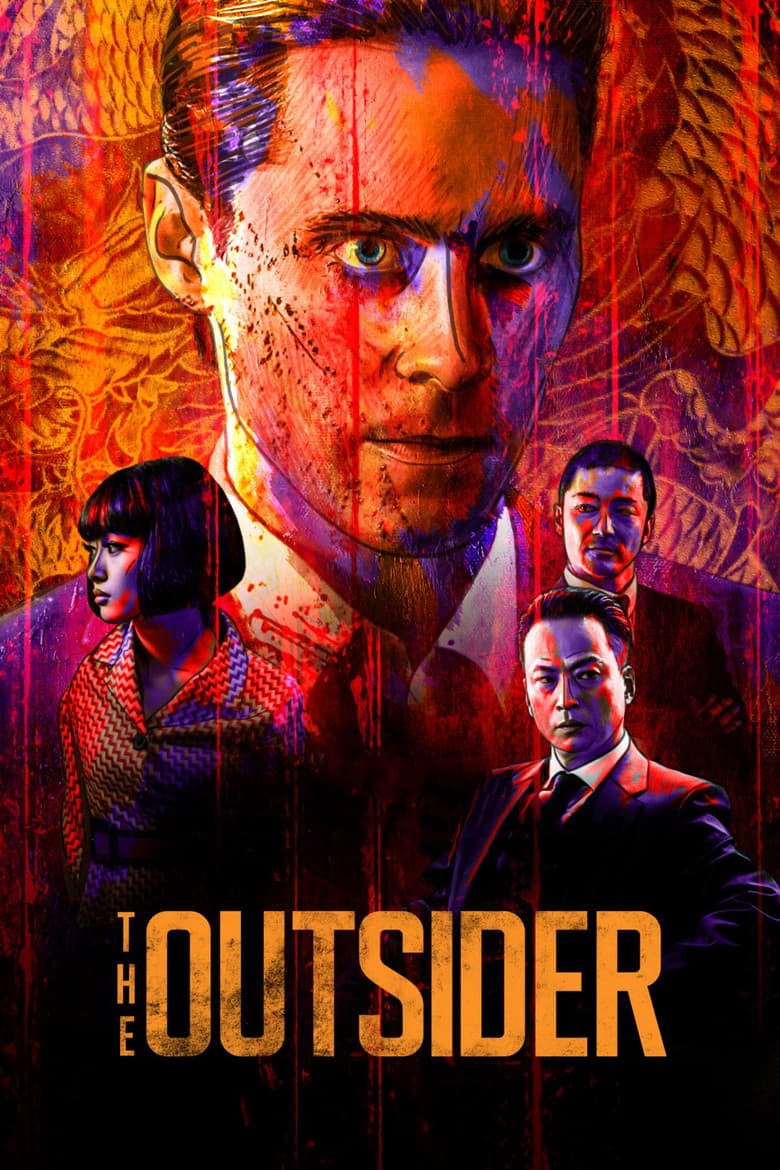
The Outsider follows Nick Lowell, a former American Marine who has spent years in a Japanese prison. In 1954 Osaka, Nick saves Kiyoshi, a yakuza prisoner, and joins Kiyoshi’s family after his release. Nick earns trust through violent jobs while rival clans fight over power and money. The dark crime drama moves slowly and uses a quiet, grim tone.
The main identity element is Nick’s place as a white American outsider inside a Japanese crime family. The story makes his search for belonging central, because he takes a Japanese lover, receives a yakuza tattoo, and ends as the clan’s new leader. Nick rejects an American businessman who uses racist insults and chooses loyalty to his Japanese family. The film treats identity as a personal fight for belonging inside a violent gang, while its main themes center on loyalty, family, and revenge.
Community feedback
Was our 20% Woke rating accurate?
Breakdown
These are the editorial factors and ratings behind our score for The Outsider.
Woke representation / casting
The film places white American Jared Leto at the center of a Japanese yakuza family. The choice makes Nick’s outsider identity highly visible. The plot directly explains his identity because he is meant to be an American outsider, so the casting does not show a broad diversity-first pattern.
18%
Woke political dialogue
Not present. The film has no modern lines about DEI, identity politics, gender roles, or activist causes. Its racist American insults belong to the postwar crime conflict.
0%
Identity-driven story themes
The film repeatedly makes Nick’s identity as a gaijin central to his rise in the yakuza. Nick must prove that an American can belong to a Japanese family, and the clan’s members test that claim. His romance with Miyu and his final rise to clan head keep the belonging issue tied to the main plot. The story presents this as personal loyalty and crime drama.
24%
Western institutional / cultural critique
Not present. The film shows a racist American businessman and a damaged postwar economy. It does not turn these events into a modern attack on Western institutions, family roles, Christianity, or traditional social norms.
0%
Woke character or canon changes
Not relevant. The film is a standalone crime story without established characters or canon. No identity-related change to a known character or historical figure is part of the plot.
0%
Anti-woke backlash and complaints
Not present. The available right-leaning posts mostly defended the film against whitewashing complaints and called those critics “SJWs.” They did not say that the movie itself pushes woke or DEI politics. The larger reported debate attacked the film for centering a white lead, which is not an anti-woke complaint.
0%
Creator track record context
Martin Zandvliet’s known work is mainly humanist and focused on war, empathy, and moral responsibility. Andrew Baldwin and the producers have little public record of activist or identity-driven work. Casting director Ko Iwagami has advocated for more Asian roles and criticized Hollywood whitewashing. This adds a mild representation signal around the production.
16%
Production
Movie · 2023
Following the brutal murder of a young real estate agent, a hardened detective attempts to uncover the truth in a case where nothing is as it seems, and by doing so dismantles the…

Movie · 2018
Young and disenchanted Sam meets a mysterious and beautiful woman who's swimming in his building's pool one night.
Movie · 2016
When a Hollywood star mysteriously disappears in the middle of filming, the studio sends their fixer to get him back.
Movie · 2024
Roy Freeman, an ex-homicide detective with a fractured memory, is forced to revisit a case he can't remember.

Movie · 2023
Helena, a woman living a seemingly ordinary life, hides a dark secret—her father is the infamous 'Marsh King', the man who kept her and her mother captive in the wilderness for…
Movie · 2016
Denmark, 2016. A blurred note is found in a bottle that has traveled across the ocean for a long time. After deciphering the cryptic note, Department Q follow a sinister trail…

Movie · 2024
FBI Agent Lee Harker is a gifted new recruit assigned to the unsolved case of an elusive serial killer. As the case takes complex turns, unearthing evidence of the occult, Harker…

Movie · 2020
A once-celebrated kid detective, now 31, continues to solve the same trivial mysteries between hangovers and bouts of self-pity.
