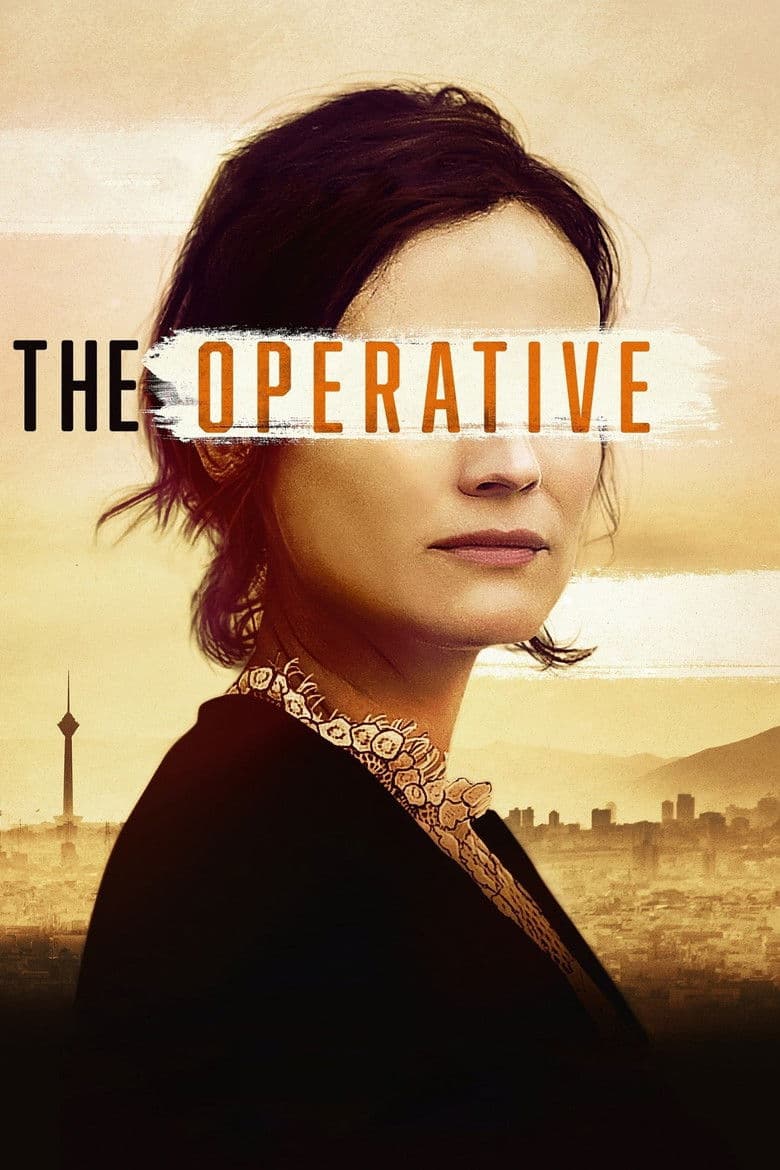
Rachel is a young Western woman who joins Mossad and learns to live behind false names. Her handlers send her to Tehran as an English teacher so she can watch Farhad, an Iranian businessman tied to secret nuclear parts. Rachel starts an affair with Farhad, while Thomas, her handler, tries to control the mission from Germany and Israel. The film uses flashbacks, quiet spy work, fear, and sudden violence to create a tense but slow and uneasy tone.
Rachel's search for a place to belong gives the story its clearest identity theme. She is British and has Jewish family ties, so the secret service feels like a family before it treats her as a tool that can be used and thrown away. The film puts a woman at the center of a dangerous spy mission, but it also shows her as lonely, manipulated, and damaged rather than as an unbeatable hero. Most of the story stays with spying, lies, romance, and the cost of living under a false name, so the identity material supports the personal drama instead of becoming a broad activist message.
Community feedback
Was our 14% Woke rating accurate?
Breakdown
These are the editorial factors and ratings behind our score for The Operative.
Woke representation / casting
Not present. Rachel is a woman in the lead, and Iranian characters are played in roles that fit the setting. The movie does not frame the casting as empowerment, diversity, or a representation campaign.
0%
Woke political dialogue
Not present. The dialogue deals with spying, war, Iran’s nuclear program, loyalty, and lies. It does not push modern identity politics, DEI, gender activism, or left-wing slogans.
0%
Identity-driven story themes
Rachel spends much of the film changing names, hiding her past, and trying to decide where she belongs. Her British background and Jewish family ties matter because she hopes Mossad can become her family, then feels that the service can discard her. The film also keeps a woman’s danger and treatment inside a male-run spy system in view. These are real identity and belonging themes, but the movie ties them to espionage and personal loss instead of a broad modern activist message.
20%
Western institutional / cultural critique
Not present. The film shows Mossad as secretive, manipulative, and willing to treat Rachel as a tool. That conflict comes from the spy plot and its danger, not from a modern attack on Western culture, family, religion, or traditional gender roles.
0%
Woke character or canon changes
Not relevant. The movie adapts The English Teacher and changes plot details for the screen. It does not change a known character’s race, sex, sexuality, or heroic role.
0%
Anti-woke backlash and complaints
Not present. The supplied X check found no anti-woke posts or complaints. Reviewed news, audience, and critic material focused on the film’s pacing, plot, realism, and ending rather than woke or DEI messaging.
0%
Creator track record context
Yuval Adler’s cached record shows a recurring focus on conflict, occupation, intelligence, and security policy. That gives the title a mild political context, but it does not show a DEI or identity-activist persona. Yiftach R. Atir’s cached record is mainly that of a former intelligence officer and spy novelist with no clear woke pattern. The cached producer records are mostly low to mild, with liberal peace and democracy work rather than identity-first activism.
18%
Production
Movie · 2017
A former rodeo star, now a motel manager, meets a young man who is responsible for the violence that suddenly has seized his small town.
Movie · 2019
In the wake of his dramatic escape from captivity, Jesse Pinkman must come to terms with his past in order to forge some kind of future.
Movie · 2025
Seasoned deep-sea divers battle the raging elements to rescue their crewmate trapped hundreds of feet below the ocean's surface.

Movie · 2022
Based on the true nail-biting mission that captivated the world. Twelve boys and the coach of a Thai soccer team explore the Tham Luang cave when an unexpected rainstorm traps…

Movie · 2020
2038: George Almore is working on a true human-equivalent AI, and his latest prototype is almost ready. This sensitive phase is also the riskiest as he has a goal that must be…

Movie · 2016
When Krisha returns to her estranged family for Thanksgiving dinner, past demons threaten to ruin the festivities.
Movie · 2022
After escaping a Michigan prison, a charming career criminal assumes a new identity in Canada and goes on to rob a record 59 banks and jewellery stores while being hunted by a…
Movie · 2021
When the aging Meyer Lansky is investigated one last time by the Feds who suspect he has stashed away millions of dollars over half a century, the retired gangster spins a…
