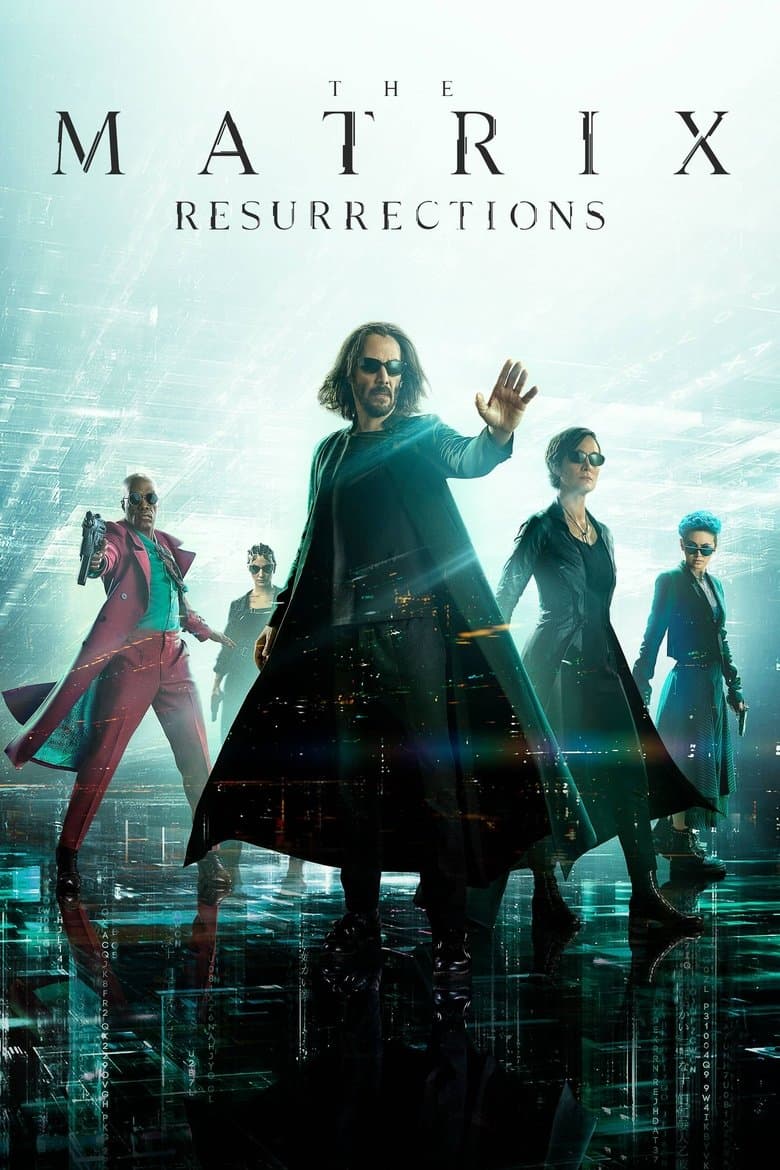
Thomas Anderson lives a dull life as a game designer who cannot tell dreams from reality. He keeps meeting a woman named Tiffany who feels like someone he once loved. Rebels pull him out of a new Matrix and show him he is really Neo. The story mixes action, a long love story with Trinity, and jokes about sequels and control.
The film has clear woke signals a normal viewer can see. A story meeting says the Matrix is about “trans-politics.” Trinity rejects the name Tiffany in a way that matches identity and deadname themes. Bugs and the rebel crew lean queer-coded, and Berg openly says Neo looks good to him. Women of color lead the free city, and Trinity ends more powerful than Neo. Meta scenes mock studios and try to take the “red pill” idea back from the right. These pieces sit inside a big action love story, so they are strong but not the only thing on screen.
Community feedback
Was our 89% Woke rating accurate?
Breakdown
These are the editorial factors and ratings behind our score for The Matrix Resurrections.
Woke representation / casting
The free-city leaders and main rebel team are mostly women and people of color in hero roles. High-profile LGBTQ actors play big parts. The modern Matrix and city of Io can support diversity, but the leadership stack and identity-forward casting still look planned.
48%
Woke political dialogue
Staff openly say the Matrix is about “trans-politics” and “capitalist exploitation.” Meta lines slam studio reboots and Warner Bros control. Tiffany asks if women are only taught to want a family. Bugs rejects simple binary choices.
62%
Identity-driven story themes
True self vs fake life, name rejection, and anti-binary ideas run through the plot. Trinity’s “My name is Trinity” beat and residual-self-image tricks read as identity themes, not only sci-fi. Queer-coded rebels and creator framing make this hard to miss.
72%
Western institutional / cultural critique
The film attacks Hollywood sequel factories and modern digital control. It also pushes back on right-wing use of the red pill. Soft digs at bland suburban marriage and gender roles appear. It is not mainly an attack on churches.
48%
Woke character or canon changes
Trinity gains the fly power that once defined Neo and finishes stronger than him. Her Tiffany name beat reframes a legacy hero through identity language. New Morpheus is a new program, not a simple race swap of Laurence Fishburne’s Morpheus.
42%
Anti-woke backlash and complaints
Many right-leaning viewers called it a woke flop, slammed diversity, Trinity’s power, and political messaging. Writer talk about reclaiming the red pill from the right fed that reaction. Some hate was only “bad sequel,” but anti-woke complaints are clear and repeated.
52%
Creator track record context
The project is driven by Lana Wachowski, a transgender filmmaker with a long public record of LGBTQ advocacy and identity-focused work. Co-writers sit mid-range progressive; the overall creative signal is high because Lana leads.
72%
Production
Movie · 2017
Detective Mark Corley storms his way onto an alien spaceship to rescue his estranged son. When the ship crashes in Southeast Asia, he forges an alliance with a band of survivors…

Movie · 2023
Humans built huge engines on the surface of the earth to find a new home. But the road to the universe is perilous.

Movie · 2022
A mysterious force knocks the moon from its orbit around Earth and sends it hurtling on a collision course with life as we know it.
Movie · 2017
Humans and Transformers are at war. Optimus Prime is gone. The key to saving our future lies buried in the secrets of the past, in the hidden history of Transformers on Earth.

Movie · 2018
As the Avengers and their allies have continued to protect the world from threats too large for any one hero to handle, a new danger has emerged from the cosmic shadows: Thanos.

Movie · 2023
When his attempt to save his family inadvertently alters the future, Barry Allen becomes trapped in a reality in which General Zod has returned and there are no Super Heroes to…

Movie · 2024
Several generations following Caesar's reign, apes – now the dominant species – live harmoniously while humans have been reduced to living in the shadows.

Movie · 2019
When Alita awakens with no memory of who she is in a future world she does not recognize, she is taken in by Ido, a compassionate doctor who realizes that somewhere in this…
