Movie review
June 16, 2017 · 154 min · PG-13 · Sci-Fi · Action · Adventure
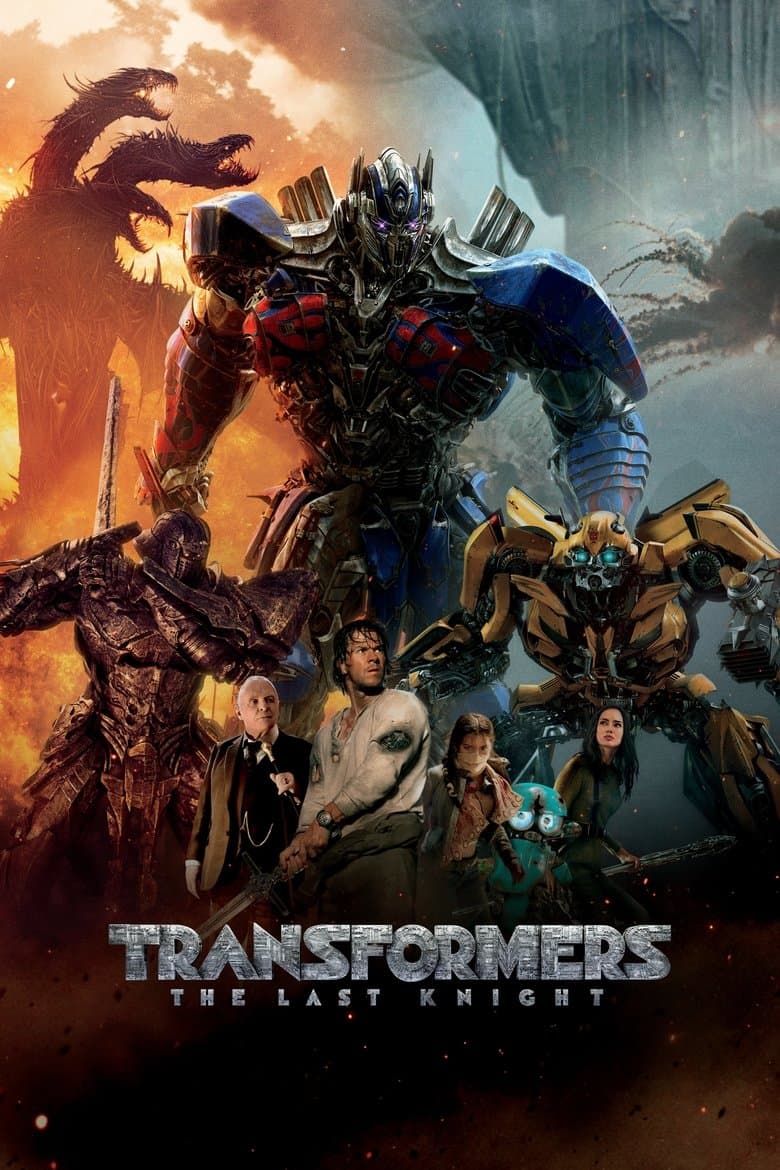
After Age of Extinction, Autobots are hunted by a Transformers Reaction Force. Cade Yeager shelters refugees while Optimus is brainwashed by the Cybertronian sorceress Quintessa into Nemesis Prime. He is sent to seize Merlin’s staff so Cybertron can drain Earth’s energy, because Earth is Unicron. An Arthurian secret history ties Transformers to King Arthur and the Knights of Iacon. Cade, Bumblebee, Oxford professor Viviane Wembly, and Sir Edmund Burton race to stop Megatron and Quintessa in a standard Bay-style military action and planet-scale CGI war.
The story is not built on modern identity politics. The main audience-visible identity push is 2017-style girl-power marketing around Isabela Moner’s Izabella and her fight like a girl monologue, plus Viviane as a capable Oxford lecturer and Merlin’s heir. In the finished film Izabella is largely sidelined, and Viviane still works heavily as a love interest with classic Bay sexual banter. Girl-power is real but thin in the plot and secondary to Wahlberg, Hopkins, and the military-Autobot focus. There is no LGBTQ story content, and major controversies were about quality, box office, and a Nazi-flag filming set piece rather than DEI as the film’s core.
Community feedback
Was our 26% Woke rating accurate?
Breakdown
These are the editorial factors and ratings behind our score for Transformers: The Last Knight.
Woke representation / casting
The cast is a modern US and UK blockbuster ensemble with supporting diversity that fits a contemporary setting. That includes Jerrod Carmichael, Santiago Cabrera, Omar Sy, Ken Watanabe, Gemma Chan, and Latina orphan Izabella. The scored piece is the empowerment marketing of Izabella plus Viviane as a capable Oxford lecturer and Merlin heir. That emphasis is noticeable but still secondary to Wahlberg, Hopkins, and the military-Autobot focus.
28%
Woke political dialogue
The named element is Izabella’s fight like a girl speech from the trailer and film. Beyond that there is little activist or identity-politics dialogue. The franchise keeps coarse sexual comedy and military banter more than DEI language.
18%
Identity-driven story themes
The core premise is Arthurian Transformers lore, Unicron and Earth, Autobot-human war, and Optimus’s corruption. Girl-power is marketing-forward and thin in the plot. Izabella is minimized, and Viviane’s importance is fantasy bloodline and MacGuffin material. Empowerment is minor texture, not the narrative engine.
12%
Western institutional / cultural critique
The TRF as overzealous government hunters is standard Bay authorities-versus-heroes action. It is balanced by sympathetic military figures such as Lennox. It is not a sustained activist critique of toxic masculinity, Christianity, traditional family, or Western culture.
8%
Woke character or canon changes
Quintessa as the first major female-presenting Bayverse film villain is a franchise novelty, not a clear DEI rewrite of a famous pre-existing character. Merlin, Arthur, and Stonehenge lore is ordinary IP expansion, not identity-driven vandalism of established human characters.
8%
Anti-woke backlash and complaints
There was no substantial right-leaning campaign treating the film as DEI propaganda. Debate centered on messiness, length, box office, and the Blenheim Nazi-flag row. Left and center mockery of the girl-power trailer is not anti-woke backlash, and scattered eye-rolls do not add up to meaningful complaint volume.
5%
Creator track record context
Cached creators score mostly low, including Bay at 9, Sela at 0, writers around 4 to 15, and casting directors around 0 to 9. Mild lifts come from Hasbro-era corporate DEI under Goldner at 28 and Spielberg’s broader liberal-humanist profile at 27. There is no identity-driven creative leadership pattern for this title.
12%
Production
Movie · 2021
Evan McCauley has skills he never learned and memories of places he has never visited. Self-medicated and on the brink of a mental breakdown, a secret group that call themselves…
Movie · 2023
65 million years ago, the only 2 survivors of a spaceship from Somaris that crash-landed on Earth, must fend off dinosaurs to reach the escape vessel in time before an imminent…
Movie · 2010
Cobb, a skilled thief who commits corporate espionage by infiltrating the subconscious of his targets is offered a chance to regain his old life as payment for a task considered…
Movie · 2019
When Alita awakens with no memory of who she is in a future world she does not recognize, she is taken in by Ido, a compassionate doctor who realizes that somewhere in this…
Movie · 2016
16-year-old Cassie Sullivan tries to survive in a world devastated by the waves of an alien invasion that has already decimated the population and knocked mankind back to the…
Movie · 2018
Thomas leads his group of escaped Gladers on their final and most dangerous mission yet. To save their friends, they must break into the legendary Last City, a WCKD-controlled…
Movie · 2024
Following their explosive showdown, Godzilla and Kong must reunite against a colossal undiscovered threat hidden within our world, challenging their very existence – and our own.
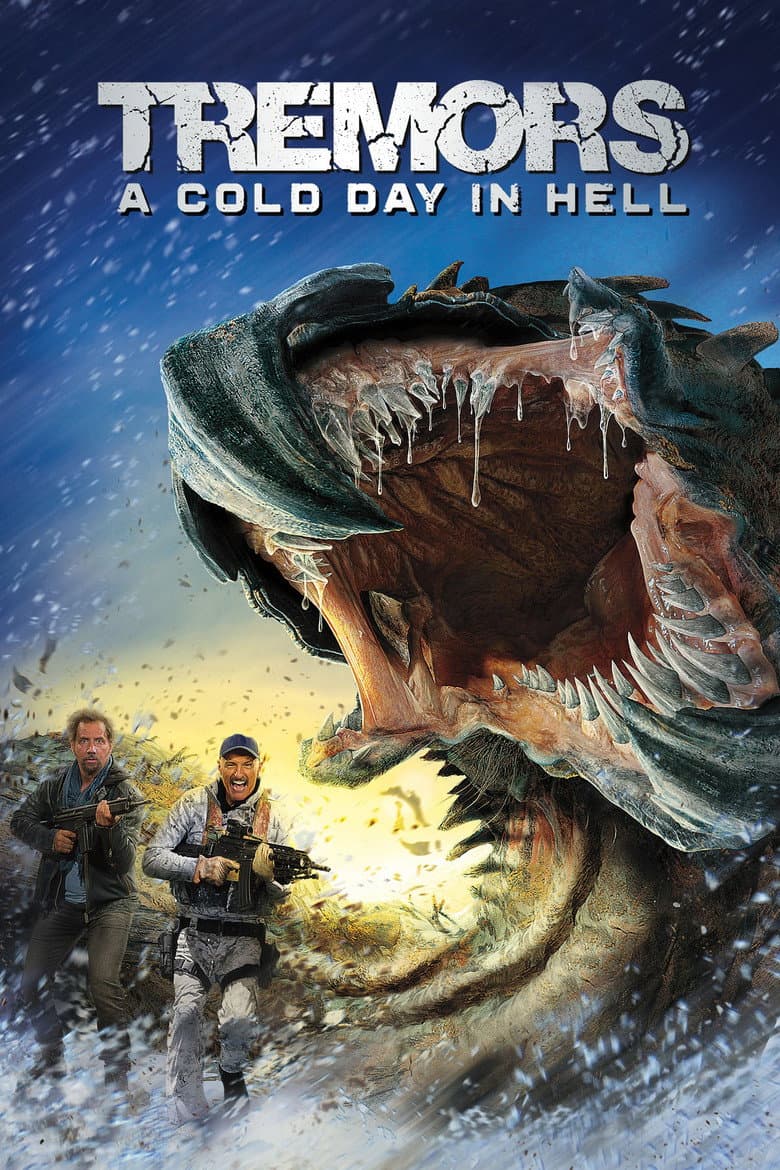
Movie · 2018
Burt Gummer and Travis Welker find themselves in a fight for survival after investigating deadly giant worm attacks in the Canadian arctic.
