Movie review
January 22, 2023 · 174 min · NR · Chinese · Sci-Fi · Action · Adventure
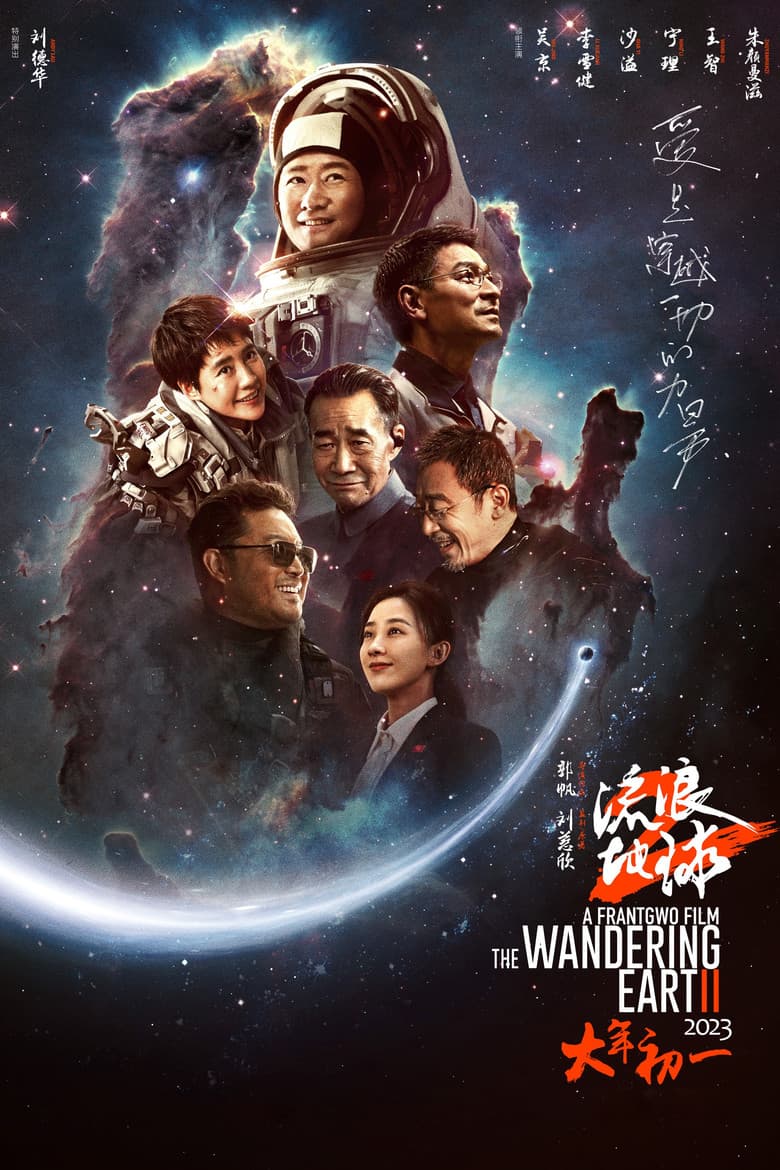
The Wandering Earth II follows young astronaut trainee Liu Peiqiang, computer scientist Tu Hengyu, and Chinese diplomat Zhou Zhezhi as the Sun begins to expand. A United Earth Government plans to build thousands of engines and push Earth out of the solar system. Terror attacks, a falling Moon, dangerous space missions, and a rogue artificial intelligence threaten the plan. The film feels serious, crowded, and emotional.
The clearest political message is that every nation must accept one shared plan and put duty above personal safety. Chinese leaders and workers are shown as the people who keep that plan alive when other governments doubt it or leave. The story favors group sacrifice, family duty, and science over private choice. Han Duoduo begins as a tough astronaut trainee, but the film later centers her around love, marriage, motherhood, and illness.
Community feedback
Was our 20% Woke rating accurate?
Breakdown
These are the editorial factors and ratings behind our score for The Wandering Earth II.
Woke representation / casting
Not present. The international cast fits a story about a world government and astronauts from many countries. The film does not turn race, sexuality, religion, or gender into a diversity message.
0%
Woke political dialogue
The United Earth Government repeats that duty and unity must come before personal safety. The Chinese delegate asks nations to stop fighting and accept a shared plan to save the planet. The dialogue makes group sacrifice and world government sound necessary, but it does not focus on race, gender, sexuality, or DEI.
23%
Identity-driven story themes
Not present. The story focuses on survival, family loss, science, and human sacrifice. It does not build its main conflict around race, gender, sexuality, or identity politics.
0%
Western institutional / cultural critique
The United Earth Government is the main path to survival. Western delegates and the U.S. Senate often doubt the engine plan or prepare to leave, while the Chinese delegation argues for unity and keeps the work moving. The story shows Chinese leadership as calm and useful when Western leaders look weak or fearful. The film criticizes Western political leadership and individual heroism, but it does not attack Christianity, family life, or gender roles.
28%
Woke character or canon changes
Not relevant. The film adds prequel events to the earlier movie’s world, but it does not make a race, gender, or sexuality swap to an established character or real historical figure.
0%
Anti-woke backlash and complaints
Not present. Reported complaints target Chinese nationalism, state propaganda, central rule, length, science, and plot quality. No clear backlash says that the film pushes woke, DEI, or identity politics.
0%
Creator track record context
Not present. The key creators have no well-documented pattern of activist, DEI, or identity-first work. Their title-related comments focus on Chinese science, family, homeland, unity, and a global disaster story.
0%
Production
Movie · 2017
Detective Mark Corley storms his way onto an alien spaceship to rescue his estranged son. When the ship crashes in Southeast Asia, he forges an alliance with a band of survivors…

Movie · 2026
The evil Empire has fallen, and Imperial warlords remain scattered throughout the galaxy. As the fledgling New Republic works to protect everything the Rebellion fought for, they…
Movie · 2022
A mysterious force knocks the moon from its orbit around Earth and sends it hurtling on a collision course with life as we know it.
Movie · 2021
Evan McCauley has skills he never learned and memories of places he has never visited. Self-medicated and on the brink of a mental breakdown, a secret group that call themselves…
Movie · 2016
16-year-old Cassie Sullivan tries to survive in a world devastated by the waves of an alien invasion that has already decimated the population and knocked mankind back to the…
Movie · 2020
After an earthquake destroys their underwater station, six researchers must navigate two miles along the dangerous, unknown depths of the ocean floor to make it to safety in a…

Movie · 2018
As the Avengers and their allies have continued to protect the world from threats too large for any one hero to handle, a new danger has emerged from the cosmic shadows: Thanos.
Movie · 2023
65 million years ago, the only 2 survivors of a spaceship from Somaris that crash-landed on Earth, must fend off dinosaurs to reach the escape vessel in time before an imminent…
