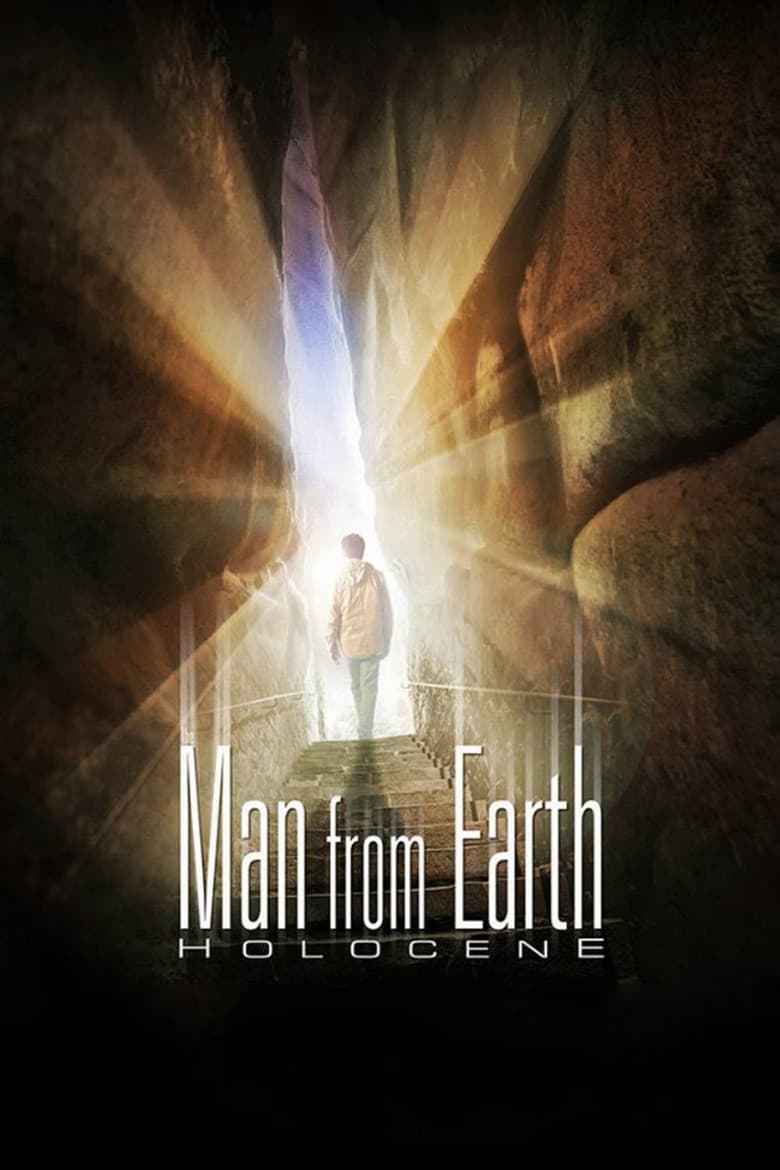
John Oldman is a 14,000-year-old man who hides under the name John Young. He teaches comparative religion at a community college in Northern California while living with fellow teacher Carolyn. Four students connect him to a book about the immortal man from the first movie, and their search puts John in danger. The film mixes quiet classroom talks with a mystery, a kidnapping, a religious argument, and a darker ending as John discovers that he may be losing his long life.
The film puts a mixed-race group of students at the center of the mystery as they investigate their teacher’s hidden past. A class briefly talks about race in the old name Cro-Magnon, and another joke says women should not need to be reborn as men to reach enlightenment. The largest social message questions fixed Christian belief by presenting John as the possible human source of Jesus and by calling the Bible a book written by people. That religious challenge shapes the last part of the film, while the rest stays focused on science, aging, truth, and the human need to believe.
Community feedback
Was our 29% Woke rating accurate?
Breakdown
These are the editorial factors and ratings behind our score for The Man from Earth: Holocene.
Woke representation / casting
Not present. The main cast includes several races, but the story takes place at a modern California college and does not present that casting as a diversity message.
0%
Woke political dialogue
The opening class calls the term Cro-Magnon outdated because it separates Europeans from Africans. A later joke says Jain women should not need to be reborn as men to reach enlightenment. These lines bring race and gender ideas into the dialogue, but they appear briefly. Most of the speech concerns religion, science, and human history.
27%
Identity-driven story themes
Not present. The story centers on immortality, religion, aging, and truth. The female students help solve the mystery, but the movie does not make gender, race, sexuality, or modern identity politics its story.
0%
Western institutional / cultural critique
The film repeatedly compares Jesus with the Buddha and presents Christian scripture as a later human story. John says the Christian message became violent and suggests that many paths can lead to enlightenment. Philip calls these ideas liberal theological nonsense, then treats John as the Antichrist and attacks him. The critique of Christianity is important in the final act, but it is not tied to modern race, gender, or activist campaigns.
38%
Woke character or canon changes
Not relevant. John uses a new name and begins to age, but those are ordinary plot changes. No established character or source figure receives a race, gender, or sexuality change.
0%
Anti-woke backlash and complaints
One Christian review says the mixed student group promotes a racial political agenda. The same review objects to the film’s attack on Christian belief, but that is mainly a religious complaint rather than a clear woke claim. This source is isolated, and wider reaction focuses on quality and plot holes.
12%
Creator track record context
Cached context rates Richard Schenkman at 8/100 and Shannon Makhanian at 10/100. Cached context rates Jerome Bixby, Emerson Bixby, and the listed producers at 0/100. The creators are mainly linked to genre films, independent production, and philosophical ideas. The available record shows no strong recurring DEI, queer, or identity-activist pattern.
5%
Production

Movie · 2018
Jonathan is a young man with a strange condition that only his brother understands. But when he begins to yearn for a different life, their unique bond becomes increasingly tested.

Movie · 2017
Thirty years after the events of the first film, a new blade runner, LAPD Officer K, unearths a long-buried secret that has the potential to plunge what's left of society into…
Movie · 2020
A young NASA JPL scientist is abducted by extraterrestrials but when no one believes his story he becomes obsessed with finding proof which leads him on a journey of discovery.
Movie · 2018
A scientist becomes obsessed with returning his family to normalcy after a terrible accident.
Movie · 2016
Taking place after alien crafts land around the world, an expert linguist is recruited by the military to determine whether they come in peace or are a threat.

Movie · 2014
The adventures of a group of explorers who make use of a newly discovered wormhole to surpass the limitations on human space travel and conquer the vast distances involved in an…

Movie · 2017
A service which creates holographic projections of late family members allows an elderly woman to spend time with a younger version of her deceased husband.
Movie · 2024
In 1985, the murder of a government-sponsored superhero draws his outlawed colleagues out of retirement and into a mystery that threatens to upend their personal lives and the…
