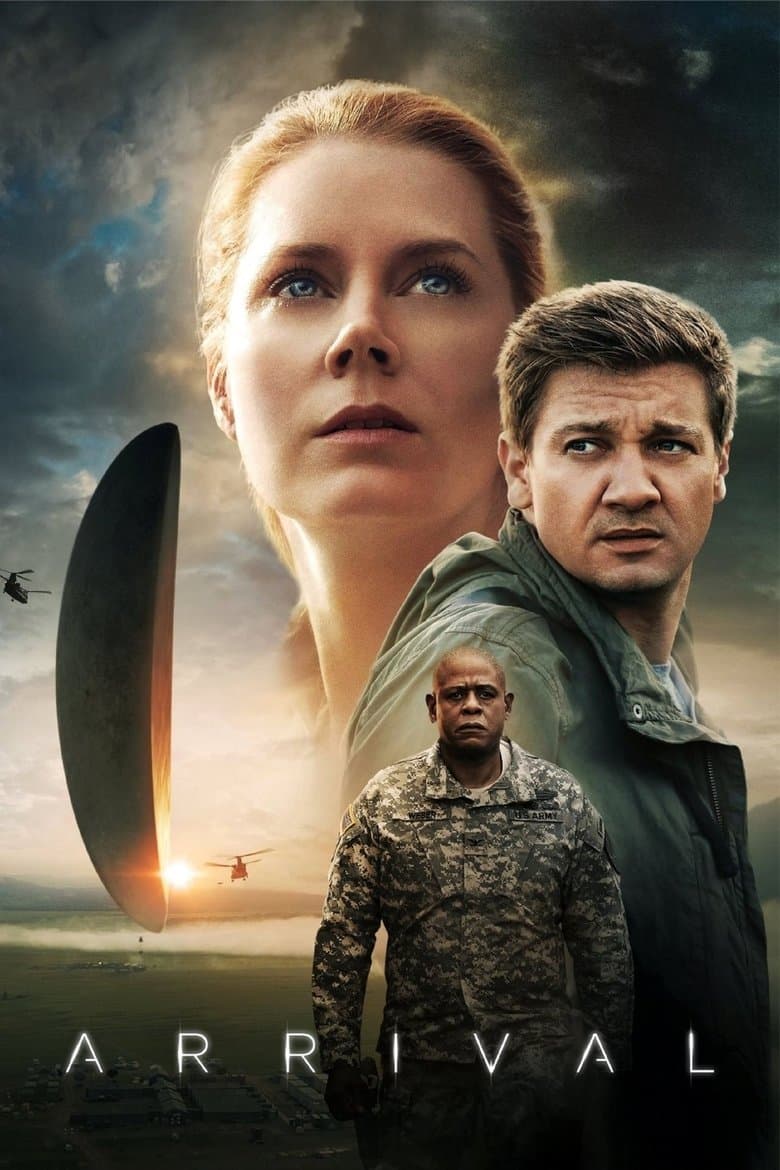
Arrival is a 2016 science fiction drama in which a linguist works with the US military to communicate with alien ships that have landed at sites around the world. The story follows how learning the aliens' language alters her understanding of time and centers on her personal experience of motherhood, loss, and choosing to embrace life despite knowing future pain. The film presents these ideas through a slow, thoughtful narrative focused on communication and human connection. No audience-visible woke elements such as identity politics, diversity lectures, girlboss framing, or activist messaging appear in the story, dialogue, or marketing.
Community feedback
Was our 16% Woke rating accurate?
Breakdown
These are the editorial factors and ratings behind our score for Arrival.
Woke representation / casting
The lead is a highly competent white female linguist whose expertise drives the plot and fits the story's focus on language skills. A black actor plays a supporting military colonel role that suits the institutional setting. Casting follows narrative logic without visible identity signaling, quotas, or mismatches that prioritize representation over story.
12%
Woke political dialogue
No political speeches, identity arguments, systemic critiques, or activist language appear. Dialogue stays on linguistics, practical problem-solving, military process, and personal emotions about family and time.
0%
Identity-driven story themes
Motherhood, grief, and choosing love despite foreseen loss form a central emotional thread. These appear as universal human experiences rather than modern identity politics, gender theory, or social justice framing. Some niche feminist readings exist but do not shape the film's core structure or messaging.
5%
Western institutional / cultural critique
The military shows initial bureaucracy and friction with the civilian expert, with minor professional dynamics that some could read as gender-related. The story ultimately shows successful cooperation across institutions and nations to solve a crisis through understanding. No sustained activist critique of Western systems, patriarchy, or traditional norms exists.
12%
Woke character or canon changes
Not relevant. The adaptation expands the short story with added global political stakes for cinematic tension. These are standard storytelling adjustments. The protagonist remains a female linguist as in the source material; no identity-driven or DEI-style alterations to characters or canon were made.
0%
Anti-woke backlash and complaints
Very little notable anti-woke or right-leaning criticism exists that accuses the film of woke or identity politics content. Reception was largely positive and non-polarized. Minor debates touched the ending's motherhood themes, with some viewers potentially appreciating the pro-family elements, but no widespread claims of left-wing propaganda or DEI messaging surfaced. Evidence of backlash is weak.
0%
Creator track record context
Writer Eric Heisserer has a moderate record of advocating for broader diversity in casting. Director Denis Villeneuve has expressed classically liberal support for personal choice on reproduction and criticized Hollywood's business-driven limits on creativity. The producers show no documented activist or identity-focused patterns. Overall influence remains mild and story-oriented rather than centered on modern woke or DEI priorities.
28%
Production
Movie · 2017
The widow of a wise professor stumbles upon one of his inventions that's able to record and play a person's memory.

Movie · 2017
Thirty years after the events of the first film, a new blade runner, LAPD Officer K, unearths a long-buried secret that has the potential to plunge what's left of society into…
Movie · 2024
Suspicious of the events ensnaring their former colleagues, Nite Owl and Silk Spectre are spurred out of retirement to investigate.
Movie · 2018
After David Kim's 16-year-old daughter goes missing, a local investigation is opened and a detective is assigned to the case.
Movie · 2019
Three astronomers accidentally intercept what they believe to be a signal from a distant alien civilization, but the truth is even more incredible than any of them could have…

Movie · 2018
A family is forced to live in silence while hiding from creatures that hunt by sound.
Movie · 2018
An up-and-coming journalist finds his world and faith increasingly challenged when he's granted the interview of a lifetime – with someone who claims to be God.

Movie · 2017
Susan, a single mother of two, works as a waitress in a small town. Her son, Henry, is an 11-year-old genius who not only manages the family finances but acts as emotional support…
