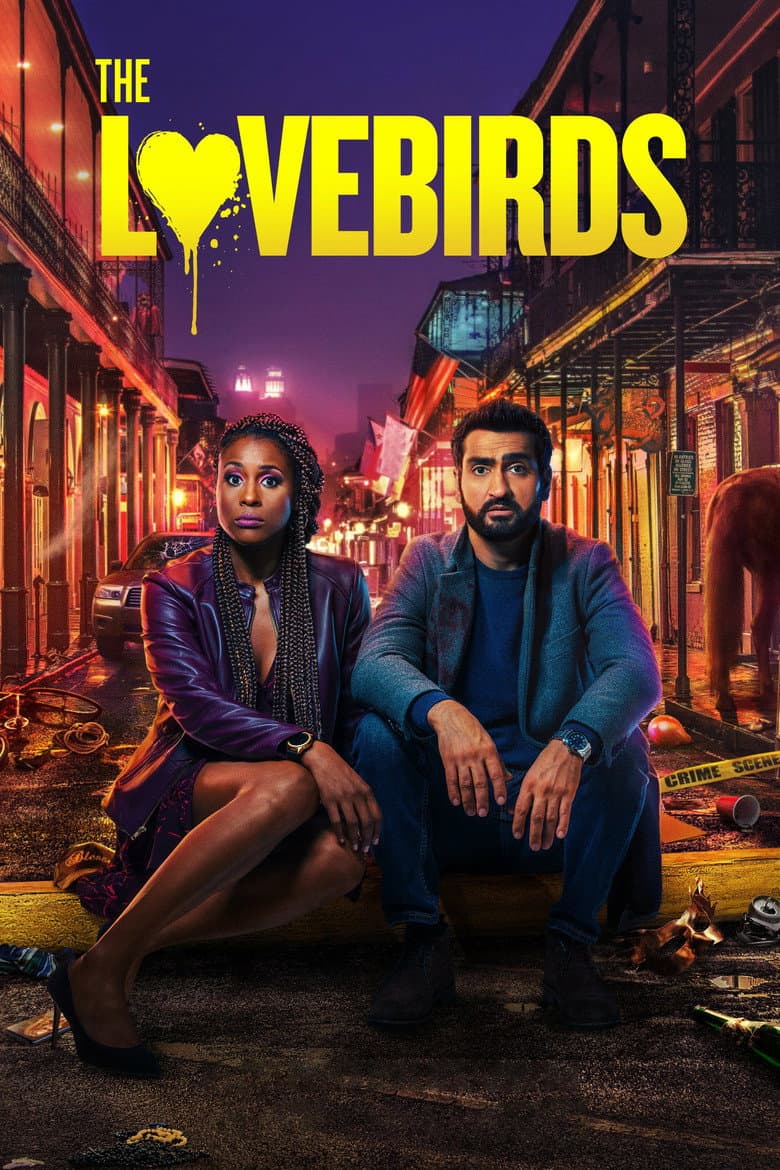
Leilani and Jibran are a New Orleans couple whose four-year relationship is falling apart. They break up while driving to a dinner party, then hit a bicyclist and watch a mustached man claiming to be a cop use their car to kill him. The pair fear that the police will blame them, so they run through the city and follow clues from the dead man’s phone. The night brings a corrupt cop, a congressman, rich people in masks, a sex cult, fights, and many crude jokes. The tone is fast, loud, and silly, with the murder plot used to test whether the couple still trusts each other.
The film gives the main roles to a black woman and a Pakistani American man, and it makes their race part of the chase. Leilani says the police will not believe them, while other lines name the pair as minorities and joke about racial profiling. The story also uses a “little Brett Kavanaugh” joke and a short joke about social-justice documentaries. These points appear in the plot and dialogue, but the movie stays focused on romance, teamwork, and communication instead of building a full political message. The ending also shows that the couple could have gone to the police, which softens the film’s criticism of them.
Community feedback
Was our 58% Woke rating accurate?
Breakdown
These are the editorial factors and ratings behind our score for The Lovebirds.
Woke representation / casting
The leads are a black woman and a Pakistani American man in a modern New Orleans romance. The pair were originally written as white, and the production changed them to reflect an interracial couple of color. Interviews tie the casting to different treatment by police and to wider representation in rom-coms. The film’s setting makes the couple plausible, so the score comes mainly from the deliberate identity framing.
55%
Woke political dialogue
The film names racial identity in several lines. A passerby calls Leilani African-American and Jibran a person of color. Leilani imagines a cop calling him a brown man and says the police will not believe them. The film also uses a little Brett Kavanaugh joke and a joke about social-justice documentaries. These references mostly appear in the chase setup and remain comic rather than becoming speeches.
35%
Identity-driven story themes
The film makes race part of the central escape problem. Leilani and Jibran fear police will treat them unfairly because she is black and he is brown. The pair then works together as an interracial couple while the mystery connects race, trust, and police treatment. The ending shows that they could have gone to the police, so the film keeps romance and teamwork at the center.
43%
Western institutional / cultural critique
The film uses racial mistrust of police as a plot engine. Leilani says the police will not give them the benefit of the doubt, and the imagined cop calls Jibran a brown man. The mystery later exposes a corrupt officer working with a congressman and a rich sex club. The twist says the pair could have trusted the police, so the movie offers a comic institutional critique rather than a full attack on police or Western society.
31%
Woke character or canon changes
Not relevant. The leads were original characters, and the story is not based on an established franchise, book, or real event.
0%
Anti-woke backlash and complaints
One Reddit commenter called the movie politically driven, objected to the idea that the brown couple could not trust the police, and complained about moral messages. A conservative family review also called one social-activism line politically correct. Most other audience comments focused on the comedy, chemistry, or weak plot, and X showed no anti-woke campaign. The evidence shows real but limited backlash.
24%
Creator track record context
Most cached records for the writers, Michael Showalter, and the supporting crew show little political or identity-focused activity. Issa Rae and Kumail Nanjiani have stronger representation-focused records. Todd Schulman also has a record of projects about race, gender, and social issues. This raises the context score, but the title’s main signals come from its casting and story rather than a large activist team.
31%
Production
Movie · 2026
A happily engaged couple is put to the test when an unexpected turn sends their wedding week off the rails.
Movie · 2022
Peter and Emma thought they were on the precipice of life’s biggest moments – marriage, kids, and houses in the suburbs – until their respective partners dumped them.
Movie · 2020
A guy meets the woman of his dreams and invites her to his company's corporate retreat, but realizes he sent the invite to the wrong person.
Movie · 2024
In the summer of 1986, three sixteen year old friends spend their Saturdays sneaking into movies at the local multiplex.
Movie · 2024
Ana is an ambitious intern dreaming of a career in the art world while trying to impress her demanding boss Claire.
Movie · 2021
Teddy wakes up the morning after his wedding to discover that he's jumped forward a year in his life to his first anniversary.
Movie · 2018
Lara Jean's love life goes from imaginary to out of control when her secret letters to every boy she's ever fallen for are mysteriously mailed out.
Movie · 2023
After a disastrous first date, wild-child Nicole and socially-anxious Max vow to lose each other’s numbers until they learn that their dogs found a love match, and now puppies are…
