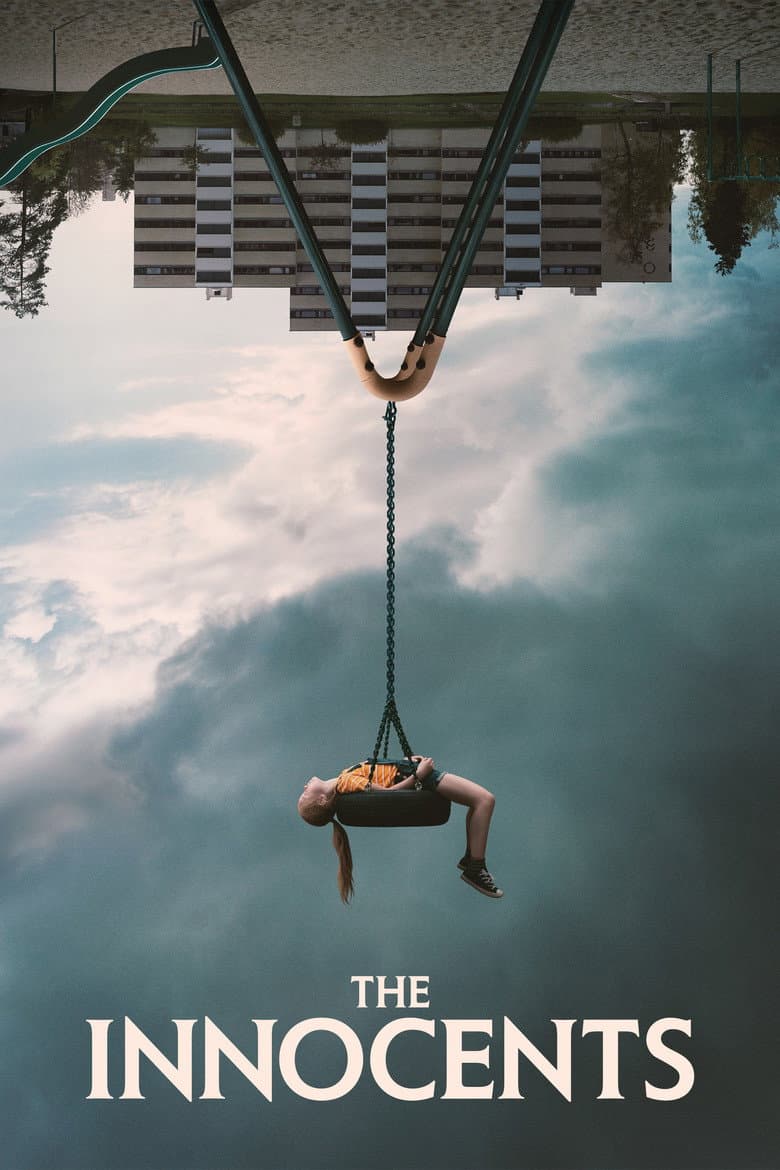
Ida moves with her parents and her older sister, Anna, to a large apartment estate in Norway during the summer. Anna is autistic and cannot speak, so Ida feels lonely and jealous when her parents focus on her sister. Ida meets Ben and Aisha in the nearby woods and playground, and the children discover powers that let them move things, share thoughts, and control minds. The bright setting slowly becomes a cold and frightening place as the children test their powers.
The clearest identity-related element is Anna, a disabled child who has a hidden inner life and a powerful voice through psychic connection. Aisha helps Anna connect with the others, and Anna becomes important to the fight against Ben. The story also places two children of color in the main group. The film is mostly about childhood cruelty, jealousy, abuse, empathy, and the hard work of learning right from wrong.
Community feedback
Was our 28% Woke rating accurate?
Breakdown
These are the editorial factors and ratings behind our score for The Innocents.
Woke representation / casting
The central group includes two children of color in prominent roles. Anna is a nonverbal autistic girl, which makes disability visible in the lead group. These choices add audience-visible representation, but the Oslo housing setting is shown as diverse. Vogt’s interviews say the gender and ethnicity changes came from finding strong child actors, not from a diversity campaign.
18%
Woke political dialogue
Not present. The children talk about powers, fear, family, and right and wrong, not modern identity or activist politics.
0%
Identity-driven story themes
Anna’s autism is a recurring part of the central conflict. Aisha’s mind link, Anna’s brief return of speech, and Anna’s powers give the disabled child a hidden inner life. The film makes this identity element important to the family and fantasy story. The film does not connect it to current politics or a wider activist cause.
28%
Western institutional / cultural critique
Not present. The film shows neglect, abuse, and weak adult supervision, but it does not turn them into a modern critique of Western institutions, religion, patriarchy, or social norms.
0%
Woke character or canon changes
Not relevant. The film uses original child characters and an original supernatural story. No established character or real historical figure is changed.
0%
Anti-woke backlash and complaints
Not present. No sustained anti-woke complaints, boycott, or review campaign appears in the reviewed coverage. The reported debate focused on autism portrayal and the casting of a dark-skinned child as the violent antagonist.
0%
Creator track record context
Eskil Vogt’s work is mostly psychological stories about family, childhood, and difficult people. His earlier Thelma is a queer coming-out story, but his public work is not built around activist campaigns. Maria Ekerhovd and the Bufo producers often support films about immigrant, Sámi, and other underrepresented lives. This gives the title a moderate creator track record context.
43%
Production
Movie · 2018
The story of a heartbroken man who attends a spiritual retreat, only to discover that the course releases more than everyday toxins and traumatic experiences.
Movie · 2024
A mother and her teenage daughter must confront Death when it arrives in the form of an astonishing talking bird.
Movie · 2023
On the day of his scheduled execution, a convicted serial killer gets a psychiatric evaluation during which he claims he is a demon, and further claims that before their time is…
Movie · 2019
On the outskirts of a kingdom, a quiet but fierce medieval warrior protects the realm from monsters and the occult.
Movie · 2022
Known as America’s Poet, Henry Wadsworth Longfellow leads an idyllic life – until the day his world is shattered by tragedy.
Movie · 2022
In the wake of a young Jewish girl’s disappearance, the son of a Hasidic funeral director returns home with his pregnant wife in hopes of reconciling with his father.
Movie · 2021
A bureaucrat interviews five souls to decide which of them will be given a life on Earth. But he soon faces an existential challenge of his own.
Movie · 2025
In late 15th-century Eastern Europe, Prince Vlad II’s bride is brutally murdered. As a result, he renounces God and damns Heaven itself.
