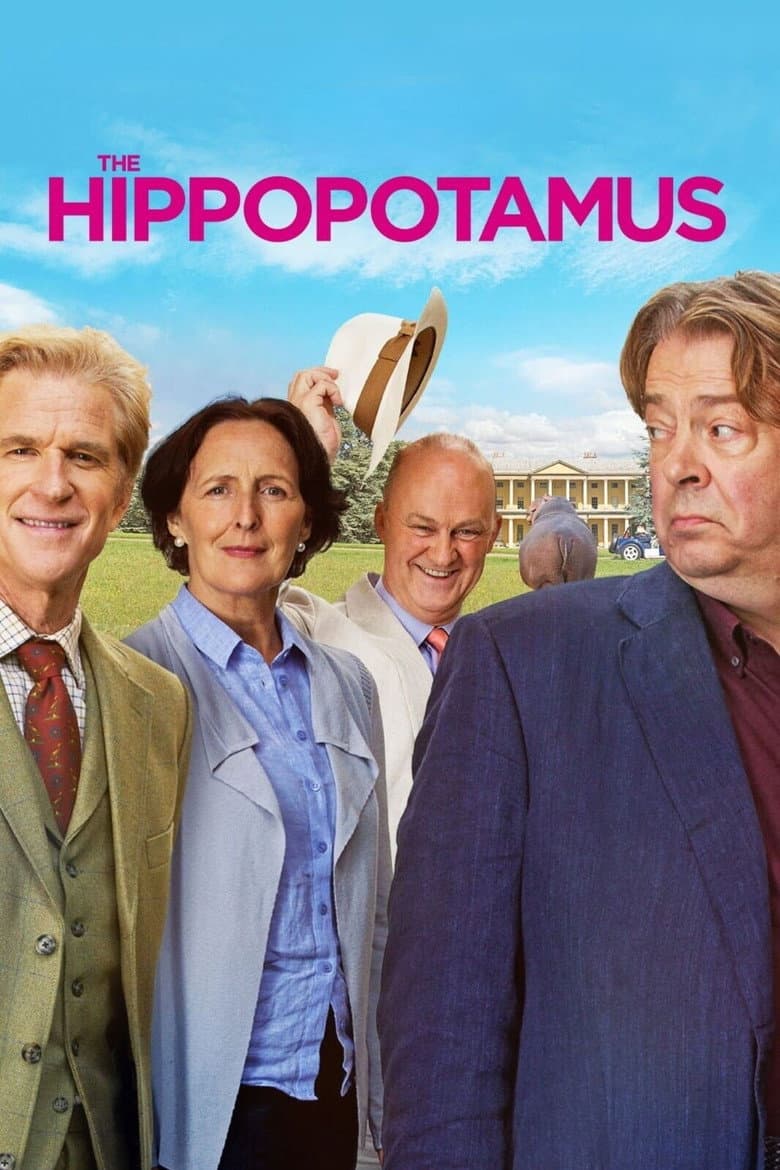
The Hippopotamus follows Ted Wallace, an aging poet who has lost his job as a theater critic after a drunken outburst. His sick goddaughter Jane sends him to a grand English country house to learn whether her recovery came from a miracle. Ted studies the family, a teenage boy named David, and a string of strange cures while he drinks and insults almost everyone around him. The film uses a dry, rude comedy style, with long spoken narration and a mystery about faith, sex, and human weakness.
The film includes a gay male theater director in a supporting role and mentions a sexual encounter between two men. Sex talk runs through the story, including a teenage boy who uses a supposed healing gift to seek sexual favors from people who believe in him. The film treats these events as crude and troubling plot material, not as a modern campaign about identity. Its main arc follows Ted as his bitter distrust gives way to compassion, renewed wonder, and a return to poetry.
Community feedback
Was our 13% Woke rating accurate?
Breakdown
These are the editorial factors and ratings behind our score for The Hippopotamus.
Woke representation / casting
Not present. The cast fits the mostly white English country-house setting. Important women appear, but the movie does not frame their casting as a diversity or empowerment statement.
0%
Woke political dialogue
Not present. Ted’s jokes cover sex, women, class, religion, and modern life. The lines are bitter personal comedy, not modern identity, DEI, or activist speech.
0%
Identity-driven story themes
The film includes a gay male theater director in a supporting role. The film also refers to a sexual encounter between two men. These details recur within the movie’s sex humor but do not drive Ted’s investigation. The main story follows skepticism, belief, shame, and Ted’s return to poetry.
18%
Western institutional / cultural critique
Not present. The film mocks wealthy manor guests, faith healers, and a theater crowd. Those targets are comic vanity and false belief, not a modern activist attack on Western institutions, capitalism, Christianity, or traditional family life.
0%
Woke character or canon changes
Not relevant. The movie adapts Stephen Fry’s 1994 novel and keeps its main characters and setting. No identity-related change to a known character is reported.
0%
Anti-woke backlash and complaints
Not present. No clear anti-woke or anti-left backlash appears in mainstream reviews or searchable discussion. The supplied X pass also found no complaints, boycott talk, or review bombing. The few objections target sexual content, plot quality, or the treatment of miracles.
0%
Creator track record context
Stephen Fry brings a record of gay-rights support and progressive causes. John Jencks has spoken about female crew members and support for filmmakers who are not white men. The other writers, producers, and casting directors have low or modest scores and no strong DEI or activist pattern. This context raises the factor slightly, but it does not show that the movie is an identity campaign.
20%
Production
Movie · 2024
Inseparable best friends AJ and Moose decide to run the local pool's snack shack after their plan to sell home-brewed beer goes down the drain.
Movie · 2016
Two teenage boys from inner-city Cork steal bicycles and ride off on a 160km quest to find an unrecovered bale of cocaine worth 7,000,000 euros.
Movie · 2022
Exploring every facet of ‘Weird Al’ Yankovic’s life, from his meteoric rise to fame with early hits like ‘Eat It’ and ‘Like a Surgeon’ to his torrid celebrity love affairs and…
Movie · 2016
A comedy that follows a group of friends as they navigate their way through the freedoms and responsibilities of unsupervised adulthood.
Movie · 2023
From his onstage tackle to the slap heard round the world, Dave Chappelle lets loose in this freewheeling and unfiltered stand-up comedy special.
Movie · 2018
Adam Sandler takes his comical musical musings back out on the road, from comedy clubs to concert halls to one very unsuspecting subway station.
Movie · 2018
Outspoken as ever, comedian Joe Rogan takes on politics, pro wrestling, pot laws, cats, vegans and much more in a stand-up special shot in Boston.
Movie · 2020
Scott has been a case of arrested development ever since his firefighter father died when he was seven. He's now reached his mid-20s having achieved little, chasing a dream of…
