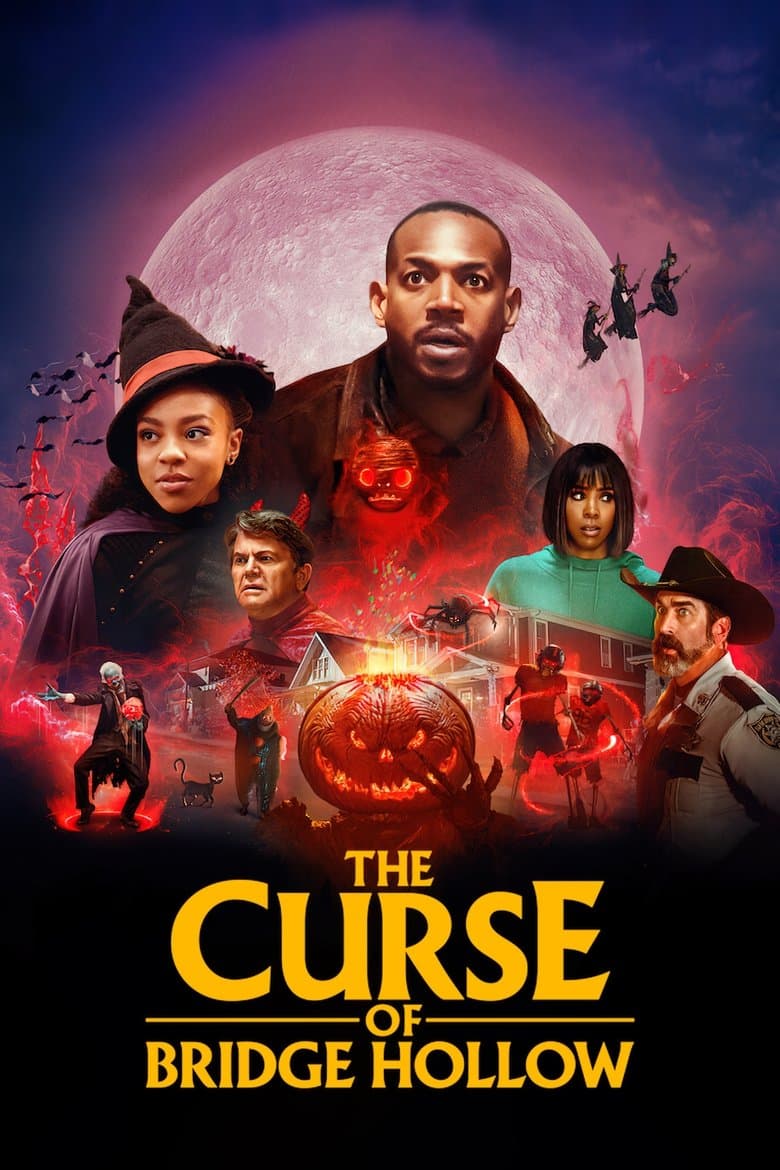
Howard Gordon is a science teacher who hates Halloween and trusts only what he can explain. He moves his wife Emily and teenage daughter Sydney from Brooklyn to Bridge Hollow, a New England town that treats Halloween as its biggest holiday. Sydney meets young ghost hunters and opens an old lantern in her new home. The act wakes Stingy Jack, an evil spirit who turns decorations into monsters and wants every day to be Halloween. Howard and Sydney must work together to save the town, giving the film a light family tone with scary creatures, silly fights, and a warm father-daughter story.
The film centers on a black family, with Sydney as a brave teenage co-lead and Howard as her science-minded father. The movie also includes a Latino boy in Sydney’s friend group and uses a joke about white privilege and a few race-based nicknames. Sydney often moves the rescue forward, but the story makes her courage part of a family effort rather than a political lesson. The main message asks parents and children to respect each other’s strengths when they disagree about science, ghosts, and Halloween. Magic, séances, demons, and a deal with the devil serve as cartoon horror in a story about family, courage, and trust.
Community feedback
Was our 22% Woke rating accurate?
Breakdown
These are the editorial factors and ratings behind our score for The Curse of Bridge Hollow.
Woke representation / casting
The film centers a black father, mother, and teenage daughter as its heroic family. Sydney is a brave co-lead who helps save the town. The film also includes a Latino boy in her paranormal group. Kelly Rowland said the film gave her black characters in a kind of family Halloween story she had not seen before, making the casting an audience-visible representation choice.
28%
Woke political dialogue
Howard jokes that Bridge Hollow smells like apples and “a hint of white privilege.” Sydney also says that “the system’s rigged” when her father blocks her Halloween plans. These lines use current political language, but they appear as quick jokes and do not shape the plot. The political material remains brief.
15%
Identity-driven story themes
Not present. Sydney is brave and helps save the town, but the story treats her courage as part of a family adventure. Howard and Sydney learn to respect each other’s different strengths without making race, gender, or sexuality the main conflict.
0%
Western institutional / cultural critique
Not present. The film makes one joke about white privilege, but it does not build a continuing attack on families, religion, schools, police, business, or other Western institutions. Its main conflict is a supernatural curse, not a modern social critique.
0%
Woke character or canon changes
Not relevant. The film uses a folk tale about Stingy Jack, but it does not make an identity or DEI change to that figure, a real historical figure, or a known franchise character. Its new father-daughter story is an ordinary creative addition.
0%
Anti-woke backlash and complaints
Not present. No clear anti-woke or right-leaning complaints appeared in the searched coverage and public posts. Negative comments focused on weak writing, copied ideas, uneven scares, and humor.
0%
Creator track record context
The cached creator context is mostly low, with low scores for Jeff Wadlow and most writers and producers. Todd Berger, Mary Vernieu, and Marlon Wayans have some representation or allyship signals in the cached notes, but none shows a strong activist pattern tied to this film. Interviews present the movie as family entertainment built from Halloween fun and a father-daughter bond. The context adds a mild signal, not a major one.
20%
Production
Movie · 2025
When twin brothers find a mysterious wind-up monkey, a series of outrageous deaths tear their family apart. Twenty-five years later, the monkey begins a new killing spree forcing…
Movie · 2024
A family's vacation to a remote getaway takes an unexpected turn when they discover the present-day implications of the island's cannibalistic past.
Movie · 2020
Hubie Dubois, despite his devotion to his hometown of Salem, Massachusetts (and its legendary Halloween celebration), is a figure of mockery for kids and adults alike.
Movie · 2017
When Cole stays up past his bedtime, he discovers that his hot babysitter is part of a Satanic cult that will stop at nothing to keep him quiet.
Movie · 2019
Columbus, Tallahassee, Wichita, and Little Rock move to the American heartland as they face off against evolved zombies, fellow survivors, and the growing pains of the snarky…
Movie · 2026
After breaking the mysterious "One Wish Willow" to win his crush's heart, a hopeless romantic finds himself getting exactly what he asked for but soon discovers that some desires…
Movie · 2016
Ronnie runs a Disco walking tour with his son, Brayden. When a sexy woman takes the tour, it begins a competition between father and son for her love.
Movie · 2024
After a family tragedy, three generations of the Deetz family return home to Winter River. Still haunted by Betelgeuse, Lydia's life is turned upside down when her teenage…
