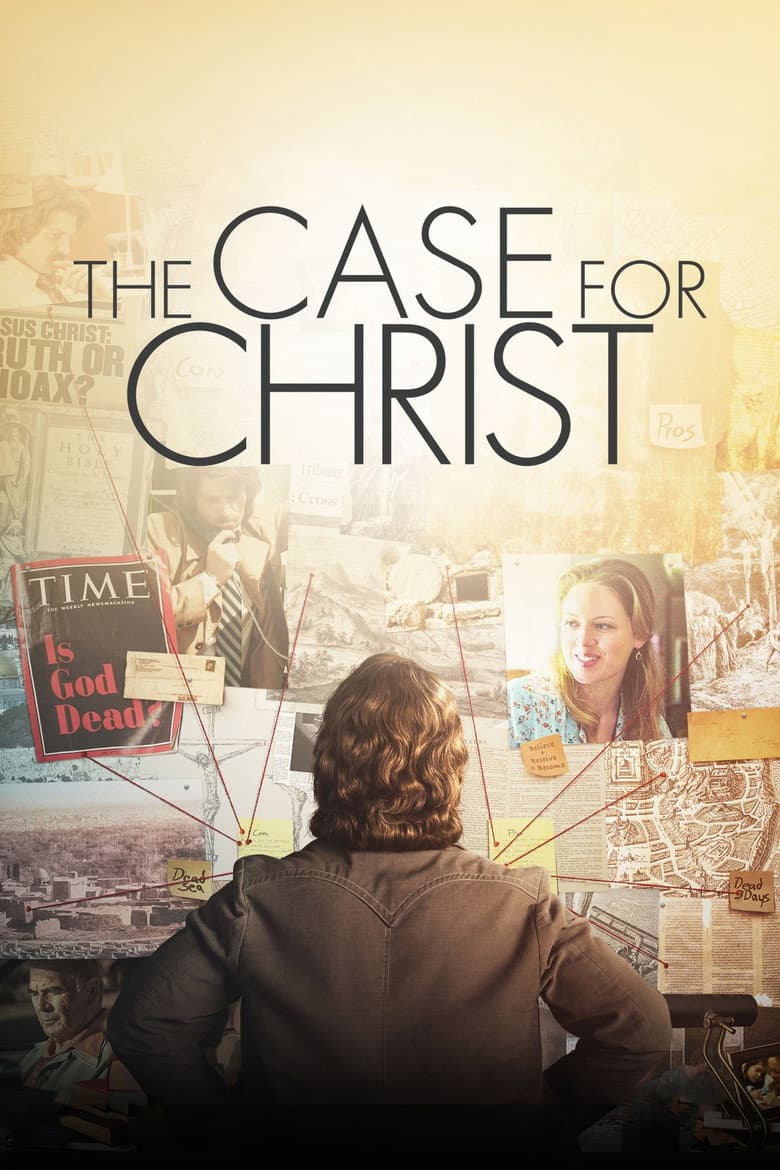
Lee Strobel is an award-winning Chicago newspaper reporter who calls himself an atheist. The story takes place in Chicago in 1980, when his wife Leslie begins attending church after a nurse saves their daughter from choking. Lee fears that Christianity will break up his family, so he uses his reporting skills to test the story of Jesus rising from the dead. The film has a serious and warm tone, with family drama, newsroom scenes, church life, and long talks about history and belief.
The film makes Christian belief the answer to Lee's marriage and work crisis. It presents prayer, the Bible, church friends, and the resurrection as true and life-changing. Lee begins as a proud skeptic who drinks too much and treats his wife's faith as a threat. He slowly learns to face his anger, listen to Leslie, and put truth and family ahead of his pride.
Community feedback
Was our 0% Woke rating accurate?
Breakdown
These are the editorial factors and ratings behind our score for The Case for Christ.
Woke representation / casting
Not present. The cast fits a 1980 Chicago drama about a white married couple, a newsroom, and a church community. The film does not build its main roles around a diversity message or identity statement.
0%
Woke political dialogue
Not present. The dialogue discusses atheism, Christianity, evidence, marriage, and personal belief. It does not push modern identity, DEI, gender-role, or activist ideas.
0%
Identity-driven story themes
Not present. The central theme is Lee's change from atheism to Christianity and the repair of his marriage. The story does not make race, gender, sexuality, or activist identity politics its focus.
0%
Western institutional / cultural critique
Not present. Lee's anger, drinking, and pride hurt his marriage, but the film treats these as personal flaws. The story affirms Christian faith, family, and marriage instead of attacking them through modern activist framing.
0%
Woke character or canon changes
Not relevant. The film dramatizes Lee Strobel's conversion and adapts his book. It does not change the race, gender, sexuality, or hero role of a known character or historical figure.
0%
Anti-woke backlash and complaints
Not present. Public debate focused on Christian preaching, religious evidence, and film quality. No clear complaint said that the movie pushed woke, DEI, identity-politics, or left-wing messaging.
0%
Creator track record context
Not present. The key creators are known mainly for Christian faith, family stories, personal redemption, and moral change. Their available history shows no sustained focus on identity-driven activism, DEI, or modern left-wing politics.
0%
Production
Movie · 2024
Inspired by the incredible true story of a hairdresser who single-handedly rallies an entire community to help a widowed father save the life of his critically ill young daughter.
Movie · 2023
Hirayama is content with his life as a toilet cleaner in Tokyo. Outside of his structured routine, he cherishes music on cassette tapes, books, and taking photos of trees.
Movie · 2023
British stockbroker Nicholas Winton visits Czechoslovakia in the 1930s and forms plans to assist in the rescue of Jewish children before the onset of World War II, in an operation…
Movie · 2018
A father and daughter live a perfect but mysterious existence in Forest Park, a beautiful nature reserve near Portland, Oregon, rarely making contact with the world.
Movie · 2016
Based on the life story of Mahendra Singh Dhoni, and his journey to being the world cup winning captain of the Indian cricket team.
Movie · 2021
The enthralling, against-all-odds story that transfixed the world in 2018: the daring rescue of twelve boys and their coach from deep inside a flooded cave in Northern Thailand.
Movie · 2018
Dan, a 21-year-old carefree boy is always surrounded by a bunch of friends and fellow hotel interns who feed off each other's everyday moments, their ups and downs.
Movie · 2024
19 year old Isaiah Wright lives for basketball and video games. A year out of high school, he has no job, no plans, and no idea how to be a man.
