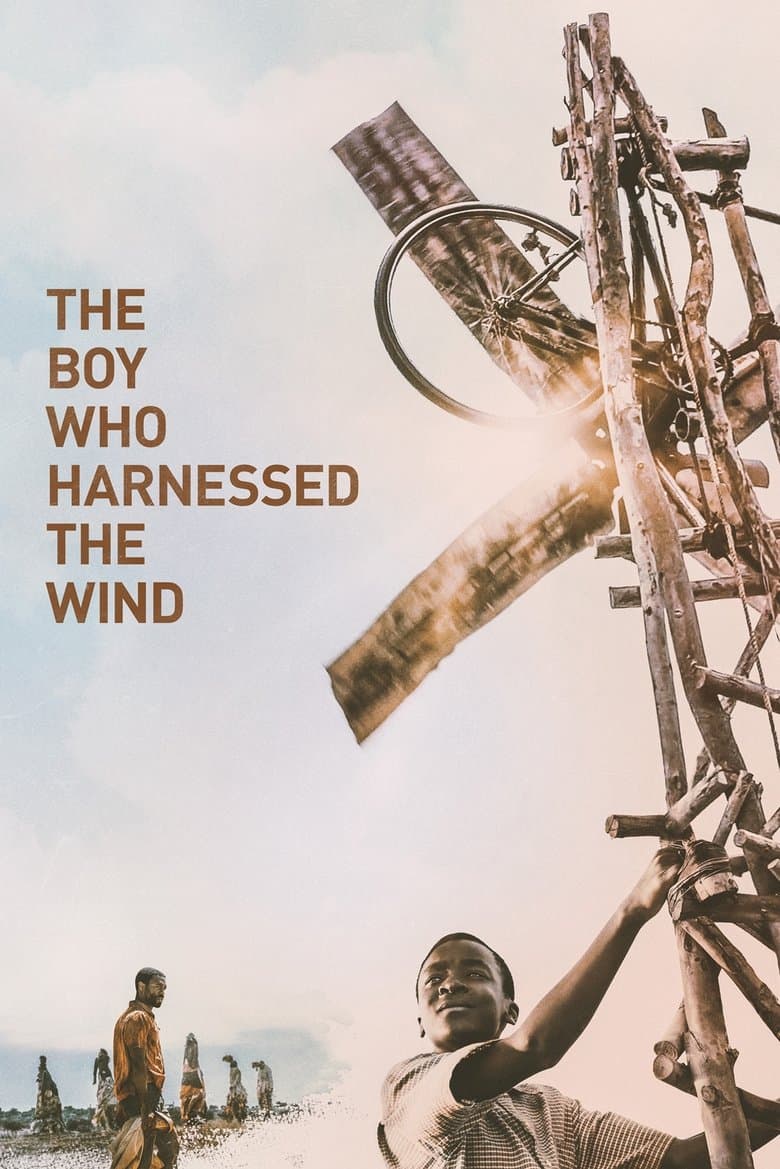
William Kamkwamba is a curious thirteen-year-old boy who lives with his farming family in rural Malawi in 2001. Floods, drought, rising grain prices, and hunger push the village toward famine, while William's family can no longer pay his school fees. William sneaks into the school library and uses a science book, scrap metal, and bicycle parts to build a windmill that can pump water for the fields. The film is serious and sad during the crisis, but it keeps a hopeful and family-focused tone as William earns his father's trust.
The clearest woke elements are the film's criticism of corrupt officials, land sellers, and food markets that leave poor families without help. The story also supports education, local self-reliance, clean wind power, and the idea that African communities should solve their own problems instead of waiting for outsiders. Annie's relationship and Agnes's support give the film a smaller message about women choosing their own future and resisting old family rules. These ideas appear more than once, but they stay beside the main father and son story rather than taking it over.
Community feedback
Was our 35% Woke rating accurate?
Breakdown
These are the editorial factors and ratings behind our score for The Boy Who Harnessed the Wind.
Woke representation / casting
Not present. The cast matches a rural Malawian setting, with African actors playing the real family and villagers. The film and interviews stress local language and authentic village life, not a diversity-first casting message.
0%
Woke political dialogue
The film ties rising grain prices and empty food stores to government failure and market pressure. The film shows officials beating a village chief after he speaks against the government. Trywell compares democracy to imported cassava that rots quickly. These lines recur around the famine, but they stay tied to Malawi's crisis instead of becoming a broad modern activist speech.
32%
Identity-driven story themes
The film gives Annie a continuing subplot about her secret relationship and her wish to choose her own future. Agnes supports her daughter's education and pushes back against family rules that limit women. The story also presents African villagers as able to solve their own crisis instead of waiting for outsiders to rescue them. These ideas are visible, but William's invention and his conflict with his father remain the main story.
28%
Western institutional / cultural critique
The film attacks government neglect, land deals, and a food market that leaves poor farmers without grain. The film shows old family rules about girls and marriage as barriers that should be challenged. The story favors education, local action, and wind power over waiting for officials or simply praying for rain. These critiques recur around the famine, but they remain tied to Malawi's setting and do not become a broad attack on Western culture.
30%
Woke character or canon changes
Not relevant. The film makes ordinary changes while adapting a memoir, including making the windmill's water pump central to the plot. No identity-driven change to William or the real events is clearly reported.
0%
Anti-woke backlash and complaints
Not present. Audience complaints focused on pacing, the water-pump logic, book-to-film changes, or Chichewa pronunciation. No credible anti-woke or right-leaning complaint about DEI, identity politics, or woke messaging was found.
0%
Creator track record context
Chiwetel Ejiofor has a cached score of 28 and a record of African and race-related stories and support for diversity in film. William Kamkwamba's cached score is 10 because his work is mainly about education, clean water, and sustainable farming. Producer Jeff Skoll has a cached score of 62 and Andrea Calderwood has 49 because their work includes strong social-issue and diversity-focused projects. Most other listed creators have low or modest cached scores, so this context is noticeable but not dominant in the film.
35%
Production
Movie · 2023
British stockbroker Nicholas Winton visits Czechoslovakia in the 1930s and forms plans to assist in the rescue of Jewish children before the onset of World War II, in an operation…
Movie · 2018
A father and daughter live a perfect but mysterious existence in Forest Park, a beautiful nature reserve near Portland, Oregon, rarely making contact with the world.
Movie · 2024
Inspired by the incredible true story of a hairdresser who single-handedly rallies an entire community to help a widowed father save the life of his critically ill young daughter.

Movie · 2023
Hirayama is content with his life as a toilet cleaner in Tokyo. Outside of his structured routine, he cherishes music on cassette tapes, books, and taking photos of trees.
Movie · 2021
The enthralling, against-all-odds story that transfixed the world in 2018: the daring rescue of twelve boys and their coach from deep inside a flooded cave in Northern Thailand.

Movie · 2016
Based on the life story of Mahendra Singh Dhoni, and his journey to being the world cup winning captain of the Indian cricket team.

Movie · 2019
A look at the Apollo 11 mission to land on the moon led by commander Neil Armstrong and pilot Buzz Aldrin.
Movie · 2018
Dan, a 21-year-old carefree boy is always surrounded by a bunch of friends and fellow hotel interns who feed off each other's everyday moments, their ups and downs.
