Movie review
May 10, 2018 · 95 min · NR · Comedy · Crime · Mystery · Action · Thriller · Drama
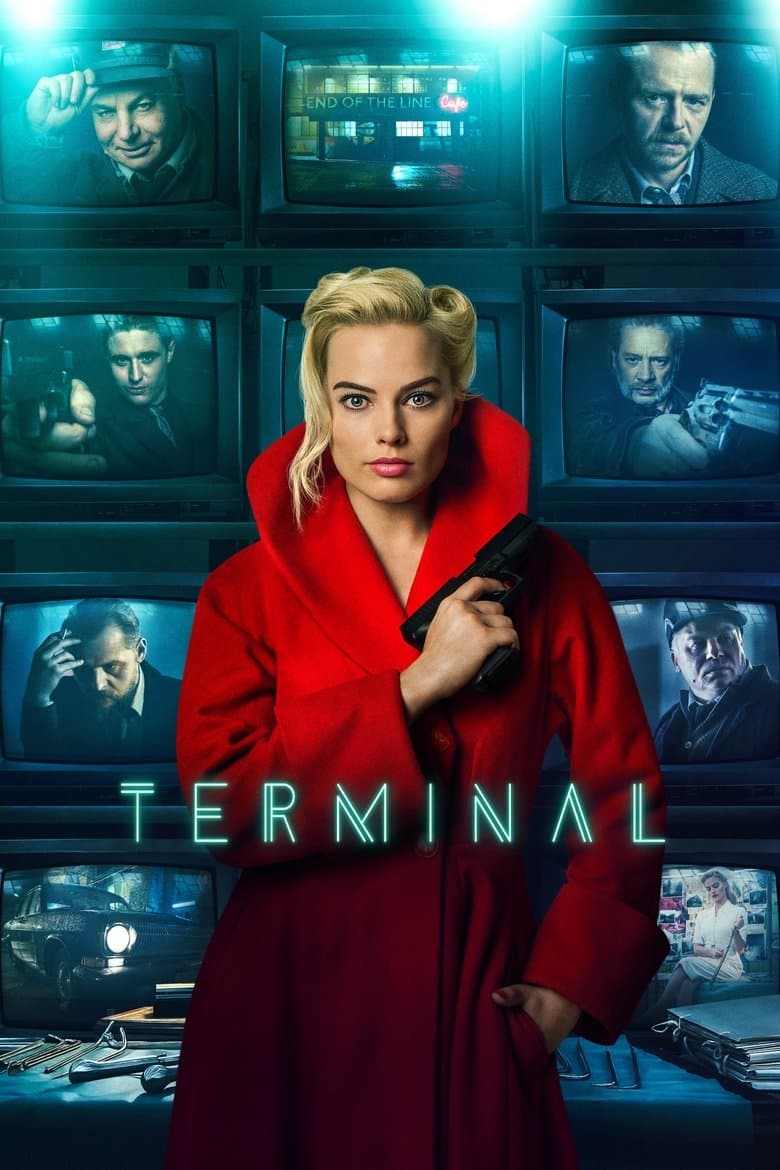
Terminal follows Annie, a waitress and secret hit woman who works in a strange train station at night. She toys with two hired killers and a dying English teacher while a hidden crime boss watches them. The story later reveals that Annie and her twin Bonnie are hunting the men who destroyed their family. The film uses neon lights, dark jokes, violence, and Alice in Wonderland images to create a grim and dramatic mood.
The strongest woke element is the film’s identity-driven story about women taking control through revenge. Annie and Bonnie are the smartest and most powerful players, while several men are shown as abusers, sexual predators, fools, or targets. Annie uses a waitress and stripper image to play on what men want, and the story presents that control as part of her victory. The movie does not build a broad political program, but its message about female power, male abuse, and revenge remains clear throughout much of the plot.
Community feedback
Was our 52% Woke rating accurate?
Breakdown
These are the editorial factors and ratings behind our score for Terminal.
Woke representation / casting
Annie and Bonnie are placed at the center of a story usually led by male crime characters. The film makes the women the skilled killers while the men become targets or people they outsmart. Robbie’s public framing of Annie’s use of the male gaze and control over men adds an identity signal. The mostly white crime cast does not show a broad diversity design.
30%
Woke political dialogue
Annie tells the men that they are predictable and presents herself as the surprise they never see coming. The final speech says the twins have reached the edge of their revenge and calls their violence justice. The film has no sustained speech about DEI or current politics.
24%
Identity-driven story themes
The film centers on Annie and Bonnie taking control after abuse by men destroys their family. The twins repeatedly manipulate, defeat, and kill male criminals and an abusive teacher. The story treats their revenge as earned justice and makes female control the key answer to male violence. This message drives the plot and the final reveal, even though the film is also a crime thriller.
60%
Western institutional / cultural critique
The film presents a father, a teacher, and priests and teachers at an orphanage as sources of abuse and control. It also shows male criminals treating women as objects before the women turn that power against them. The church and family are tied to the twins’ pain rather than offering safety or moral help. The movie does not make a wider argument about modern Western society, so this criticism is important but limited.
30%
Woke character or canon changes
Not relevant. Terminal is an original crime story, not an adaptation of a known character, book, or real event. Its Alice in Wonderland references do not change an established canon.
0%
Anti-woke backlash and complaints
Not present. The separate X search found no anti-woke reaction. Published reviews criticized the plot, pacing, style, or handling of female empowerment, but they did not accuse the film of pushing woke, DEI, or identity politics.
0%
Creator track record context
Margot Robbie and LuckyChap have a clear focus on female-led stories and more chances for women behind the camera. Robbie described Terminal as a classic female revenge story and linked its timing to the #MeToo period. Vaughn Stein has no strong public activist record, and most other producers have commercial or low-profile backgrounds. This gives the title a moderate creator context.
42%
Production
Movie · 2020
Markus returns home to care for his daughter when his wife dies in a tragic train accident. However, when a survivor of the wreck surfaces and claims foul play, Markus suspects…
Movie · 2025
A former teenage getaway driver gets dragged back into her unsavory past when a former employer offers her a chance to save the life of her chronically unreliable ex-boyfriend.
Movie · 2017
Trying to reverse a family curse, brothers Jimmy and Clyde Logan set out to execute an elaborate robbery during the legendary Coca-Cola 600 race at the Charlotte Motor Speedway.
Movie · 2017
The world’s top bodyguard gets a new client, a hitman who must testify at the International Court of Justice.
Movie · 2016
In the aftermath of an unspeakable act of terror, Police Sergeant Tommy Saunders joins courageous survivors, first responders and investigators in a race against the clock to hunt…

Movie · 2016
In the fourth installment of the fighting franchise, Boyka is shooting for the big leagues when an accidental death in the ring makes him question everything he stands for.

Movie · 2018
Max and Annie's weekly game night gets kicked up a notch when Max's brother Brooks arranges a murder mystery party -- complete with fake thugs and federal agents.
Movie · 2023
A tormented father witnesses his young son die when caught in a gang's crossfire on Christmas Eve. While recovering from a wound that costs him his voice, he makes vengeance his…
