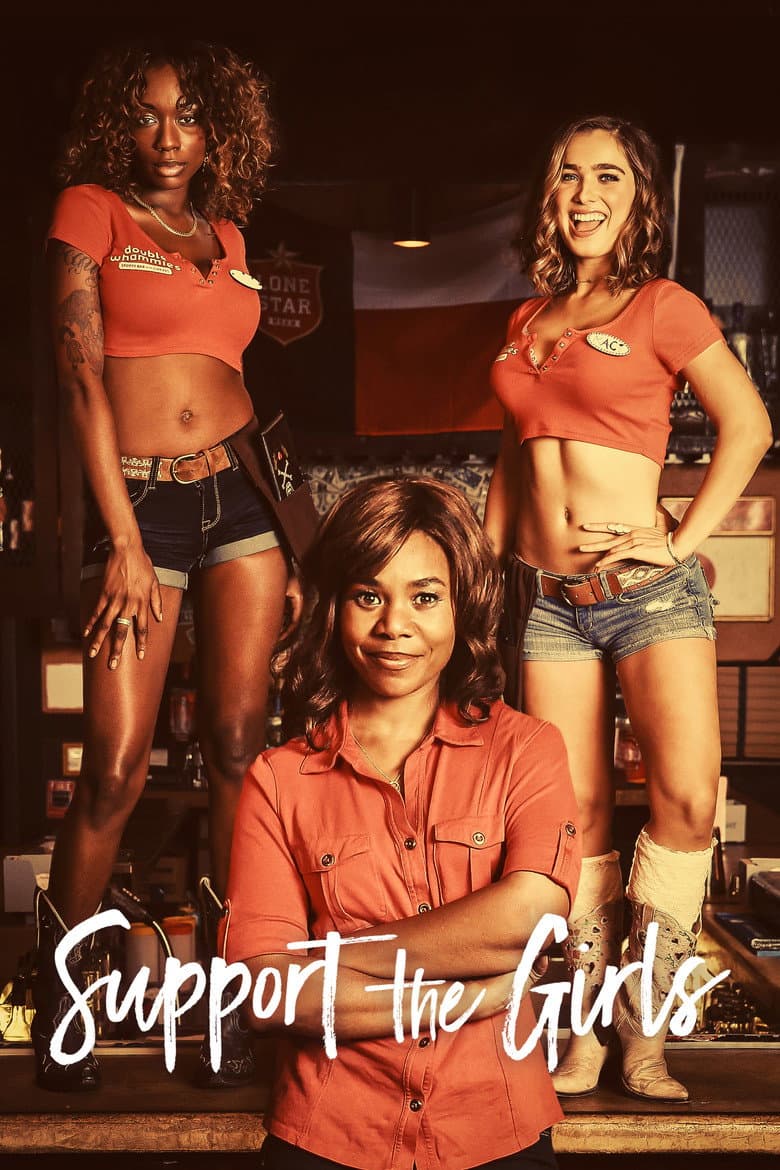
Lisa Conroy manages Double Whammies, a Texas sports bar where waitresses wear revealing uniforms and keep male customers happy. She treats the staff like family and tries to protect them while dealing with a trapped burglar, a worker's family crisis, an angry owner, and trouble in her marriage. The story follows one long and messy day as Lisa tries to keep the bar open and everyone safe. The tone mixes dry comedy with stress, sadness, and small moments of kindness.
The movie makes women supporting each other its main message. The women face sexual comments, unwanted touching, body shaming, an abusive boyfriend, low pay, and the pressure to smile through all of it. Lisa is the skilled and caring center of the workplace, while several men act selfish, weak, or threatening. The film also includes a race-based staffing rule that the owner calls diversity, plus a lesbian regular and a mixed group of women, so gender, race, and sexuality are visible parts of the story.
Community feedback
Was our 56% Woke rating accurate?
Breakdown
These are the editorial factors and ratings behind our score for Support the Girls.
Woke representation / casting
The main staff forms a visibly mixed group of women led by Regina Hall's Black manager. The owner uses a “Rainbow Guideline” that controls the racial mix of each shift and calls the rule diversity. The film makes race and gender part of the work rules instead of leaving them in the background.
45%
Woke political dialogue
The film gives a substantial workplace argument about racial hiring, diversity, and discrimination. The owner and Lisa directly discuss whether the business treats workers fairly. The women also speak about unwanted touching, sexual harassment, and the rules that control their jobs.
38%
Identity-driven story themes
The story centers on women supporting each other in a job that sells their looks to male customers. The women repeatedly protect coworkers from harassment, body shaming, abuse, and unfair treatment. Lisa remains the most skilled and caring person in the workplace, while several men act selfish, weak, or threatening. The film gives Lisa flaws and does not make her an unbeatable hero.
57%
Western institutional / cultural critique
The bar is built around men paying to look at women and receive friendly attention. The owner treats workers as a product and uses a race-based staffing policy. The rival ManCave chain shows how a larger company can repeat the same system in a more organized way. The story links male entitlement with harassment and poor treatment, but it does not attack Christianity or Western culture as a whole.
47%
Woke character or canon changes
Not relevant. The film is an original story about a fictional sports bar. The movie does not change an established character, a known story, or a real historical figure.
0%
Anti-woke backlash and complaints
Not present. Public posts and reviews included praise, slow-film complaints, and comments about the gender themes, but no meaningful anti-woke complaint was found. The supplied X research also reports no anti-woke reaction.
0%
Creator track record context
Andrew Bujalski has repeatedly centered fully realized female characters and has described woman-centered stories as a recurring priority. His public record shows a mild female-focused pattern, not a strong record of DEI or activist politics. The producers have mostly low or mild scores, with liberal or inclusion-related work but little evidence of identity activism.
25%
Production
Movie · 2019
The story of Rudy Ray Moore, who created the iconic big screen pimp character Dolemite in the 1970s.

Movie · 2019
A young Scottish singer, Rose-Lynn Harlan, dreams of making it as a country artist in Nashville after being released from prison.

Movie · 2024
Emotions run high when three estranged sisters reunite in a cramped New York City apartment to watch over their ailing father during his final days.
Movie · 2020
Scott has been a case of arrested development ever since his firefighter father died when he was seven. He's now reached his mid-20s having achieved little, chasing a dream of…

Movie · 2018
In 1990s Los Angeles, a 13-year-old spends his summer navigating between a troubled home life and a crew of new friends he meets at a skate shop.

Movie · 2016
Two high school girls are best friends until one dates the other's older brother, who is totally his sister's nemesis.
Movie · 2024
In 2008, during the last month of summer before high school begins, an impressionable 13-year-old Taiwanese American boy learns what his family can't teach him: how to skate, how…
Movie · 2018
Tony Lip, a bouncer in 1962, is hired to drive pianist Don Shirley on a tour through the Deep South in the days when African Americans, forced to find alternate accommodations and…
