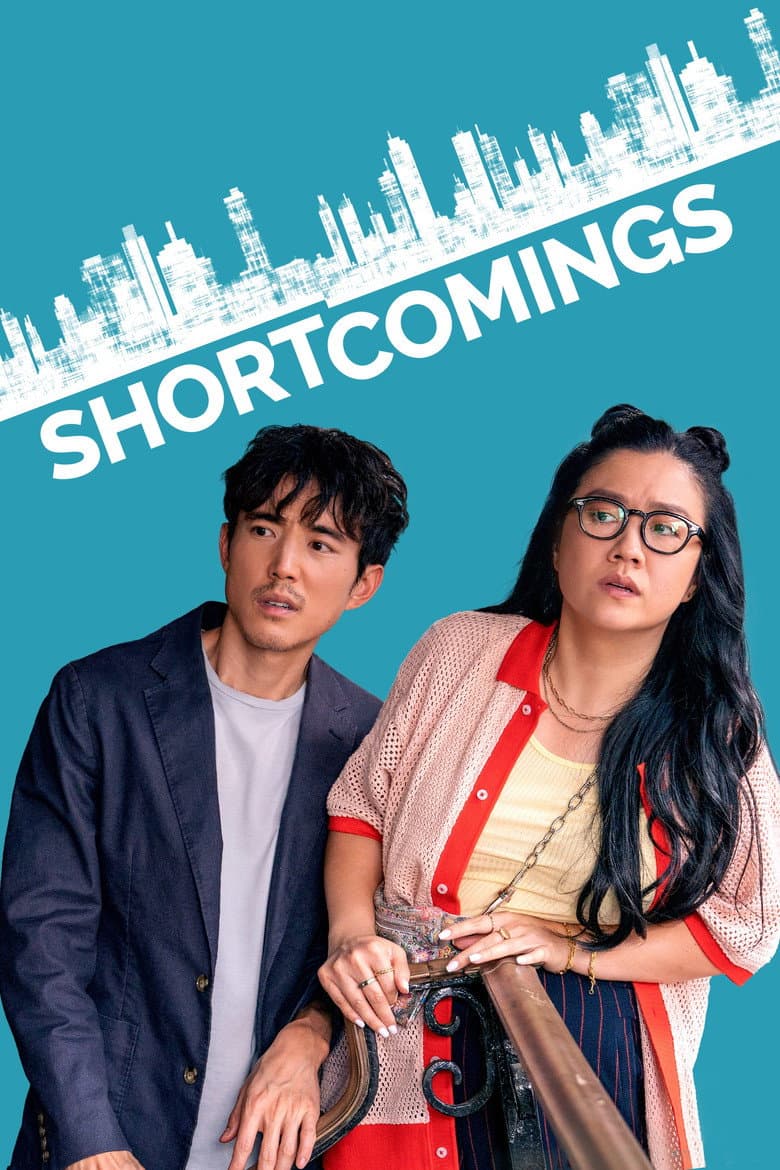
Ben Tanaka manages a small art house movie theater in Berkeley while trying to become a filmmaker. He is sharp, proud, and often cruel, and his long relationship with Miko breaks down after she leaves for a three-month internship in New York. Ben then dates other women and spends time with Alice, his outspoken lesbian best friend, while he tries to decide what he wants. The story moves from the Bay Area to New York and uses dry jokes, awkward dates, and sad moments to show a man who keeps making his own problems.
The movie puts Asian American identity at the center of Ben's work, friendships, dating life, and arguments about movies. Its opening scene debates whether a glossy Asian-led film deserves praise because it gives people representation, and later scenes question white dating preferences, race-based attraction, and double standards. Alice's lesbian relationships and her guarded life with her Korean family add a clear queer storyline. These ideas are repeated through the film, but the story mainly uses them to expose Ben's selfishness rather than to deliver a broad political speech.
Community feedback
Was our 62% Woke rating accurate?
Breakdown
These are the editorial factors and ratings behind our score for Shortcomings.
Woke representation / casting
The main cast is built around Asian American characters, and the film's public pitch puts that identity in view. Ben is Japanese American in the source story, while Justin H. Min is Korean American, so the lead does not fully match the character's background. The Bay Area setting and the source story make the wider Asian casting fit the world. Most choices follow the story's Asian American setting rather than a broad diversity showcase.
34%
Woke political dialogue
The opening argument asks whether a shallow Asian-led film deserves praise for representation. Ben also calls the film a capitalist fantasy, while Miko argues that Asian-led movies can open doors. Later talks compare his attraction to white women with white men's interest in Asian women. These ideas return in breakups, dates, and fights, but the movie does not stop for a long activist speech.
44%
Identity-driven story themes
Asian American identity shapes Ben's work, friendships, dating choices, and fear of how others see him. The film repeatedly links romance to race, white beauty standards, and the idea of treating a partner as a racial type. Alice's lesbian relationships and her choice to hide them from her Korean family add a real queer subplot. These themes drive the main conflicts, but the movie remains a character comedy about Ben's selfish behavior rather than a queer-centered story.
58%
Western institutional / cultural critique
The film repeatedly shows Ben as self-important, possessive, and careless with women. Miko, Alice, and Sasha challenge his excuses and refuse to treat his behavior as noble. The opening scene also questions Hollywood's habit of praising a shallow story because it has Asian faces. The criticism stays tied to Ben's relationships and film talk, so it is not a broad attack on Western institutions.
35%
Woke character or canon changes
Not relevant. The film keeps the core identities from Adrian Tomine's graphic novel, including a Japanese American lead and a lesbian Asian American friend. The noted updates are modern details such as online porn, not identity changes.
0%
Anti-woke backlash and complaints
Niche Reddit threads criticized the movie for portraying Asian men as self-hating, obsessed with white women, or unable to discuss dating racism fairly. Some posts treated the story as an identity-driven message that blames Asian men while excusing white male interest in Asian women. Mainstream coverage did not show a large anti-woke campaign against the film. The backlash was limited and mixed with complaints about Ben and the film's quality.
25%
Creator track record context
Randall Park's cached score is 33 and reflects a record of Asian American representation work, not a strong activist profile. Adrian Tomine's cached score is 52 because his stories often examine Asian American identity and race, though he is not known as a public activist. Several producers have backed identity-focused independent films, while many others have little or no such record. This gives the project a moderate creator track record context signal.
40%
Production

Movie · 2016
A young woman struggles to move on with her life after the death of her husband, an acclaimed folk singer, when a brash New York writer forces her to confront her loss and the…
Movie · 2021
Resolving to achieve professional success without compromising her ethics, Lucy embarks on a ruthless game of one-upmanship against cold and efficient nemesis Joshua, a rivalry…
Movie · 2023
College freshman Abby tries to distance herself from her dark past while resisting her attraction to bad boy Travis.
Movie · 2016
A sex therapist goes through puberty after the successful removal of a benign tumor resting against his pituitary gland.
Movie · 2019
Charlie suffers from a serious disease that causes acute narcolepsy whenever he is happy. Although he develops a variety of techniques to deny himself pleasure and deal with his…
Movie · 2021
The story of Gary Valentine and Alana Kane growing up, running around and going through the treacherous navigation of first love in the San Fernando Valley, 1973.
Movie · 2023
The dramatic comedy is based on the true story of writer and pinball wizard Roger Sharpe, chronicling his journey to overturn New York City’s 35-year ban on pinball.
Movie · 2022
Divorced couple Georgia and David find themselves on a shared mission: they team up and travel to Bali to stop their daughter Lily from making the same mistake they once made 25…
