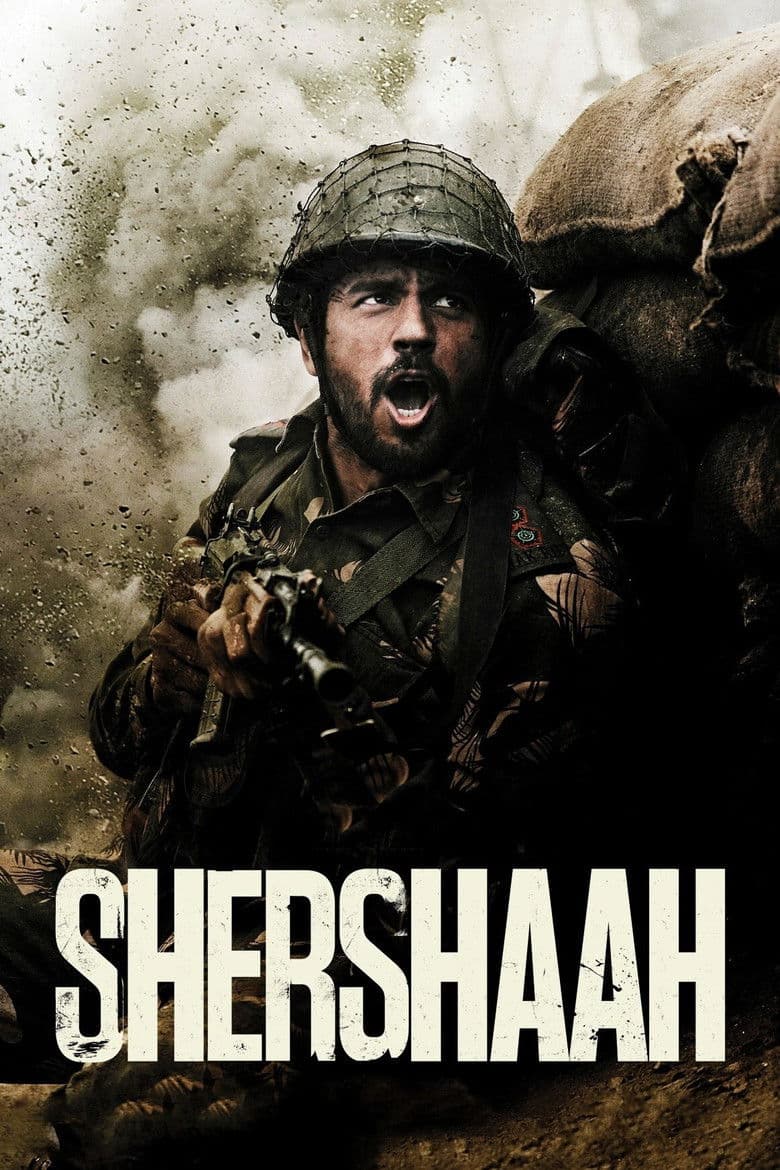
Shershaah follows Captain Vikram Batra, a young Indian Army officer who serves in Jammu and Kashmir. He gives up a better-paying merchant navy job because he still wants to join the Army. When the Kargil War begins in 1999, he leads soldiers up steep mountain posts against Pakistani forces. The film uses a warm romantic tone in its college scenes and a serious, emotional tone in its battle scenes.
The film gives Dimple Cheema a clear voice when her father rejects Vikram because their castes differ. Dimple refuses a marriage chosen for her and says that she will marry Vikram or no one, so personal choice challenges family control. A Kashmiri civilian also says that the army treats every Kashmiri like a terrorist and has made life worse. These moments add a small identity and army criticism thread, but the story mainly celebrates military courage, loyalty, sacrifice, friendship, and love.
Community feedback
Was our 24% Woke rating accurate?
Breakdown
These are the editorial factors and ratings behind our score for Shershaah.
Woke representation / casting
Not present. The film uses Indian actors for Indian soldiers, local Kashmiri people, and a Sikh woman in a real Indian setting. The casting is tied to the people and place in the story, not a diversity message.
0%
Woke political dialogue
A Kashmiri civilian says the army sees a terrorist in every Kashmiri and has made local life worse. The line gives a brief activist-style criticism of military treatment of civilians. Vikram answers that the army is there to protect people, and the film soon returns to its patriotic war story.
18%
Identity-driven story themes
Dimple challenges her father when he rejects Vikram because their castes differ. Dimple refuses a marriage chosen for her and says she will marry Vikram or no one. The film presents her choice as stronger than family control. This remains a short romance thread beside Vikram’s military story.
28%
Western institutional / cultural critique
Not present. The film does not make Western institutions, Christianity, or traditional male roles a repeated target. Dimple’s brief dispute with her father is a personal marriage conflict inside the Indian war story.
0%
Woke character or canon changes
Not relevant. The film dramatizes a real soldier’s life and keeps the main identities and hero role tied to Captain Vikram Batra and Dimple Cheema. No race, gender, sexuality, or identity change to a known figure drives the story.
0%
Anti-woke backlash and complaints
Not present. No sustained complaint was found that the film pushes woke, DEI, or identity-politics content. The separate X research found no anti-woke complaints, while right-leaning praise called it patriotic and not woke. Other complaints focused on war framing, accuracy, and nationalism, not woke content.
0%
Creator track record context
Karan Johar and Somen Mishra have broader careers that include gender, queer, caste, class, and other social themes. Vishnu Varadhan, Sandeep Srivastava, and Jogi Malang have no strong activist record. The other producers also have little public evidence of identity-driven work. This gives the title some background context, but it only weakly matches the film’s patriotic war story.
26%
Production
Movie · 2016
The Coast Guard makes a daring rescue attempt off the coast of Cape Cod after a pair of oil tankers are destroyed during a blizzard in 1952.

Movie · 2021
Jim Hanson’s quiet life is suddenly disturbed by two people crossing the US/Mexico border – a woman and her young son – desperate to flee a Mexican cartel.

Movie · 2017
An American sniper and his spotter engage in a deadly cat-and-mouse game with an Iraqi sniper.
Movie · 2016
An American Ambassador is killed during an attack at a U.S. compound in Libya as a security team struggles to make sense out of the chaos.
Movie · 2022
Shiva, a tribal vagabond lives with his mother in hamlet, stays away from the traditional Daivaradhane and Bhoota Kola legacy due to an unforgettable childhood incident.

Movie · 2018
A logger defends his family from a group of dangerous drug runners.

Movie · 2025
A broker of lucrative payoffs between corrupt corporations and the individuals who threaten them breaks his own rules when a new client seeks his protection to stay alive.

Movie · 2018
A geologist races against time to save his estranged wife and two children when a devastating earthquake strikes Oslo, Norway.
