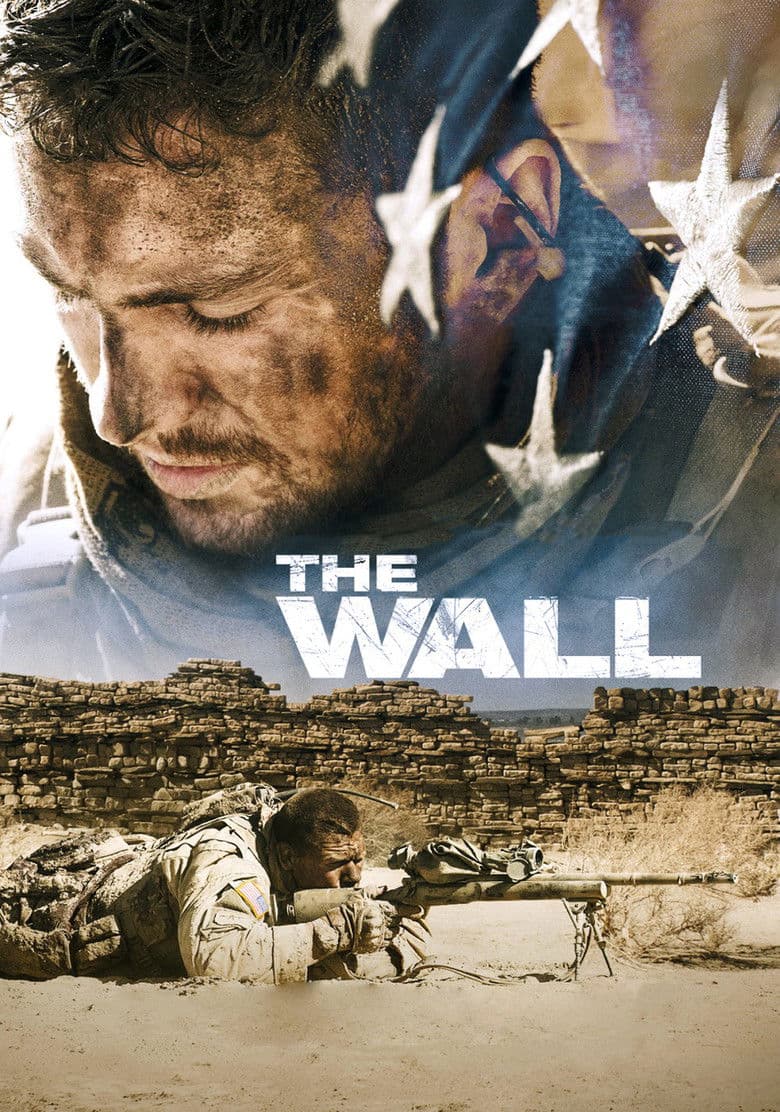
The Wall follows Sergeant Allen “Ize” Isaac, an American sniper trapped in the Iraqi desert in 2007. He hides behind a weak stone wall after he and Staff Sergeant Shane Matthews are attacked at a ruined pipeline work site. Isaac is hurt, short of water, and cut off from help. An unseen Iraqi sniper named Juba speaks through the radio and turns the rescue attempt into a deadly mind game. The movie is short, tense, bleak, and built around waiting, fear, pain, and sudden violence.
The movie shows the Iraq War as a costly and confusing fight rather than a clear victory. Juba claims that American forces killed workers and damaged an important building, and he challenges Isaac about why the soldiers came to Iraq. Isaac tries to use his training and the radio to survive while Juba uses stories, threats, and false promises to control the conversation. The film questions military reports, rescue plans, and the idea that technology can control a war. These ideas stay inside the survival duel, which ends with a grim reminder that the violence can continue.
Community feedback
Was our 4% Woke rating accurate?
Breakdown
These are the editorial factors and ratings behind our score for The Wall.
Woke representation / casting
Not present. The main visible roles are two American soldiers played by white actors, while the Iraqi sniper is heard over the radio and voiced by Laith Nakli. The casting fits the story and does not show a diversity-first pattern.
0%
Woke political dialogue
Not present. The soldiers and Juba discuss the Iraq War, military orders, and the dead. The film does not use modern identity politics, DEI, or activist language.
0%
Identity-driven story themes
Not present. The story centers on survival, fear, and the cost of combat. It does not build its plot around race, sex, gender, sexuality, or group identity.
0%
Western institutional / cultural critique
Not present. Juba questions the war and nation-building, but the film does not turn that conflict into a modern critique of patriarchy, whiteness, capitalism, Christianity, or traditional social roles.
0%
Woke character or canon changes
Not relevant. The film is an original war story rather than an adaptation of established characters or real historical figures. No identity-driven canon change is involved.
0%
Anti-woke backlash and complaints
Not present. The supplied X pass found no complaints that the film pushes woke, DEI, identity politics, or left-wing messaging. Wider reviews and audience comments focused on war themes, tactics, and the ending.
0%
Creator track record context
Doug Liman has a mild left-leaning political context from Fair Game and a documentary about the FBI review of Brett Kavanaugh. The stored profiles do not show a strong pattern of identity politics or DEI work among the writer and producers. Interviews for this film focus on survival, realism, veterans, and the design of the wall.
20%
Production
Movie · 2025
A broker of lucrative payoffs between corrupt corporations and the individuals who threaten them breaks his own rules when a new client seeks his protection to stay alive.
Movie · 2016
An American Ambassador is killed during an attack at a U.S. compound in Libya as a security team struggles to make sense out of the chaos.
Movie · 2016
In the fourth installment of the fighting franchise, Boyka is shooting for the big leagues when an accidental death in the ring makes him question everything he stands for.
Movie · 2017
A fast-talking lawyer transforms his body and takes a vow of silence, not to be broken until he finds out who killed his wife and daughter and has his revenge.
Movie · 2017
London, England, April 1980. Six terrorists assault the Embassy of Iran and take hostages. For six days, tense negotiations are held while the authorities decide whether a…
Movie · 2023
A tormented father witnesses his young son die when caught in a gang's crossfire on Christmas Eve. While recovering from a wound that costs him his voice, he makes vengeance his…
Movie · 2017
Rohan is a kind, happy young man who has been blind since birth and works as a voice-over artist for a living.
Movie · 2022
Shiva, a tribal vagabond lives with his mother in hamlet, stays away from the traditional Daivaradhane and Bhoota Kola legacy due to an unforgettable childhood incident.
