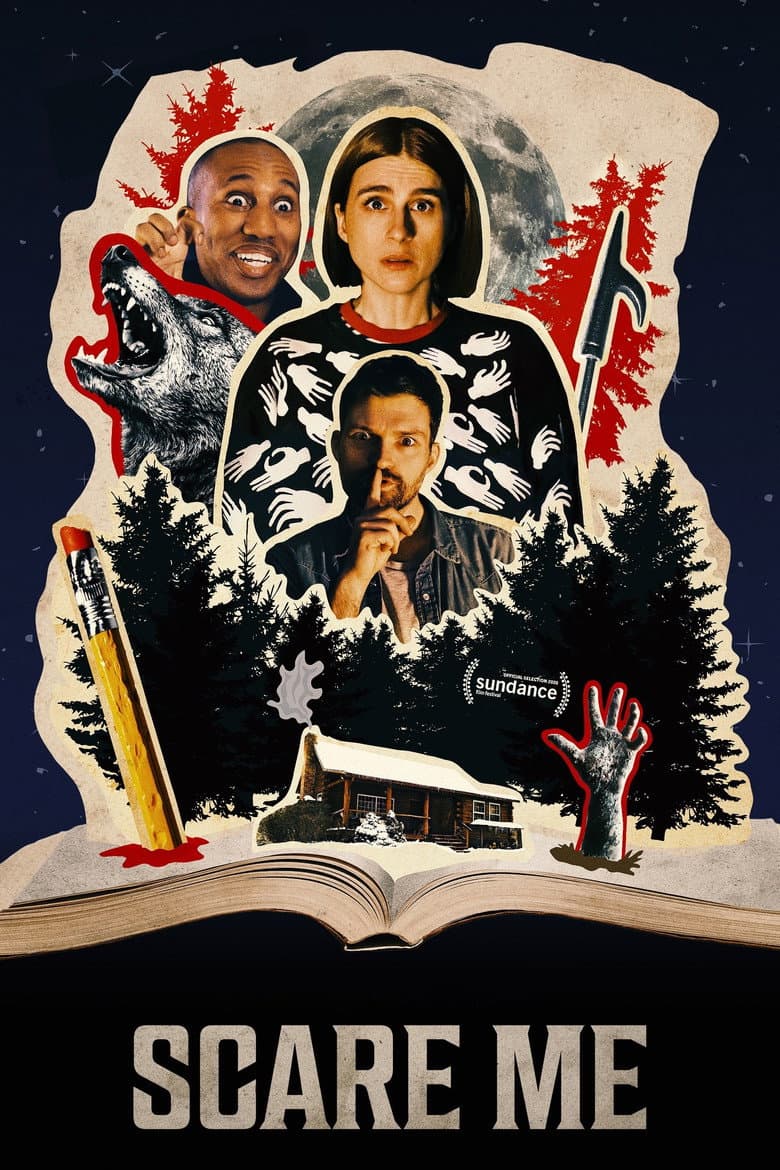
Fred is a struggling writer who rents a cabin in the Catskills to work on a horror story. A power outage brings his neighbor Fanny, a successful horror novelist, to his door. They drink, take turns telling scary stories, and later invite a pizza delivery man into the game. The funny contest grows tense as Fred’s jealousy and fear of failure turn the cabin into a real danger.
Scare Me gives its clearest woke elements to its gender story. Fanny is smarter, more successful, and a better storyteller than Fred, while Fred is shown as a privileged man who cannot accept being outdone by a woman. The movie uses lines about white male heroes, male entitlement, gender politics, and toxic masculinity during the story game. These ideas drive the final threat, when Fred’s wounded pride turns his playacting into a frightening attack.
Community feedback
Was our 65% Woke rating accurate?
Breakdown
These are the editorial factors and ratings behind our score for Scare Me.
Woke representation / casting
Fanny is the film’s most successful and capable main character, while Fred is the less skilled male lead. Carlo is a black pizza worker in a small modern-day cast, but his role is brief and the film does not frame the casting as a diversity goal. The gender contrast is noticeable, yet the casting does not show a broad representation-first pattern.
18%
Woke political dialogue
Fanny tells Fred that there are too many white guy protagonists and pushes him to change his lead to a girl. Fanny explains that her novel is about gender politics and men clinging to their mothers. Fred and Fanny repeatedly argue about who deserves praise and power. These ideas return during the story game, but the film presents them through jokes and tense arguments.
48%
Identity-driven story themes
Fanny repeatedly leads the game and proves better at writing, acting, and inventing stories than Fred. Fred treats her success as an insult and grows angry when a woman outshines him. The film connects his jealousy to male entitlement, toxic masculinity, and the fear women face when an angry man stops pretending to play. Fred’s collapse and death make this gender message part of the main horror plot.
68%
Western institutional / cultural critique
The film presents Fred as a privileged white man who expects praise before he has done the work. Fanny and the story expose his jealousy, sexism, and anger when a woman succeeds. The film links his loss of control to a gender conflict that echoes #MeToo concerns. The critique targets personal behavior and male culture, while it does not attack capitalism, religion, or Western institutions as a whole.
50%
Woke character or canon changes
Not relevant. The movie is an original story about fictional writers. It contains no established characters, source material, or real historical figures that receive identity-related changes.
0%
Anti-woke backlash and complaints
Not present. Public reaction mainly discussed the pacing, ending, acting, and whether Fanny was too harsh. The supplied X research and broader search found no clear anti-woke, anti-DEI, or anti-left complaint about the film.
0%
Creator track record context
Josh Ruben has a cached score of 48/100 and has linked the film to #MeToo, male allyship, privilege, and male resentment of successful women. Daniel Powell and Alex Bach have cached scores of 55/100 and 59/100 and have backed progressive and diverse projects. The other cached producers have low or unclear activist records. This gives the film meaningful creator-context support, but the main writer and director’s record is limited rather than dominant.
43%
Production
Movie · 2026
Moments after surviving an all-out attack from the Le Domas family, Grace discovers she’s reached the next level of the nightmarish game — and this time with her estranged sister…
Movie · 2024
A family's vacation to a remote getaway takes an unexpected turn when they discover the present-day implications of the island's cannibalistic past.
Movie · 2022
A disgraced internet personality attempts to win back his followers by livestreaming one night alone in a haunted house.

Movie · 2022
Legendary rock band Foo Fighters move into an Encino mansion steeped in grisly rock and roll history to record their much anticipated 10th album.
Movie · 2016
Rob is grief-stricken following the death of his girlfriend Nina, but after a failed suicide attempt he begins to move on from the tragedy and falls for his colleague Holly.

Movie · 2024
A live broadcast of a late-night talk show in 1977 goes horribly wrong, unleashing evil into the nation's living rooms.
Movie · 2026
After breaking the mysterious "One Wish Willow" to win his crush's heart, a hopeless romantic finds himself getting exactly what he asked for but soon discovers that some desires…
Movie · 2023
Emily Young, a senior, wants to be elected as her sorority's president. She adopts a cute sloth, thinking it can become the new mascot and help her win, until a string of…
