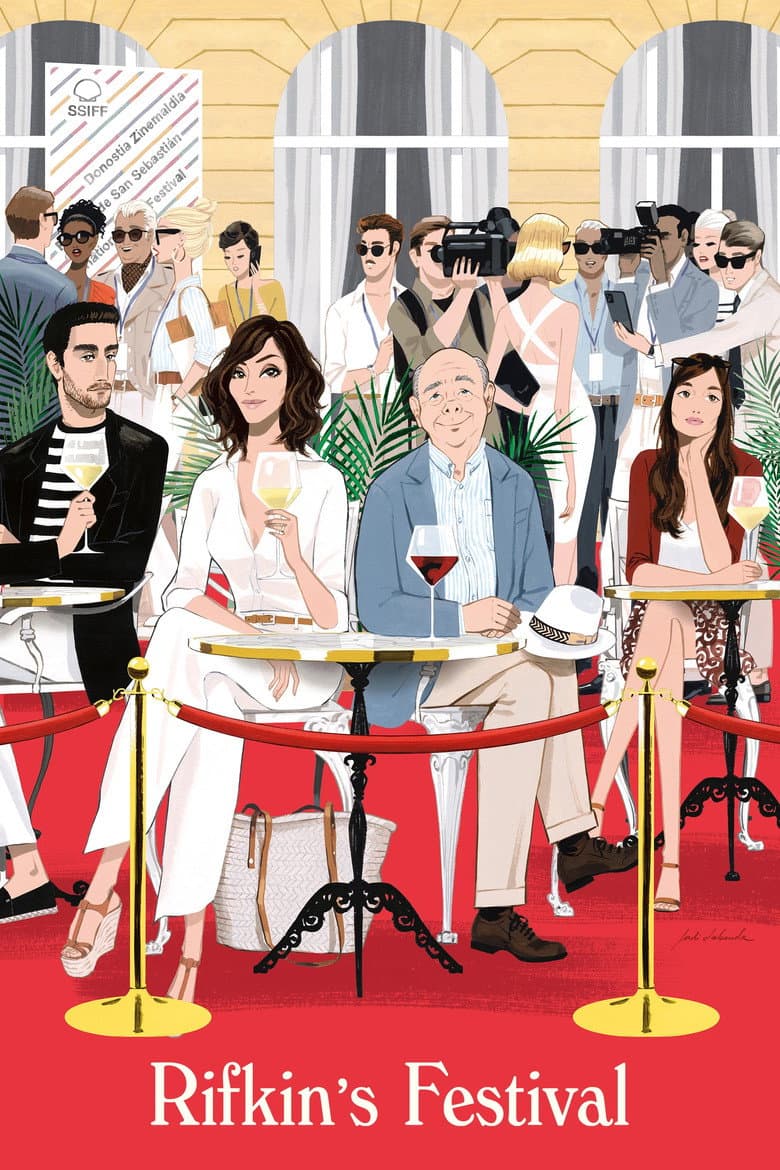
Mort Rifkin is a retired film teacher and a failed writer who thinks every great book and movie must answer the biggest questions about life. He travels from New York to San Sebastian with Sue, his wife, who works in film publicity at the local festival. Mort grows jealous when Sue becomes close to Philippe, a young French director whose popular anti-war movie Mort sees as shallow. The trip becomes a dreamy and funny crisis about marriage, aging, death, and the gap between real life and the movies Mort loves.
Sue wants a new life with Philippe after years of carrying Mort through his gloom, while Mort turns to Jo, a Spanish doctor trapped with Paco, a cheating painter who expects her to care for him. Jo understands Mort because they share a love of older films and both feel lonely in their marriages. The story makes the women more practical and self-directed than the men, and it shows male jealousy, selfishness, and entitlement as causes of pain. Those ideas support the romantic conflict, but the film spends most of its time on personal choices, old movie jokes, black-and-white dream scenes, and Mort's search for a reason to keep living.
Community feedback
Was our 30% Woke rating accurate?
Breakdown
These are the editorial factors and ratings behind our score for Rifkin's Festival.
Woke representation / casting
Not present. The film uses American, French, and Spanish characters because the story takes place at an international film festival. The film does not frame the cast as a diversity statement or make identity a main subject.
0%
Woke political dialogue
Philippe praises women who achieve and calls their energy sexy. Philippe also says that women show feelings while men often see feelings as weakness. The film places these lines inside a short flirtation scene. The gender talk is brief and does not guide the whole story.
25%
Identity-driven story themes
Sue works as a successful film publicist and chooses a new life when her marriage no longer works. Jo works as a doctor and struggles with a husband who cheats and expects her to care for him. The story repeatedly makes the men needy or selfish while the women make clearer choices. These gender roles matter to the romance, but they do not become a wider activist message.
30%
Western institutional / cultural critique
Paco treats his status as an artist as an excuse to cheat and make Jo care for him. Mort acts jealous and controlling, and his wife says she has grown tired of carrying him. The story treats this male selfishness as a reason the marriages fail. The film does not turn that criticism into an attack on religion, capitalism, family life, or Western institutions.
28%
Woke character or canon changes
Not relevant. The film is an original story about Mort Rifkin and does not change known characters, canon, or real historical people.
0%
Anti-woke backlash and complaints
Not present. Reported debate focused on Woody Allen’s personal allegations, #MeToo-era boycotts, and local tourism concerns. No clear anti-woke complaint says the film pushes DEI, identity politics, or left-wing messaging.
0%
Creator track record context
Woody Allen’s public record is mainly secular New York comedy and relationship stories, with little DEI or identity activism. Lorenzo Mieli and Mario Gianani have backed queer, gender-identity, or women-centered films, and Lorenzo Gangarossa has similar female-centered credits. The other listed producers have little public record of identity activism. This mixed background gives some context, but the film itself is not framed around those causes.
20%
Production
Movie · 2019
Two young people arrive in New York to spend a weekend, but once they arrive they're met with bad weather and a series of adventures.
Movie · 2016
The story of a young man who arrives in Hollywood during the 1930s hoping to work in the film industry, falls in love, and finds himself swept up in the vibrant café society that…
Movie · 2016
A boy growing up in Dublin during the 1980s escapes his strained family life by starting a band to impress the mysterious girl he likes.
Movie · 2016
Mia, an aspiring actress, serves lattes to movie stars in between auditions and Sebastian, a jazz musician, scrapes by playing cocktail party gigs in dingy bars, but as success…

Movie · 2019
No beau? No problem! To earn money for college, a high schooler creates a dating app that lets him act as a stand-in boyfriend.
Movie · 2022
Divorced couple Georgia and David find themselves on a shared mission: they team up and travel to Bali to stop their daughter Lily from making the same mistake they once made 25…
Movie · 2023
Michelle and Allen, who have reached the point in their relationship where they are considering next steps, decide to invite their parents to finally meet and to offer some…
Movie · 2023
Highly intelligent computer major Zoey Miller is uninterested in romantic love, but her life is turned upside down when Zack, the school's soccer star, gets amnesia and mistakes…
