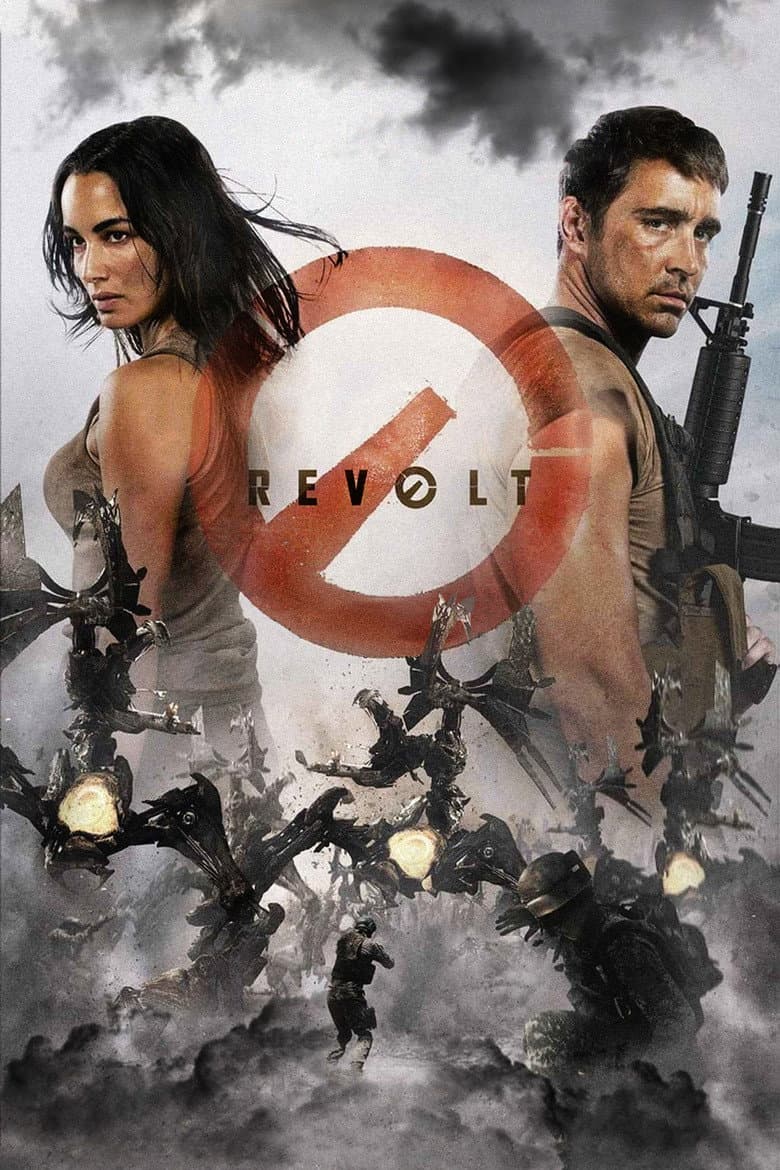
Revolt follows Bo, an American soldier who wakes up with no memory in a prison cell in war-torn Kenya. He escapes with Nadia, a French doctor and foreign aid worker, while alien machines hunt people across the countryside. Bo wants to reach a ruined U.S. base, but he learns that the machines used him to track human survivors. The film has a grim, fast-moving action tone built around survival, memory, and a last stand.
Revolt gives the local Kenyan resistance an important heroic role instead of letting the American soldier save everyone alone. Roderick, a Black Kenyan fighter with strong science skills, designs the weapon that can destroy the alien mothership, and local men and women lead the final attack. Bo must admit that his military role helped bring danger to the group, then follow the local plan and use his powers to help. This creates a noticeable identity-driven message and a criticism of outside military power, but it grows mainly in the final part of the movie rather than filling every scene.
Community feedback
Was our 31% Woke rating accurate?
Breakdown
These are the editorial factors and ratings behind our score for Revolt.
Woke representation / casting
Not present. The film’s local cast is black because the story is set in Kenya, while the two leads are an American soldier and a French aid worker. The director’s comments frame local casting as realism and location, not as a wider diversity campaign.
0%
Woke political dialogue
Not present. The spoken lines focus on survival, the alien attack, military plans, and the loss of cities. The film does not use clear modern identity, DEI, or activist speeches.
0%
Identity-driven story themes
Bo starts as an American soldier who expects to return to a U.S. base and defeat the threat. The story later makes him an unwitting tool that leads the aliens toward local survivors. The Nairobi resistance, including Roderick and local women fighters, takes the lead in saving people and building the weapon. Bo must give up the hero role, accept blame for the danger, and follow their plan.
42%
Western institutional / cultural critique
The film shows a ruined U.S. base and makes Bo’s military identity part of the aliens’ plan. Local fighters distrust the American connection and direct the successful response. This creates a mild criticism of outside military power. The film does not give repeated speeches against Western society, capitalism, Christianity, or other major institutions.
28%
Woke character or canon changes
Not relevant. The film is an original alien-invasion story. It does not change an established character, franchise, or real historical event.
0%
Anti-woke backlash and complaints
Not present. The supplied X research found no anti-woke posts about the film. Other coverage discussed action, pacing, the setting, and the ending, but no clear anti-woke or anti-DEI complaint was found.
0%
Creator track record context
Director Joe Miale has made social-action and marriage-equality PSAs and supported a community project linked to the shoot. Writer Rowan Athale has said he avoids grand political statements. The producers and casting director mainly have commercial genre careers without a strong activist record. The overall creator context is low, with a small social-action signal.
15%
Production
Movie · 2024
In the near future, on a decimated Earth, Paul and his twin sons face terror at night when ferocious creatures awaken.

Movie · 2017
In the near future, Major is the first of her kind: a human saved from a terrible crash, then cyber-enhanced to be a perfect soldier devoted to stopping the world's most dangerous…

Movie · 2026
A 'Man from the Future' arrives at an LA diner where he must recruit the precise combination of disgruntled patrons to join him on a one-night quest to save the world from the…

Movie · 2025
Set against the backdrop of a postapocalyptic Earth whose Eastern Hemisphere was destroyed by a massive solar flare, leaving what life remains mutated from radiation and fallout.
Movie · 2024
Post-apocalyptic survivors find refuge in the Rocky Mountains to hide from giant, insect-like creatures that can't live above 8,000 feet.
Movie · 2010
Cobb, a skilled thief who commits corporate espionage by infiltrating the subconscious of his targets is offered a chance to regain his old life as payment for a task considered…
Movie · 2016
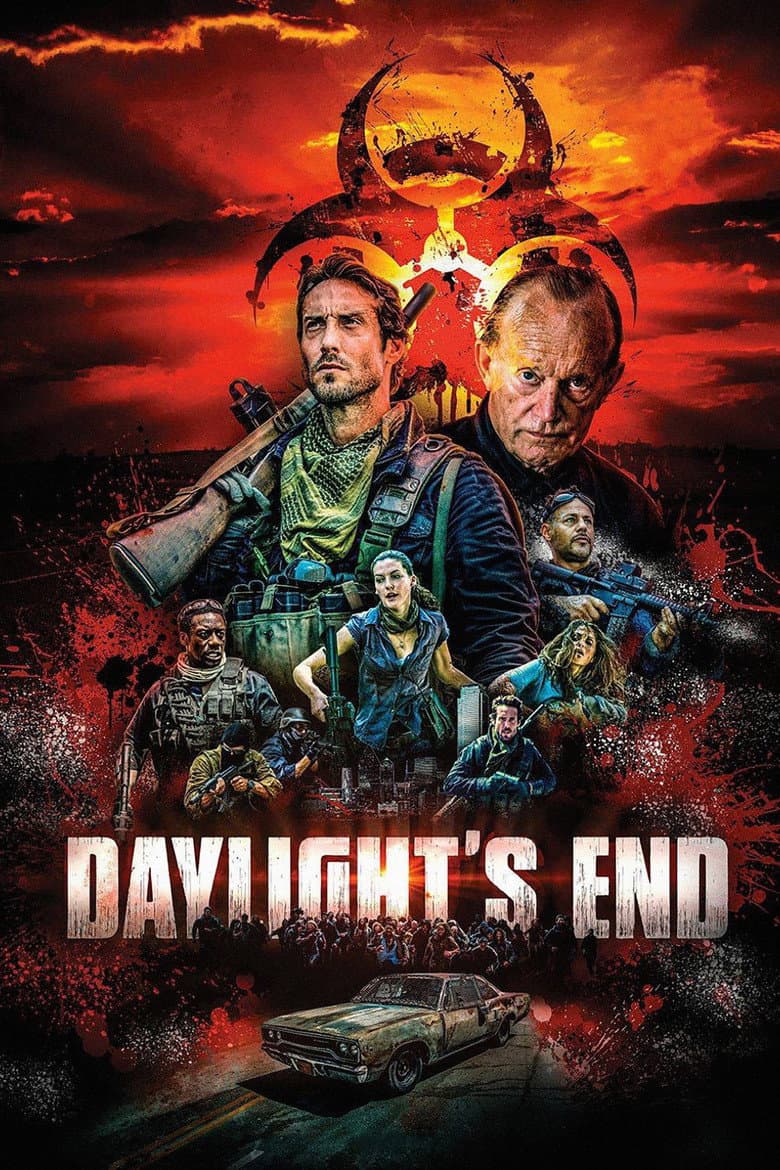
Years after a mysterious plague has devastated the planet and turned most of humanity into blood-hungry creatures, a rogue drifter on a vengeful hunt stumbles across a band of…

Movie · 2016
When a massive, gilled monster emerges from the deep and tears through the city, the government scrambles to save its citizens.
