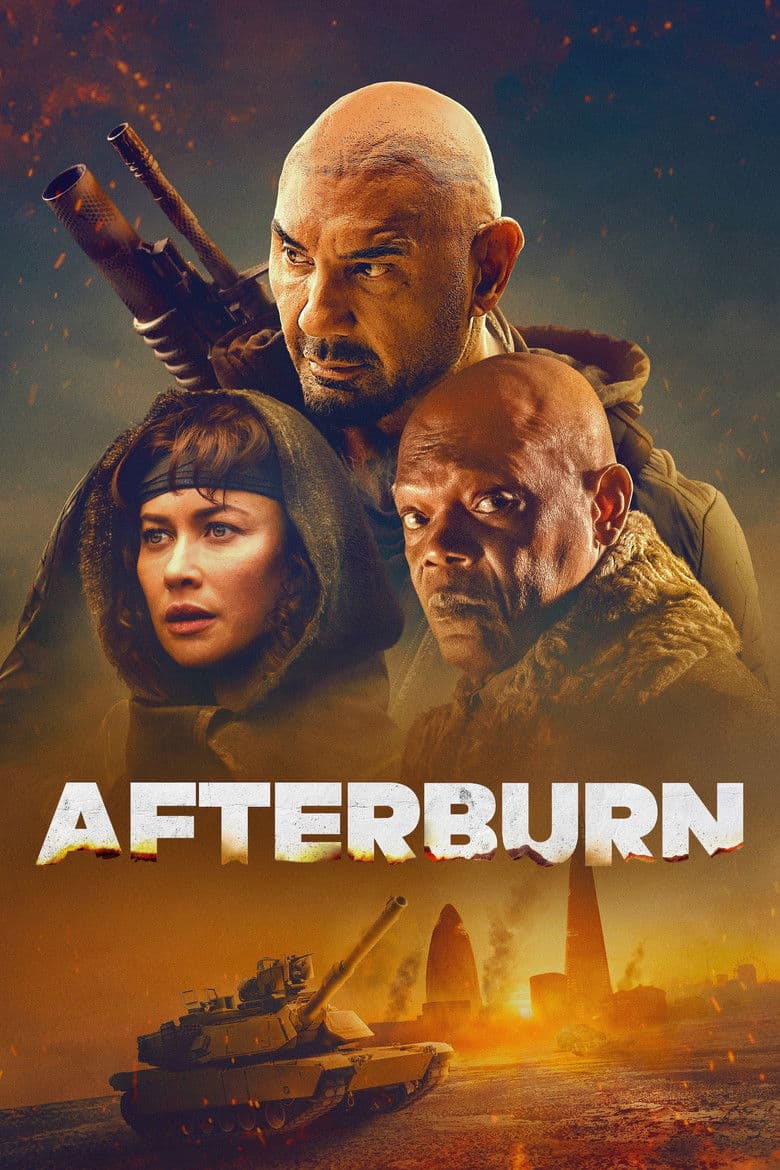
After a huge solar flare destroys most modern technology, Jake, a former soldier, survives by finding old treasures for powerful people. Six years later, he is sent from England into ruined France to recover what everyone thinks is the Mona Lisa. Jake joins Drea, a rebel fighter, while King August and the warlord Volkov fight over control, weapons, and the ruins of Europe. The film uses bloody fights, strange monsters, chases, crude jokes, and a light romance in a rough post-apocalyptic adventure.
Jake and Drea work as equal action partners, and Drea is a skilled fighter who helps stop Volkov. The film also gives Fuentes a government job and casts Samuel L. Jackson as an American who calls himself King of England. These choices are visible, but the story does not build its conflict around race, gender, sexuality, or modern diversity politics. Its main ideas are survival, freedom, the danger of warlords, the value of art, and the choice to resist evil.
Community feedback
Was our 6% Woke rating accurate?
Breakdown
These are the editorial factors and ratings behind our score for Afterburn.
Woke representation / casting
Not present. The film has a mixed international cast, but the story does not present that mix as a diversity goal. Drea is a capable female fighter and Fuentes is a minister, yet the story treats them as standard action characters. Samuel L. Jackson’s American king is self-appointed, so the role has a story reason.
0%
Woke political dialogue
The film repeats the phrase “cultural appropriation” in jokes about Jake taking the Mona Lisa. August gives Jake a crude title using the phrase, and Jake repeats it during the mission. The dialogue treats the phrase as a gag about stealing art instead of arguing about race or identity. The film has no serious current political speech.
6%
Identity-driven story themes
Not present. The story follows a treasure hunt, a rebel fight, a romance, and a struggle over a bomb after a solar flare. It does not make race, gender, sexuality, or DEI the point of any character arc.
0%
Western institutional / cultural critique
Not present. The story attacks failed governments and warlords, but that is a basic anti-tyranny plot. The film does not turn that conflict into a modern message about capitalism, patriarchy, Christianity, or conservative culture.
0%
Woke character or canon changes
Not relevant. The movie adapts the Afterburn comic, but no woke or identity-driven change to an established character or historical figure is clearly reported. Its main plot changes are ordinary adaptation choices.
0%
Anti-woke backlash and complaints
Not present. The supplied X pass found no anti-woke posts, and web searches found only complaints about weak writing, poor effects, plot holes, accents, and the missing dog. One small blog used the word “woke” without explaining a specific identity or political complaint.
0%
Creator track record context
J.J. Perry and most writers and producers have low cached woke scores and no clear activist pattern. Matt Johnson supported a program that gives more chances to women and diverse creators, but his films are not built around identity politics. Dave Bautista has criticized Donald Trump and supported LGBTQ causes. This gives mild background context, but no clear sign that it shaped Afterburn.
15%
Production
Movie · 2026
A 'Man from the Future' arrives at an LA diner where he must recruit the precise combination of disgruntled patrons to join him on a one-night quest to save the world from the…
Movie · 2016
Four losers are thrust into the position of saving the world when they stumble upon a UFO crash site and become genetically equipped to the battle suit on board.
Movie · 2024
After crash-landing on an alien planet, an asteroid miner must contend with the challenges of his new surroundings, while making his way across the harsh terrain to the only other…
Movie · 2024
Returning to her home planet, an infamous bounty hunter forms an unexpected alliance with a team of unlikely heroes.
Movie · 2025
During the Vietnam War, a recon unit ventures to an isolated jungle valley to uncover the fate of a missing platoon.
Movie · 2026
When their plan to book a show at the Rivoli goes horribly wrong, Matt and Jay accidentally travel back to the year 2008.
Movie · 2022
The Red Ribbon Army, an evil organization that was once destroyed by Goku in the past, has been reformed by a group of people who have created new and mightier Androids, Gamma 1…
Movie · 2021
A former special forces agent is trapped in a time loop and relives his death over and over again. To escape the terrible situation, he must track down those responsible and stop…
