Movie review
April 13, 2016 · 94 min · PG · Kids · Animation · Action · Adventure · Family
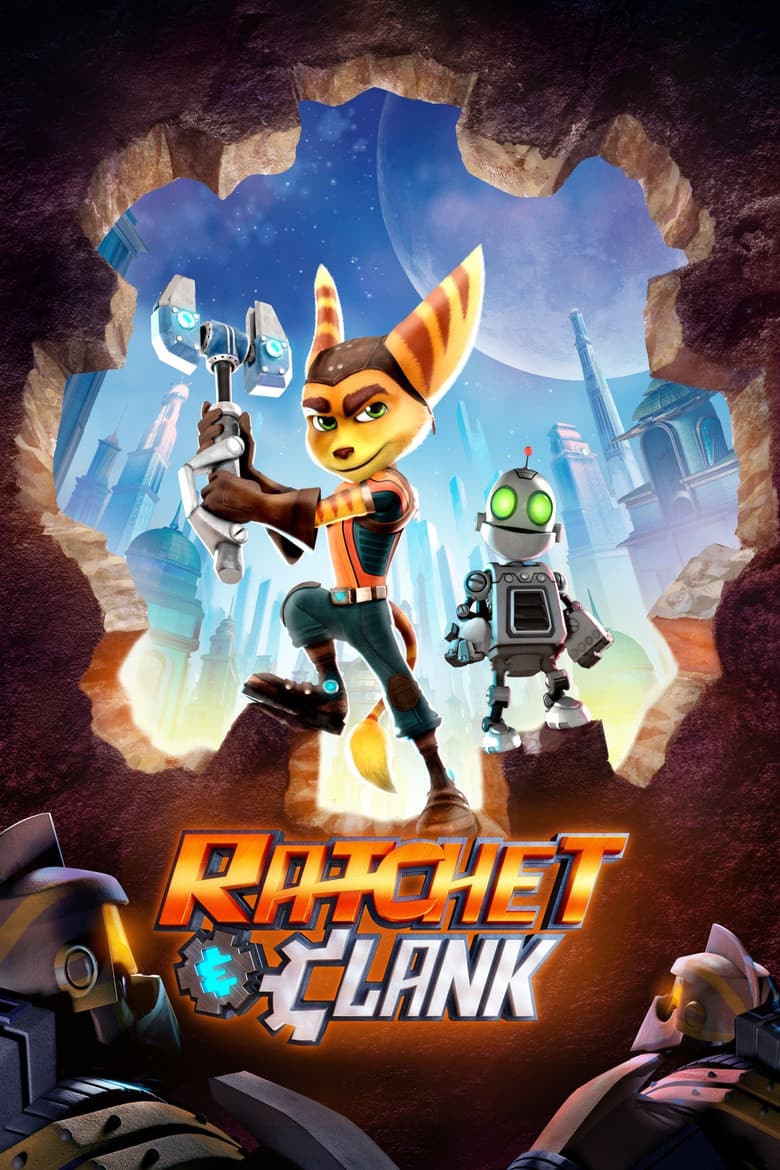
Ratchet is a young Lombax mechanic who dreams of joining the Galactic Rangers, a famous team that protects the Solana Galaxy. He meets Clank, a small robot who escapes from Chairman Drek’s warbot factory with a warning about a planet-destroying weapon. The two friends join the Rangers after stopping an attack, but Ratchet soon enjoys fame and Captain Qwark grows jealous. The film uses bright space battles, quick jokes, and a light family-adventure tone.
The story says that real heroism means helping others instead of chasing praise. Ratchet learns that courage and teamwork matter more than being famous or looking like a great hero. Clank’s careful thinking balances Ratchet’s brave but reckless choices, while Cora and Elaris help the Ranger team fight and plan. Qwark’s selfish choices and later regret show how pride can damage trust. Drek’s plan uses polluted planets and a giant weapon as the danger, but the film treats that as a simple science-fiction threat rather than a modern political debate.
Community feedback
Was our 2% Woke rating accurate?
Breakdown
These are the editorial factors and ratings behind our score for Ratchet & Clank.
Woke representation / casting
Not present. The main female characters are Cora, a Ranger fighter, and Elaris, a team planner. The film does not present their gender, race, or casting as a social message, and the alien setting gives no clear human ethnicity pattern.
0%
Woke political dialogue
Not present. The spoken jokes focus on weapons, fame, teamwork, and Qwark’s ego. No character gives modern identity, DEI, gender-politics, or activist lines.
0%
Identity-driven story themes
Not present. Ratchet’s search for purpose and Clank’s status as a defective robot concern heroism and belonging in the story world. The film does not turn those ideas into modern identity politics or representation messaging.
0%
Western institutional / cultural critique
Not present. Drek destroys planets because his home world is polluted, and Qwark wants fame. The film uses these details as a simple villain plot and a lesson about pride, not as a critique of Western institutions, family life, religion, or modern social systems.
0%
Woke character or canon changes
Not relevant. The film retells the first game with a softer Ratchet, a different plot order, and a larger role for the Rangers. These are ordinary adaptation and tone changes, with no clear woke or identity-driven reason shown.
0%
Anti-woke backlash and complaints
Not present. The X search found no specific complaints about the 2016 film. Wider reviews and fan discussion mostly criticize the shallow adaptation, jokes, and weak story, not woke, DEI, or identity politics.
0%
Creator track record context
Jericca Cleland has supported charity and nature projects, including work linked to WWF and Save the Children. Gerry Swallow has said children’s books can carry political ideas, and his work includes some political themes. T.J. Fixman and Kevin Munroe have no strong public record of identity activism, while the producers are mainly commercial genre and animation workers. None of this context is clearly tied to the film’s story or marketing.
10%
Production
Movie · 2016
While Po and his father are visiting a secret panda village, an evil spirit threatens all of China, forcing Po to form a ragtag army to fight back.
Movie · 2016
Adam West and Burt Ward returns to their iconic roles of Batman and Robin. The film sees the superheroes going up against classic villains like The Joker, The Riddler, The Penguin…
Movie · 2017
Despite his family’s baffling generations-old ban on music, Miguel dreams of becoming an accomplished musician like his idol, Ernesto de la Cruz.
Movie · 2017
Gru and his wife Lucy must stop former '80s child star Balthazar Bratt from achieving world domination.
Movie · 2016
Kubo mesmerizes the people in his village with his magical gift for spinning wild tales with origami. When he accidentally summons an evil spirit seeking vengeance, Kubo is forced…
Movie · 2024
After a shipwreck, an intelligent robot called Roz is stranded on an uninhabited island. To survive the harsh environment, Roz bonds with the island's animals and cares for an…
Movie · 2017
Six young ninjas are tasked with defending their island home of Ninjago. By night, they’re gifted warriors using their skill and awesome fleet of vehicles to fight villains and…
Movie · 2018
Peter Rabbit's feud with Mr. McGregor escalates to greater heights than ever before as they rival for the affections of the warm-hearted animal lover who lives next door.
