Movie review
November 15, 2022 · 102 min · PG-13 · Fantasy · Comedy · Action
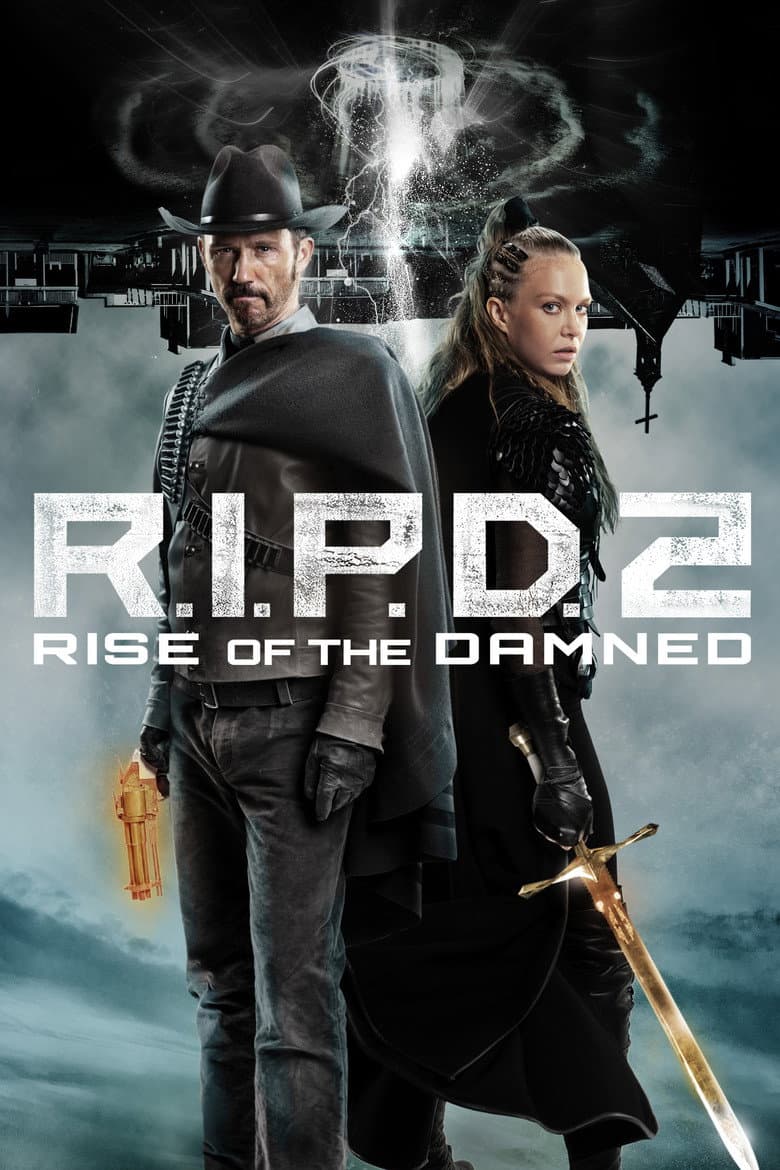
R.I.P.D. 2: Rise of the Damned follows Sheriff Roy Pulsipher in the American West of 1876. Outlaws kill Roy days before his daughter's wedding, and the afterlife police send him back to hunt souls that escaped Hell. His veteran partner is Jeanne d'Arc, a skilled swordswoman who has served the force for centuries. Their mission mixes gunfights, demons, family trouble, and broad jokes as they race to close a mine shaft that has become a gate to Hell.
Roy and Jeanne look like two black women whenever living people see them, which turns race and gender into a running body-swap joke. A hotel owner hesitates to admit them, and Roy says their appearance may make it harder to get help in the 1876 West. Jeanne often guides the new male officer and proves stronger in combat, but her skill comes from centuries of service. The main story stays focused on Roy giving up revenge, saving his future son-in-law, and helping Jeanne face her fear of fire.
Community feedback
Was our 46% Woke rating accurate?
Breakdown
These are the editorial factors and ratings behind our score for R.I.P.D. 2: Rise of the Damned.
Woke representation / casting
Living people see both leads as black women, even though Roy is a white male sheriff and Jeanne is the white French Joan of Arc. The choice puts two black female bounty hunters at the center of an 1876 Western. The story returns to their avatars for jokes and tense meetings with local people. Their race and gender changes are clear and hard to miss.
43%
Woke political dialogue
Roy says their appearance as black women may make it harder to gather information. A hotel owner is slow to admit them, and the script includes a joke about having a black friend. These short exchanges point directly to race, but they remain tied to a few scenes.
16%
Identity-driven story themes
The body change makes race and gender a repeated part of the film's humor. The story also uses the change to show racial barriers in the Old West. Jeanne acts as Roy's skilled female guide and often beats him in combat. The demon mission, Roy's family, and revenge still drive the main story.
26%
Western institutional / cultural critique
The hotel scene shows racial exclusion in the Old West. Roy also expects their Black appearance to limit how local people help them. The movie does not turn this into a wider attack on America, Christianity, family, or law enforcement.
18%
Woke character or canon changes
The movie loosely adapts the Rise of the Damned comic and replaces Roy's male Puritan partner, Crispin Mather, with Jeanne d'Arc. The change gives the partner role to a powerful female warrior and mentor. Jeanne remains important throughout the mission. No interview evidence ties the change to a stated diversity plan.
28%
Anti-woke backlash and complaints
A few audience comments called the movie woke or said it pushed a political message. One Reddit user complained about the Black casting and repeated racism scenes. A Metacritic user said the woke material was tasteful and did not take over the story. Most public discussion focused on the movie's quality instead.
22%
Creator track record context
Paul Leyden has a mild record of female-driven work and has supported stronger female roles. His cached creator score is 25. Andrew Klein's cached score is 0, while Ogden Gavanski's score is 10. Their combined record provides mild supporting context rather than strong activist evidence.
20%
Production
Movie · 2019
A boy is given the ability to become an adult superhero in times of need with a single magic word.

Movie · 2017
Four teenagers in detention discover an old video game console with a game they’ve never heard of. When they decide to play, they are immediately sucked into the jungle world of…

Movie · 2022
When a team of mercenaries breaks into a wealthy family compound on Christmas Eve, taking everyone inside hostage, the team isn’t prepared for a surprise combatant: Santa Claus is…
Movie · 2021
Yuta Okkotsu is a nervous high school student who is suffering from a serious problem—his childhood friend Rika has turned into a curse and won't leave him alone.

Movie · 2023
Hapless family man Paul Matthews finds his life turned upside down when millions of strangers suddenly start seeing him in their dreams.

Movie · 2025
The Demon Slayer Corps are drawn into the Infinity Castle, where Tanjiro, Nezuko, and the Hashira face terrifying Upper Rank demons in a desperate fight as the final battle…

Movie · 2025
Ten-year-old Aurora asks her hitman neighbor to kill the monster under her bed that she claims ate her family.
Movie · 2023
Paul and Sophie, interns at a mysterious London firm, become steadily aware their employers Humphrey and Dennis are anything but conventional – they are disrupting the world of…
