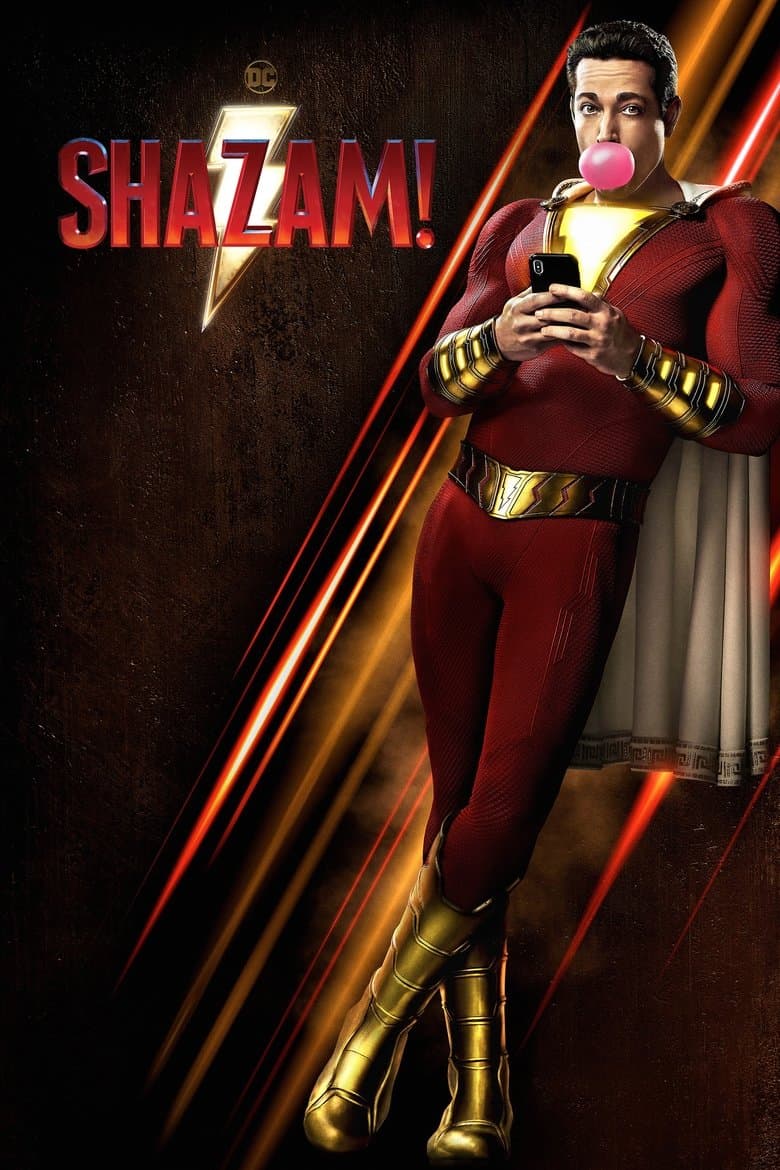
Shazam! follows Billy Batson, a troubled 14-year-old foster child in Philadelphia who keeps running away while searching for the mother he lost as a small child. An ancient wizard gives Billy the power to become an adult superhero whenever he says “Shazam!” Billy tests his powers with his foster brother Freddy, but he must fight Dr. Thaddeus Sivana, a bitter man who controls the Seven Deadly Sins. The movie combines bright jokes, wish-fulfillment action, dark fantasy violence, and a warm family story.
The foster home brings together children from different backgrounds and includes a child with a disability. The children become a team, and Billy learns that loyalty and care can create a real family. The movie shows this as part of a modern foster-home setting without speeches about race, sex, or politics. The story focuses on courage, responsibility, teamwork, and resistance to evil. The film contains little woke content, and the small amount that some critics noticed does not drive the main story.
Community feedback
Was our 4% Woke rating accurate?
Breakdown
These are the editorial factors and ratings behind our score for Shazam!.
Woke representation / casting
Not present. The movie includes children from several backgrounds and a disabled brother in the foster home. The movie does not present those traits as a diversity program or political message. The mixed group fits a modern foster-home setting and supports the found-family story.
0%
Woke political dialogue
Not present. The dialogue covers powers, school bullying, danger, family, and responsibility. The characters do not give activist or social-justice speeches.
0%
Identity-driven story themes
Not present. Billy searches for his mother and slowly accepts a caring foster family. The family message centers on loyalty and care. The story does not focus on race, sex, sexuality, or activist identity.
0%
Western institutional / cultural critique
Not present. The film shows an abusive father, a failed birth mother, school bullies, and a villain’s revenge. The film does not connect these problems to modern claims about men, capitalism, patriarchy, or Western institutions.
0%
Woke character or canon changes
Not relevant. The movie uses the foster-family version of Billy and gives his foster siblings powers. These choices support the family adventure. The movie does not present them as woke or identity-driven changes.
0%
Anti-woke backlash and complaints
A Breitbart review called the foster home a “Woke Foster Home of Identity Politics” because it includes children from several backgrounds and a disabled boy. The same review called a brief rescue scene a rejection of “toxic masculinity.” A Fabius Maximus post also called the film political indoctrination. The supplied X pass found no large campaign, boycott, or review bomb.
20%
Creator track record context
Not present. The cached records show no activist or identity-driven pattern among Sandberg, the writers, Safran, or Delia. Their title interviews focus on comedy, wish fulfillment, filmmaking, and family.
0%
Production

Movie · 2017
Four teenagers in detention discover an old video game console with a game they’ve never heard of. When they decide to play, they are immediately sucked into the jungle world of…

Movie · 2022
When a team of mercenaries breaks into a wealthy family compound on Christmas Eve, taking everyone inside hostage, the team isn’t prepared for a surprise combatant: Santa Claus is…

Movie · 2025
The Demon Slayer Corps are drawn into the Infinity Castle, where Tanjiro, Nezuko, and the Hashira face terrifying Upper Rank demons in a desperate fight as the final battle…
Movie · 2023
Hapless family man Paul Matthews finds his life turned upside down when millions of strangers suddenly start seeing him in their dreams.

Movie · 2017
When Mahendra, the son of Bāhubali, learns about his heritage, he begins to look for answers. His story is juxtaposed with past events that unfolded in the Mahishmati Kingdom.
Movie · 2024
After a family tragedy, three generations of the Deetz family return home to Winter River. Still haunted by Betelgeuse, Lydia's life is turned upside down when her teenage…
Movie · 2023
Paul and Sophie, interns at a mysterious London firm, become steadily aware their employers Humphrey and Dennis are anything but conventional – they are disrupting the world of…
Movie · 2020
After the vicious slaughter of his family by stone-cold mercenary Sub-Zero, Hanzo Hasashi is exiled to the torturous Netherrealm.
