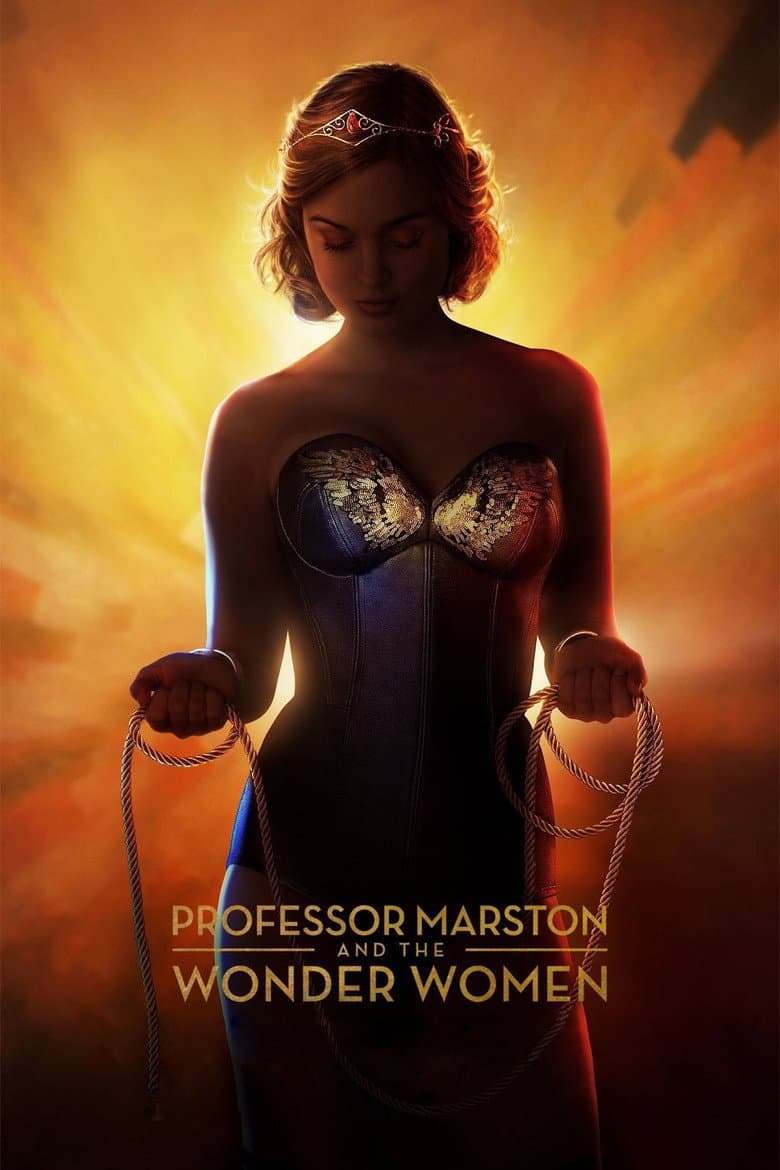
Professor Marston and the Wonder Women is a period drama about William Moulton Marston, a Harvard psychologist who helps develop an early lie detector and later creates Wonder Woman. The story moves between college work, family life, and the comic book business from the 1920s through the 1940s. William, his wife Elizabeth, and their young research helper Olive form a secret three-person family while schools, employers, relatives, and publishers judge their choices. The movie uses romance, sex, humor, and serious conflict as the three try to stay together and protect their work.
The main woke elements are the film's central three-person relationship, its romantic bond between Elizabeth and Olive, and its strong praise of female power. The film presents Wonder Woman as a way to teach girls that they can choose their own future, lead society, and hold the highest office. The movie also links the hero to bondage, same-sex love, birth control, and the idea that women should guide a less violent world. These ideas appear in the romance, the comic's creation, the dialogue, and the final defense of Wonder Woman, so they are central rather than brief side points.
Community feedback
Was our 88% Woke rating accurate?
Breakdown
These are the editorial factors and ratings behind our score for Professor Marston and the Wonder Women.
Woke representation / casting
Not present. The main roles match the real people and their period setting. The film has no clear diversity-first cast or identity-based casting message.
0%
Woke political dialogue
The film repeatedly has William defend female power and equal rights. He presents Wonder Woman as a way to help girls choose their futures and calls the comic a feminist movement. Characters also debate whether women should lead because men are violent and whether love between women is natural. These lines appear in several important scenes.
58%
Identity-driven story themes
The film's main story follows a three-person romantic family made up of William, Elizabeth, and Olive. It gives the women a romantic bond with each other and treats their love as real and meaningful. The film links their relationship to nontraditional love, sexual restraint, same-sex love, and Wonder Woman's female-power message. The unusual family drives the main conflict from beginning to end.
88%
Western institutional / cultural critique
The film shows universities and publishers punishing the trio for their relationship and ideas. It presents older marriage rules, male control, and moral watchdogs as barriers to women's freedom. The story also treats religious censorship of the comic as narrow and hostile. These conflicts recur, but the film keeps them inside a historical story.
44%
Woke character or canon changes
The film turns Elizabeth and Olive into a romantic couple, even though family members said they were like sisters and there is no clear proof of a sexual relationship. It also shows Elizabeth rejecting William's first Wonder Woman idea, while family accounts say she urged him to make the hero a woman. These changes affect the sexuality and roles of real people. They drive the film's central romance and its version of Wonder Woman's origin.
70%
Anti-woke backlash and complaints
Not present. The X pass found no anti-woke reaction. Reddit and news discussion focused on historical accuracy and the unusual relationship, not claims that the film pushed woke politics.
0%
Creator track record context
Writer Angela Robinson has a strong record of LGBTQ stories. Producers Joey Soloway and Andrea Sperling have strong records of queer and trans representation. Amy Redford and Clare Munn have broader social-impact and gender-equality work. This background fits the film's queer romance and female-power focus, although several other producers have little such record.
74%
Production
Movie · 2018
The coming-of-age tale of 16-year-old Lina Vilkas who is deported to Siberia amid Stalin's reign of terror in the Baltic region during WWII.
Movie · 2018
Seasoned musician Jackson Maine discovers — and falls in love with — struggling artist Ally. She has just about given up on her dream to make it big as a singer — until Jack…
Movie · 2017
A brilliant but impulsive young surgeon spirals into self-destruction after a painful breakup, struggling to cope with love, loss, and the consequences of his own temper.
Movie · 2025
Laura and Simon have been best friends since college. Over the years, they've realized their bond is more than platonic.

Movie · 2019
Kabir, a highly intelligent but short-tempered medical surgeon spirals into addiction after his intense relationship with his girlfriend turbulently ends.
Movie · 2016
Set during the last days of the Ottoman Empire, a love triangle develops between Mikael, a brilliant medical student, the beautiful and sophisticated artist Ana, and Chris, a…
Movie · 2016
Canadian folk artist Maud Lewis falls in love with a fishmonger while working for him as a live-in housekeeper.
Movie · 2020
Lonely college freshman Alex has closed himself off from his peers, who all appear to have this whole "college thing" figured out.
