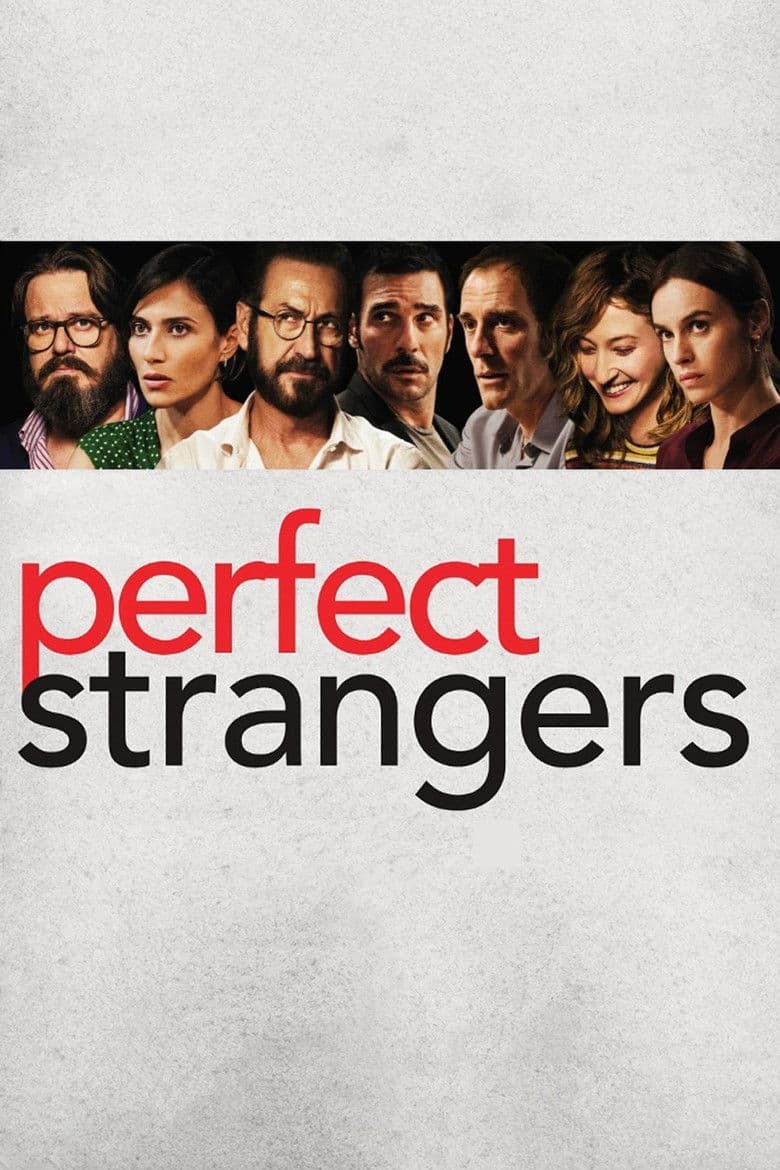
Perfect Strangers follows seven longtime friends who meet for dinner in a smart apartment in Rome during a lunar eclipse. Eva, a psychologist, suggests that everyone place their phones on the table and share every call and message. The game turns a warm evening into a tense fight as affairs, lies, family troubles, and old wounds come into view. The film mixes sharp comedy with bitter drama and asks whether people can survive total honesty.
The clearest woke element is a gay friend who hides his relationship with Lucio because he fears the group’s reaction. The friends use insulting words and show homophobia, while the story asks viewers to see the harm caused by that fear and treats Peppe with sympathy. The film also gives Eva a leading role as a psychologist who starts the game, but it does not make her a political leader or turn the cast into a diversity statement. These themes form one important subplot inside a wider story about privacy, cheating, friendship, and the false image of a happy marriage.
Community feedback
Was our 47% Woke rating accurate?
Breakdown
These are the editorial factors and ratings behind our score for Perfect Strangers.
Woke representation / casting
Not present. The film uses an ordinary contemporary Roman group of Italian friends with three couples and one single. The cast is not presented as a diversity statement, and the gay character is part of the plot rather than a repeated casting pattern.
0%
Woke political dialogue
The film has one long and clear identity-focused argument. The friends use insults and questions after they think Lele is gay, and Peppe explains why he cannot openly discuss Lucio. Peppe also says that telling the truth could bring judgment from friends, family, and a court. The scene rejects that treatment, but most dialogue covers phones, cheating, marriage, and privacy.
33%
Identity-driven story themes
Peppe’s hidden relationship with Lucio makes sexual identity a major reveal. The group’s fear and insults show the pressure to hide a same-sex relationship, and the story treats that fear as harmful. Bianca responds with kindness, while the other friends expose their own discomfort. The film still spends most of its time on cheating, private phones, marriage, and friendship.
43%
Western institutional / cultural critique
The film shows marriages and family roles as fragile, dishonest, and often unhappy. The men’s cheating, the women’s secret affairs, and the friends’ reaction to a possible gay relationship challenge the image of a respectable family circle. The father also gives his teenage daughter calm advice about sex instead of only demanding obedience. The story spreads blame across men and women, so it is social criticism more than a strong attack on traditional life.
25%
Woke character or canon changes
Not relevant. The film is an original contemporary story about a group of friends. It does not change known characters, a book, or historical figures.
0%
Anti-woke backlash and complaints
Russian authorities and courts flagged the film under Russia’s “LGBT propaganda” law in 2023 because one character comes out as gay. The action led to fines for streaming services and reports that the film’s age rating could be raised or its license reviewed. Several news outlets covered the case, but the X review found no English-language anti-woke complaints and no broad Italian boycott or review-bombing campaign. The 2022 Egyptian backlash belonged to an Arabic remake, so it does not raise this score for the Italian film.
28%
Creator track record context
Paolo Genovese has a moderate record of stories about gender, relationships, violence against women, and changing social norms. Rolando Ravello and Paola Mammini also have social-issue or feminist themes in their work. Filippo Bologna and Paolo Costella have little evidence of an activist or identity-driven pattern. The mixed record supports a moderate context score, while the producers and other crew have mostly standard industry profiles.
37%
Production
Movie · 2016
Based on the life story of Mahendra Singh Dhoni, and his journey to being the world cup winning captain of the Indian cricket team.

Movie · 2018
A father and daughter live a perfect but mysterious existence in Forest Park, a beautiful nature reserve near Portland, Oregon, rarely making contact with the world.

Movie · 2023
Hirayama is content with his life as a toilet cleaner in Tokyo. Outside of his structured routine, he cherishes music on cassette tapes, books, and taking photos of trees.
Movie · 2023
British stockbroker Nicholas Winton visits Czechoslovakia in the 1930s and forms plans to assist in the rescue of Jewish children before the onset of World War II, in an operation…

Movie · 2019
A look at the Apollo 11 mission to land on the moon led by commander Neil Armstrong and pilot Buzz Aldrin.

Movie · 2024
Inspired by the incredible true story of a hairdresser who single-handedly rallies an entire community to help a widowed father save the life of his critically ill young daughter.
Movie · 2021
The enthralling, against-all-odds story that transfixed the world in 2018: the daring rescue of twelve boys and their coach from deep inside a flooded cave in Northern Thailand.
Movie · 2018
Dan, a 21-year-old carefree boy is always surrounded by a bunch of friends and fellow hotel interns who feed off each other's everyday moments, their ups and downs.
