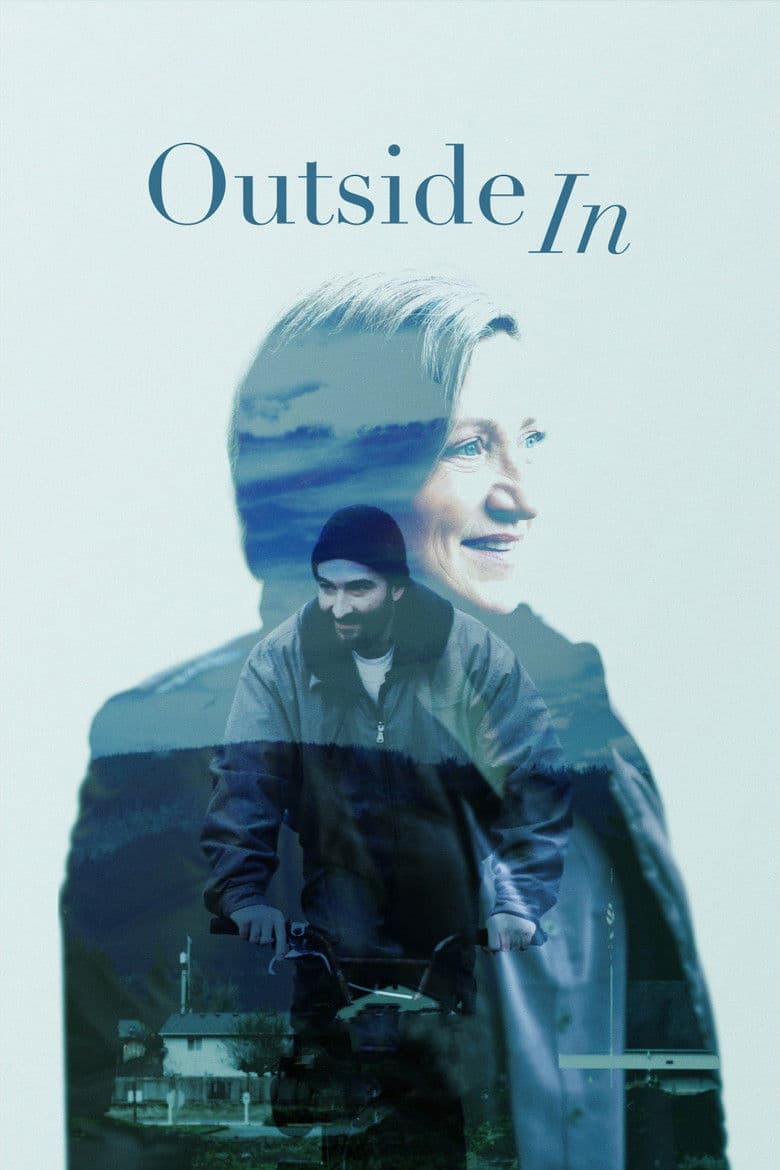
Outside In follows Chris, a 38-year-old man who returns to his small Washington town after spending 20 years in prison for a crime he did not commit. He struggles with phones, work, old friends, and a brother who has moved on without him. His former high school English teacher, Carol, helped keep him going in prison and helped win his release, so he soon tells her that he loves her. Carol is married and has a teenage daughter, which turns their close bond into a painful choice. The film has a quiet, rainy, serious tone.
The main woke element is a repeated challenge to the expected life of a wife and mother. Carol feels trapped by her marriage and by the idea that she should accept a job, a husband, and a family without asking what she wants. The story gives a middle-aged woman a serious romantic and sexual choice with a younger former student, while Chris is shown as the more dependent and emotionally lost person. The film treats these choices as messy personal problems, not as a speech about race, gender groups, or current politics.
Community feedback
Was our 28% Woke rating accurate?
Breakdown
These are the editorial factors and ratings behind our score for Outside In.
Woke representation / casting
The main cast is mostly white, while Black performers appear in small roles such as Courtney and a parole officer. The film does not make their race a subject or use a diversity-first message. These side roles create only a slight audience-visible representation signal.
12%
Woke political dialogue
Not present. The dialogue does not push DEI, gender politics, or activist ideas. The film focuses on personal choices and prison reentry.
0%
Identity-driven story themes
The story repeatedly shows Carol feeling trapped by a marriage, job, and family role that she accepted without asking what she wanted. Carol then pursues a romantic and sexual bond with Chris, a younger former student, even though the choice damages her marriage and hurts her daughter. The film gives a middle-aged woman clear desire and room to change, which challenges traditional expectations about wives and mothers. The story treats the result as a messy personal problem instead of a broad campaign about gender.
34%
Western institutional / cultural critique
The film shows Chris serving 20 years for a crime he did not commit and struggling to find work after release. Carol spends years helping his case and considers helping another prisoner. These details question the justice system and the barriers faced by former prisoners. The film does not connect that criticism to race, capitalism, or a current activist movement.
18%
Woke character or canon changes
Not relevant. The film is an original story. It does not change a known character or real historical figure.
0%
Anti-woke backlash and complaints
Not present. The provided X pass found no anti-woke reaction. The available reviews and audience posts focus on acting, pacing, and the troubled romance, not DEI or identity politics.
0%
Creator track record context
Lynn Shelton’s work mainly explores personal relationships and social awkwardness, not direct activist themes. Jay Duplass, Mark Duplass, and Mel Eslyn have no strong documented pattern of activist production choices. Lacey Leavitt has a more women-centered and queer-visible work history. This gives a mild context signal, but the film stays focused on personal freedom and difficult relationships.
25%
Production
Movie · 2023
British stockbroker Nicholas Winton visits Czechoslovakia in the 1930s and forms plans to assist in the rescue of Jewish children before the onset of World War II, in an operation…

Movie · 2018
A father and daughter live a perfect but mysterious existence in Forest Park, a beautiful nature reserve near Portland, Oregon, rarely making contact with the world.
Movie · 2023
Hirayama is content with his life as a toilet cleaner in Tokyo. Outside of his structured routine, he cherishes music on cassette tapes, books, and taking photos of trees.
Movie · 2024
Inspired by the incredible true story of a hairdresser who single-handedly rallies an entire community to help a widowed father save the life of his critically ill young daughter.
Movie · 2016
Based on the life story of Mahendra Singh Dhoni, and his journey to being the world cup winning captain of the Indian cricket team.

Movie · 2019
A look at the Apollo 11 mission to land on the moon led by commander Neil Armstrong and pilot Buzz Aldrin.
Movie · 2018
Dan, a 21-year-old carefree boy is always surrounded by a bunch of friends and fellow hotel interns who feed off each other's everyday moments, their ups and downs.
Movie · 2024
19 year old Isaiah Wright lives for basketball and video games. A year out of high school, he has no job, no plans, and no idea how to be a man.
