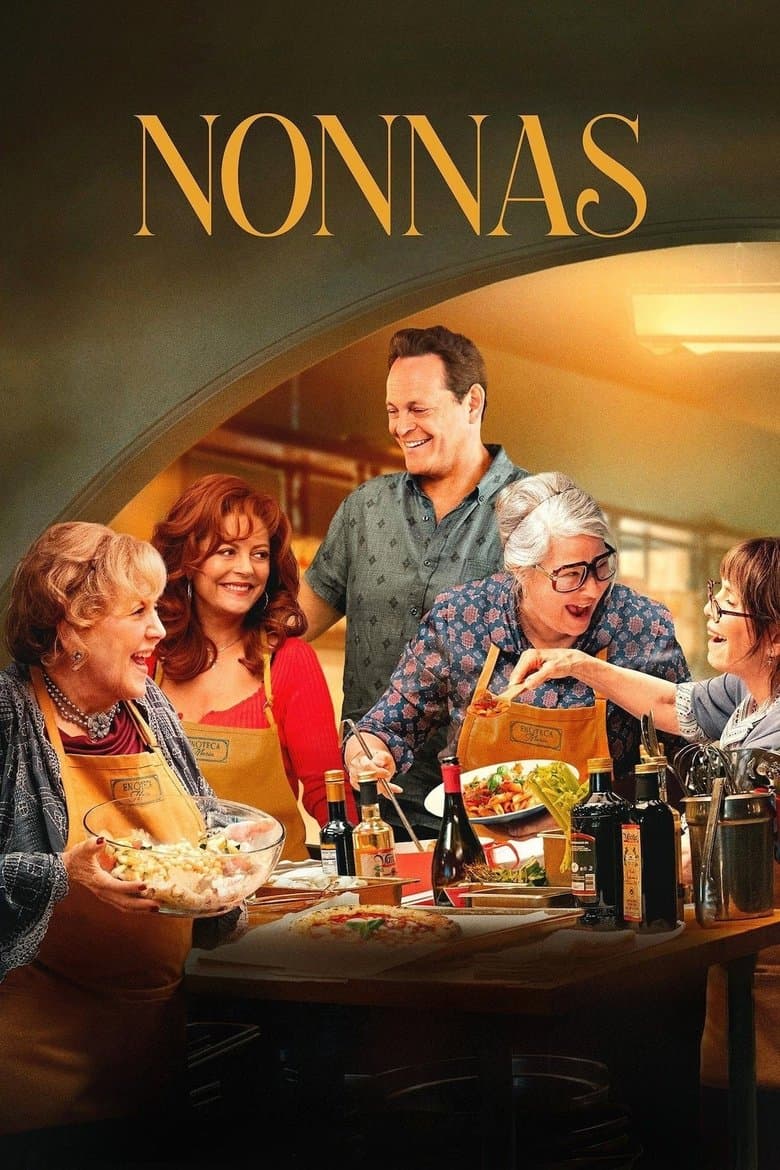
Joe Scaravella is a grieving Brooklyn man who has lost his mother and grandmother. He spends his insurance money on a failing restaurant in Staten Island and hires four Italian grandmothers to cook the recipes that shaped his childhood. Joe struggles to repair the building and keep the business alive. Local resistance and his grief make each step harder. The film is a gentle, sentimental comedy about family, work, and second chances.
The clearest woke element is Teresa, a former nun who says she left the Church after falling in love with a woman. The other nonnas welcome her story, so the film gives a short but clear LGBTQ-affirming scene inside its larger family tale. Gia also leads a brief talk about aging, beauty, and being seen, while the four older women are shown as skilled and independent workers. These ideas support the film's respect for older women, but the main story stays focused on grief, tradition, friendship, and the restaurant's survival.
Community feedback
Was our 31% Woke rating accurate?
Breakdown
These are the editorial factors and ratings behind our score for Nonnas.
Woke representation / casting
Not present. The main cast fits the Italian-American Staten Island setting, and the four older women are cast as grandmothers because the restaurant is built around real nonnas. The film does not present a diversity-first casting message or an identity mismatch.
0%
Woke political dialogue
Teresa says that the world rejected what she was after she fell in love with a woman and left the convent. The line gives the film a brief identity-based message about acceptance. The movie does not build a wider political debate around the line, and most dialogue covers grief, food, family, and business.
8%
Identity-driven story themes
Teresa is a former nun who says she loved a woman and left the Church. The other nonnas treat her story as something to accept and honor. Gia leads a short talk about beauty, age, and being seen. The women also find fresh purpose through paid work. The main plot remains about grief, family food, and saving the restaurant.
30%
Western institutional / cultural critique
Teresa's backstory presents the Church as a place that rejected her relationship with a woman. The film does not attack Christianity as a whole or make the Church a main target. The other conflicts involve money, repairs, inspections, and a local rival, not a broad critique of Western institutions.
12%
Woke character or canon changes
The film is based on the real Enoteca Maria, but its main women are invented versions of people from Joe Scaravella's life. The film makes Teresa a former nun who loved a woman, while reporting on the real Teresa Scalici describes a Staten Island mother who later cooked at the restaurant. This identity-focused change is limited to Teresa's backstory and does not change the restaurant's main origin.
18%
Anti-woke backlash and complaints
Small conservative and Christian accounts objected to the late scene where former nun Teresa reveals that she loved a woman. Those viewers called the beat Netflix shoehorning LGBT or leftist content into a wholesome restaurant story. Some right-leaning viewers said the movie was mostly not woke and saw only one agenda beat. No boycott, review-bombing drive, or large campaign appeared, so the backlash remained fringe.
15%
Creator track record context
Stephen Chbosky has a history of LGBTQ-inclusive storytelling and free-expression views, but no broad activist record is shown in the available background. Liz Maccie has no notable public activist statements. Some producers have worked on LGBTQ or race-and-justice projects, and Mary Vernieu has spoken about representation. This gives the title mixed, moderate creator context, while the director and writer's interviews focus on family, grief, food, hope, and immigrant memory.
27%
Production
Movie · 2023
A rich man learns about a guru who can see without using his eyes. He sets out to master the skill in order to cheat at gambling.

Movie · 2018
With their golden era long behind them, comedy duo Stan Laurel and Oliver Hardy embark on a variety hall tour of Britain and Ireland.

Movie · 2016
Discover what Thor was up to during the events of Captain America: Civil War.

Movie · 2020
After Santa Barbara Police Chief Carlton Lassiter is ambushed and left for dead, Shawn and Gus return to help him and find themselves embroiled in a case involving the personal…
Movie · 2026
After Matt's dreams of a picturesque Italian wedding are shattered when his fiancée leaves him at the altar, he embarks on his planned honeymoon across Italy alone, immersing…

Movie · 2019
A headstrong Chinese-American woman returns to China when her beloved grandmother is given a terminal diagnosis.

Movie · 2016
The Minions need to raise $20 to purchase an as seen on TV banana blender. So they take up lawn mowing at an old folks home, with hilarious antics!

Movie · 2021
Buster and his new cast now have their sights set on debuting a new show at the Crystal Tower Theater in glamorous Redshore City.
