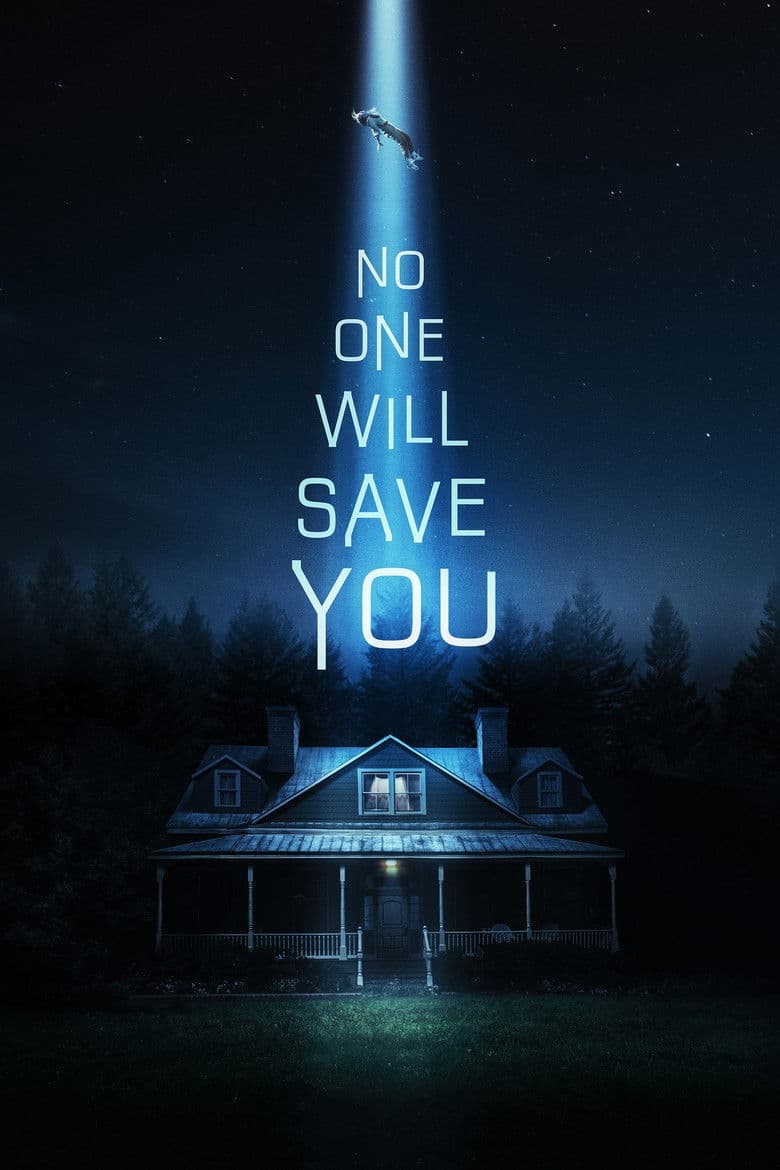
Brynn Adams lives alone in a rural town after the death of her childhood friend Maude. She spends her days sewing, building model towns, and writing letters that she cannot send. One night, strange aliens invade her home and force her into a fight for her life. The nearly silent film feels tense, lonely, strange, and sad as Brynn faces both the creatures and the guilt she has carried for years.
The film focuses on whether a person can face a terrible mistake and forgive herself. Brynn is pushed out by her neighbors, and the story links that rejection to Maude's death. Her fights with the aliens show her fear, quick thinking, and wish to survive. The ending gives Brynn a peaceful town where the people welcome her, while the aliens still control them. That final image makes her new happiness feel both comforting and disturbing.
Community feedback
Was our 4% Woke rating accurate?
Breakdown
These are the editorial factors and ratings behind our score for No One Will Save You.
Woke representation / casting
Not present in this title.
0%
Woke political dialogue
Not present. Only five words of dialogue exist in the entire film, and none involve politics, activism, or social issues.
0%
Identity-driven story themes
Not present in this title.
0%
Western institutional / cultural critique
Not present. Community tension stems from a private tragedy rather than critiques of institutions, masculinity, family norms, or Western culture in activist terms.
0%
Woke character or canon changes
Not relevant. The story is fully original with no source material or established characters altered for ideological reasons.
0%
Anti-woke backlash and complaints
Not present. No anti-woke or right-leaning complaints appear in reviews, social media, or news coverage accusing the film of identity politics or DEI content.
0%
Creator track record context
Brian Duffield has a mild liberal-leaning history in genre work. Jenny Jue has supported more Asian American and Pacific Islander representation. The producers and script supervisor have no documented activist focus. These signals are limited and do not appear in the film as an identity message.
18%
Production
Movie · 2018
A family is forced to live in silence while hiding from creatures that hunt by sound.
Movie · 2022
A brilliant toy company roboticist uses artificial intelligence to develop M3GAN, a life-like doll programmed to emotionally bond with her newly orphaned niece.

Movie · 2016
When a massive, gilled monster emerges from the deep and tears through the city, the government scrambles to save its citizens.
Movie · 2020
Looking for an escape from her recurring nightmares, 18-year-old Sarah submits to a university sleep study, but soon realizes she's become the conduit to a frightening new…

Movie · 2024
A live broadcast of a late-night talk show in 1977 goes horribly wrong, unleashing evil into the nation's living rooms.

Movie · 2022
Trapped on her family’s isolated farm, Pearl must tend to her ailing father under the bitter and overbearing watch of her devout mother.
Movie · 2026
After breaking the mysterious "One Wish Willow" to win his crush's heart, a hopeless romantic finds himself getting exactly what he asked for but soon discovers that some desires…
Movie · 2016
In the middle of a routine patrol, officer Daniel Carter happens upon a blood-soaked figure limping down a deserted stretch of road.
