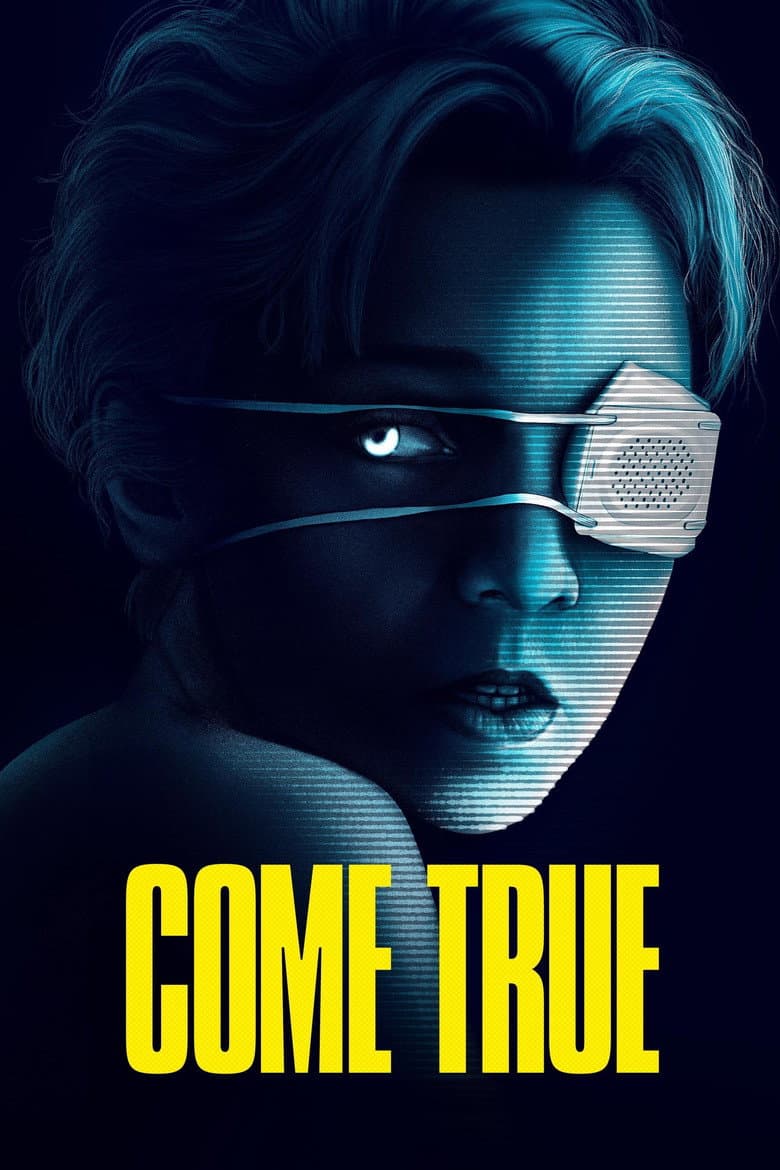
Sarah is an 18-year-old who has run away from home and sleeps wherever she can. She joins a university sleep study because it offers money, a bed, and a break from her repeating nightmares. The study begins to show the same dark figure in the dreams of several people, and Sarah becomes tied to a strange discovery about sleep and the mind. The movie uses cold blue images, slow tension, and strange horror as Sarah struggles to tell waking life from dreams.
Sarah takes part in the danger and pushes back when the researchers hide information from her. The film also shows an older male study worker watching her sleep, following her, and starting a sexual relationship with her while he has a role in the study. That relationship creates a clear age and power imbalance, but the story uses it as personal danger inside the nightmare plot. The main themes are fear, isolation, sleep paralysis, scientific control, and the uncertain line between the mind and the outside world.
Community feedback
Was our 6% Woke rating accurate?
Breakdown
These are the editorial factors and ratings behind our score for Come True.
Woke representation / casting
Not present. Women appear in major roles, but the film does not make race, gender, or group representation part of the story.
0%
Woke political dialogue
Not present. The dialogue centers on dreams, sleep studies, fear, and personal danger. It does not push modern identity, DEI, or activist ideas.
0%
Identity-driven story themes
Not present. The story includes a disturbing older-man and younger-woman relationship, but it treats that situation as personal horror. Sarah’s gender, race, or sexuality does not become a wider political or identity-driven theme.
0%
Western institutional / cultural critique
Riff is an older male study worker who watches Sarah sleep, follows her, and has sex with her while holding a role in the study. Sarah confronts his behavior, and the story later makes him a threat inside the nightmare. The film uses this as personal horror and a disturbing power imbalance, not as a wider attack on men, family, or Western institutions.
10%
Woke character or canon changes
Not relevant. The movie is an original story and does not change an established character, source, or real historical figure.
0%
Anti-woke backlash and complaints
Not present. Available discussion centers on the ending, dream logic, pacing, and the disturbing age gap in the romance. No clear complaint says the movie pushes woke, DEI, or identity politics.
0%
Creator track record context
Anthony Scott Burns has a creator score of 2/100 and an apolitical genre profile. Daniel Weissenberger has a creator score of 0/100. The producers have mostly low scores, with Vincenzo Natali at 31/100. The film’s interviews focus on dreams, sleep paralysis, technology, and personal horror.
5%
Production

Movie · 2021
Something lurks off the coast of Block Island, silently influencing the behavior of fisherman, Tom Lynch. After suffering a series of violent outbursts, he unknowingly puts his…
Movie · 2025
During the Vietnam War, a recon unit ventures to an isolated jungle valley to uncover the fate of a missing platoon.
Movie · 2017
Twenty years after three teenagers disappeared in the wake of mysterious lights appearing above Phoenix, Arizona, unseen footage from that night has been discovered, chronicling…
Movie · 2020
As a grisly virus rampages a city, a lone man stays locked inside his apartment, digitally cut off from seeking help and desperate to find a way out.
Movie · 2024
A live broadcast of a late-night talk show in 1977 goes horribly wrong, unleashing evil into the nation's living rooms.
Movie · 2024
With his wife out sick, a struggling father brings home a lifelike AI, only to have his self-aware new help want everything her new family has to offer...
Movie · 2022
Trapped on her family’s isolated farm, Pearl must tend to her ailing father under the bitter and overbearing watch of her devout mother.
Movie · 2017
Two brothers return to the cult they fled from years ago to discover that the group's beliefs may be more sane than they once thought.
