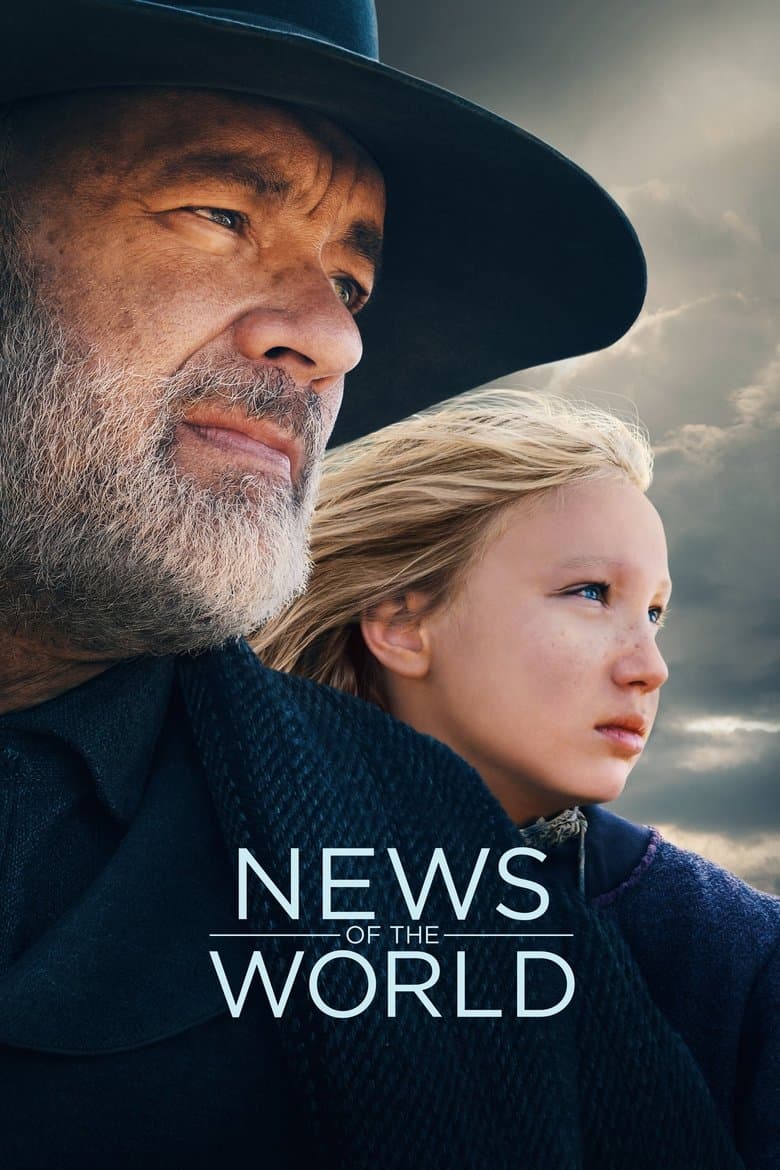
Captain Jefferson Kyle Kidd is an older Civil War veteran who travels 1870 Texas reading newspaper stories aloud for a small fee. He finds a young girl, Johanna, who was raised by the Kiowa and barely speaks English. He agrees to take her hundreds of miles to her last living relatives. The tone is quiet, dusty, and emotional, more about care and belonging than big shootouts.
The film is mainly a road story about two lost people becoming a family. Viewers see hard parts of that time, including a hanged black freeman and a cruel land boss who drove out non-white people and pushes fake praise of himself. Kidd chooses honest news over that boss’s lies, and the movie stresses healing after a divided war. Those beats can feel a bit like modern fights over truth and hate, but the heart of the movie stays on the bond between Kidd and Johanna, not on lectures about today’s identity politics.
Community feedback
Was our 29% Woke rating accurate?
Breakdown
These are the editorial factors and ratings behind our score for News of the World.
Woke representation / casting
Leads are Tom Hanks and a German girl cast to match the book. A black freeman appears mainly as a murder victim at the start. Kiowa people show up as part of the period story, with tribe input on language. No clear quota-style or identity-first casting pattern in the main roles.
5%
Woke political dialogue
Crowds push back when news touches post-war rights. Kidd calms anger and later refuses to read a boss’s self-praise paper, reading real news instead. Lines favor truth, calm, and “the war is over.” That is political, but more classic healing talk than modern activist slogans.
5%
Identity-driven story themes
Johanna’s life between German family, Kiowa upbringing, and white Texas is central. Race hate and forced removal appear as real dangers of the setting. The core arc is found family and belonging after trauma, not a modern identity-politics campaign, though some viewers link the racism and “fake news” beats to today.
32%
Western institutional / cultural critique
Farley’s county is run by a racist boss who spreads lies and rules by fear; workers rise after Kidd reads a mine disaster story. That targets demagogues and false news more than churches, family, or “toxic masculinity.” The Confederate past is treated with regret and care for the hero, not pure sneering.
30%
Woke character or canon changes
Not relevant. The film shortens and softens the novel in ordinary ways. It does not race-swap or identity-rewrite the main characters or known historical figures for DEI goals.
0%
Anti-woke backlash and complaints
No meaningful anti-woke campaign treats this film as DEI propaganda. Talk stayed on the Western story and performances. Soft-on-history criticism from the left does not count here.
0%
Creator track record context
Greengrass brings mild classical left-liberal political drama history and openly tied the film to healing a divided country. Other key writers and most producers sit near zero to low teens on the cached list, so the overall creative package is only a light lift.
22%
Production

Movie · 2021
On a post-apocalyptic Earth, a robot, built to protect the life of his dying creator's beloved dog, learns about life, love, friendship, and what it means to be human.
Movie · 2016
The feel-good story of Michael 'Eddie' Edwards, an unlikely but courageous British ski-jumper who never stopped believing in himself—even as an entire nation was counting him out.

Movie · 2018
In the prehistoric past, Keda, a young and inexperienced hunter, struggles to return home after being separated from his tribe when bison hunting goes awry.

Movie · 2015
During a manned mission to Mars, Astronaut Mark Watney is presumed dead after a fierce storm and left behind by his crew.

Movie · 2025
After a family tragedy, kung fu prodigy Li Fong is uprooted from his home in Beijing and forced to move to New York City with his mother.

Movie · 2018
After losing the love of his life to a cruel Philistine prince, a young Hebrew with Supernatural strength defends his people, sacrificing everything to avenge his love, his…
Movie · 2016
On his way out of the wilderness, Jesus struggles with the Devil over the fate of a family in crisis, setting himself up for a dramatic test.
Movie · 2018
A man stranded in the Arctic is finally about to receive his long awaited rescue. However, after a tragic accident, his opportunity is lost and he must then decide whether to…
