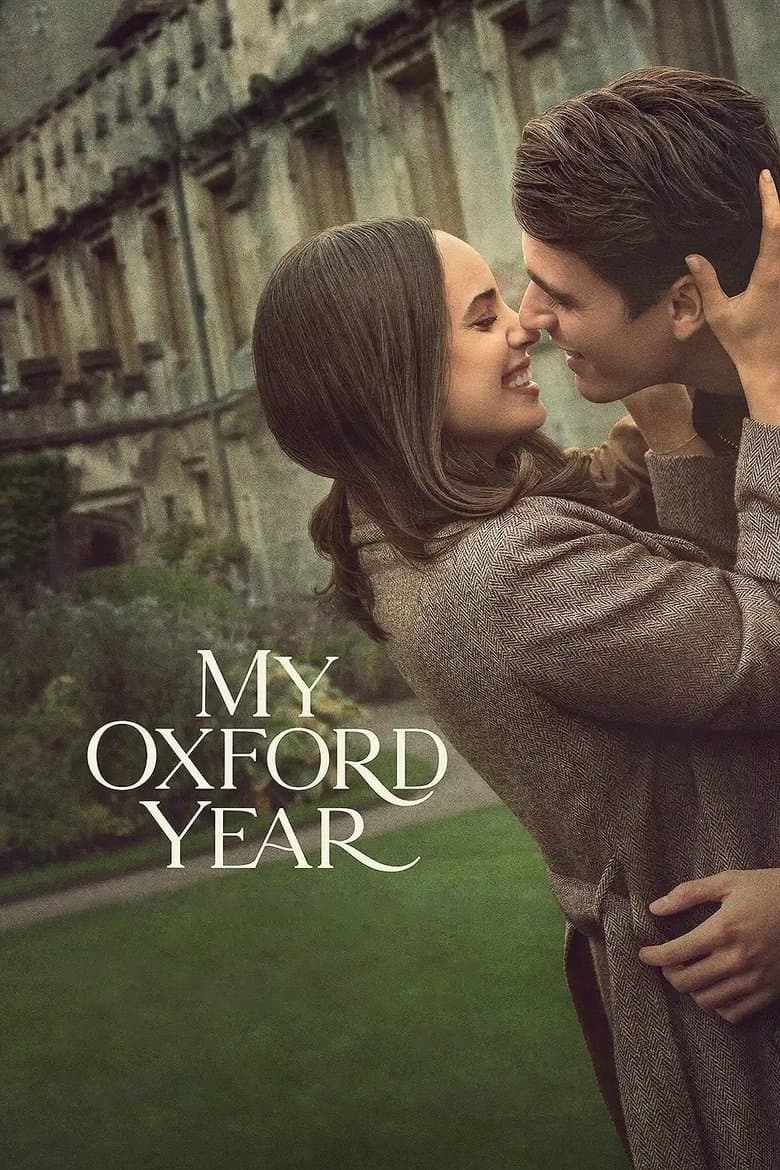
Anna De La Vega is a driven young American from Queens who goes to Oxford University to study poetry before starting a job at Goldman Sachs. She has planned her future carefully, but she falls for Jamie Davenport, a witty British teaching assistant who hides a deadly illness. Their love grows through books, campus trips, parties, and talks about how to live. The film starts as a bright romantic comedy and becomes a sad drama about love, loss, and choosing a life that feels true.
The film gives its lead a clearly Latina family background and makes her success, education, and place at Oxford visible parts of her identity. A pub scene has a man insult Anna by saying she is a diversity quota, so the movie directly raises race and representation in one short conflict. Anna's close friend Charlie is openly gay, and another friend is of Indian heritage, but their identities stay in supporting roles. These points are easy to notice, yet the main story remains a romance about ambition, grief, and learning to accept an uncertain future.
Community feedback
Was our 53% Woke rating accurate?
Breakdown
These are the editorial factors and ratings behind our score for My Oxford Year.
Woke representation / casting
The film centers a high-achieving Latina New Yorker at Oxford. Anna's close friend Charlie is openly gay, and Tom is a British Indian student, giving the main group a clear identity mix. A pub scene directly calls Anna a diversity quota, so the movie makes representation part of its on-screen conflict. The modern setting makes the mix believable, and race is not the main subject.
43%
Woke political dialogue
The strongest political language appears in a pub scene. One character attacks American gun culture and the country's impact on other nations. He also calls Americans ignorant and calls Anna a diversity quota. Anna discusses the suffragettes and the rise of feminism in a class assignment. These points are clear but limited to a few scenes, while the main talks focus on poetry, romance, cancer, and family.
33%
Identity-driven story themes
Anna's story repeatedly presents a capable Latina woman making her own choices. Her immigrant family and her clash over a diversity insult make identity part of her journey. Charlie's gay identity and Tom's heritage are visible in the friend group but do not drive the plot. The main story remains a romance about grief, ambition, and learning to live without a plan.
31%
Western institutional / cultural critique
One pub rant attacks American gun culture, foreign policy, and what the speaker calls American ignorance. The film gives this view to a rude drunk man, and the conflict ends quickly. The story does not build a wider attack on Western institutions, family life, or traditional gender roles.
18%
Woke character or canon changes
The novel uses Eleanor Duran from Ohio, while the film uses Anna De La Vega from New York and gives her a Hispanic immigrant family. Sofia Carson said she pushed for this change so Hispanic women would be shown beyond stereotypes. The film also changes Anna's mother from a cleaner into a doctor in Argentina who works as a nurse in the United States. These identity changes affect the lead character, although the romance and cancer story remain the main plot.
46%
Anti-woke backlash and complaints
A small right-leaning account called the opening woke because Anna is an overqualified Latina lead and a gay neighbor appears quickly. A small French-language account complained about Netflix adding a gay male side character and called the diversity touches useless. Tiny promo accounts gave the trailer a zero out of ten woke-free score, with no visible reach. No major right-leaning outlet, boycott, or review-bombing campaign appeared, so the backlash was fringe.
12%
Creator track record context
Sofia Carson has the strongest relevant track record, with mainstream gender-equity work and public LGBTQ ally posts. Her interviews about this film also stress showing Hispanic women beyond stereotypes. Iain Morris is mainly known for mainstream comedy, and Julia Whelan and Melissa Osborne have no clear activist profile. Allison Burnett has called himself a lefty, but no strong activist framing of this film was found.
26%
Production
Movie · 2025
When her mother sends her on a quest to complete a teenage bucket list, a young woman uncovers family secrets, finds romance — and rediscovers herself.
Movie · 2021
Senior year of high school takes center stage as Lara Jean returns from a family trip to Korea and considers her college plans — with and without Peter.
Movie · 2024
After discovering their significant others are siblings, two resentful exes must spend Christmas under one roof — while hiding their romantic history.
Movie · 2016
The story of a young man who arrives in Hollywood during the 1930s hoping to work in the film industry, falls in love, and finds himself swept up in the vibrant café society that…
Movie · 2022
Divorced couple Georgia and David find themselves on a shared mission: they team up and travel to Bali to stop their daughter Lily from making the same mistake they once made 25…

Movie · 2025
18-year-old Noah moves from America to London, with her mother who's recently fallen in love with William, a wealthy British businessman.

Movie · 2017
When a hapless but dedicated talent manager signs his first client who actually has talent, his career finally starts to take off.

Movie · 2022
Lina is about to graduate high school and has her sights set on her future at MIT. But when her mom gets sick, she encourages Lina to follow in her footsteps and have “the summer…
