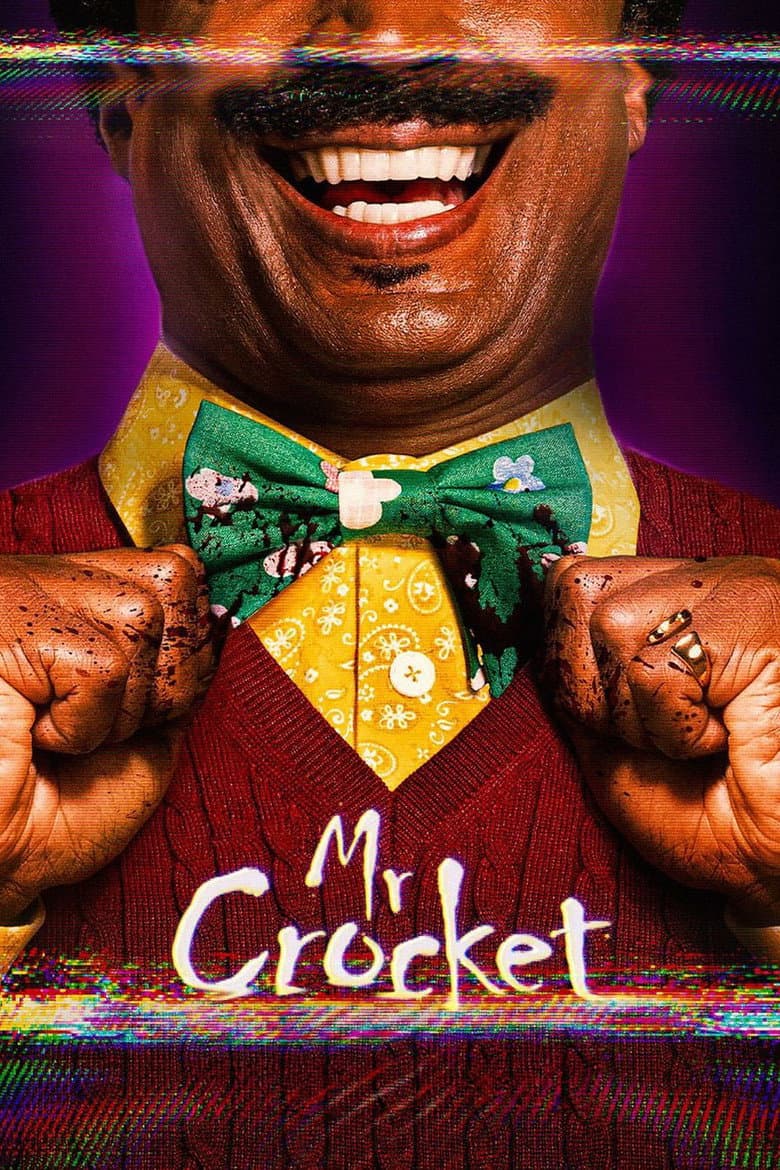
In 1993, Summer Beverly raises her son Major after the death of his father. Major watches a strange VHS children’s program called Mr. Crocket’s World, and Mr. Crocket soon leaves the television to take him. Summer follows clues through homes, abandoned places, and a nightmare version of the show as she tries to bring Major back. The film combines colorful children’s television images with monsters, brutal deaths, grief, and a painful story about family.
The film gives most major roles to black characters, including Summer, Major, Mr. Crocket, Rhonda, and Eddie. The story shows this representation clearly, but race does not create conflict and the characters do not give identity-based speeches. The main themes involve child abuse, grief, parental responsibility, and the danger of ignoring a child’s pain. Summer’s rescue mission drives the story, while Mr. Crocket turns his promise to protect children into control, murder, and a false family, so the film remains mainly supernatural horror about parents and children.
Community feedback
Was our 34% Woke rating accurate?
Breakdown
These are the editorial factors and ratings behind our score for Mr. Crocket.
Woke representation / casting
Most major roles are played by black actors. The film centers a black mother and son, a black children’s host, and black adults connected to the missing children. Interviews describe the movie as predominantly Black and explain that it gives actors of color a place in horror and shows a black family’s point of view. The story does not make race a conflict, so the score reflects clear representation rather than a race based plot.
52%
Woke political dialogue
Not present. The movie has no clear spoken support for modern DEI, identity politics, or activist politics. The dialogue centers on grief, parenting, abuse, and the monster’s plan.
0%
Identity-driven story themes
Not present. The story centers on grief, child abuse, parental responsibility, and supernatural control. It does not turn these family problems into modern identity politics or a gender rights message.
0%
Western institutional / cultural critique
Not present. The movie shows abusive adults and police officers who misunderstand the case. It does not build a modern critique of masculinity, family life, Christianity, or Western institutions.
0%
Woke character or canon changes
Not relevant. The film expands Espy’s 2022 short. No identity based change to an established character, franchise, or historical figure is reported.
0%
Anti-woke backlash and complaints
Not present. No anti woke or right leaning complaints were found in the searched coverage. Public criticism mostly concerns pacing, story logic, gore, and effects.
0%
Creator track record context
Espy’s past work often centers black characters and community stories, but his record is mostly horror and commercial work. Reid has repeated links to black led projects and police violence subject matter. Producer Jenna Cavelle has a clear record of building projects for female, BIPOC, and LGBTQ+ filmmakers. The other producers and casting director show milder or limited public activist records. This gives the creative team a moderate representation context rather than a strongly partisan one.
42%
Production
Movie · 2024
A live broadcast of a late-night talk show in 1977 goes horribly wrong, unleashing evil into the nation's living rooms.
Movie · 2023
Eight year old Peter is plagued by a mysterious, constant tapping from inside his bedroom wall—one that his parents insist is all in his imagination.
Movie · 2022
Trapped on her family’s isolated farm, Pearl must tend to her ailing father under the bitter and overbearing watch of her devout mother.
Movie · 2016
Lorraine and Ed Warren travel to north London to help a single mother raising four children alone in a house plagued by malicious spirits.
Movie · 2026
After breaking the mysterious "One Wish Willow" to win his crush's heart, a hopeless romantic finds himself getting exactly what he asked for but soon discovers that some desires…
Movie · 2016
In 1630, a farmer relocates his family to a remote plot of land on the edge of a forest where strange, unsettling things happen.
Movie · 2024
Five years after surviving Art the Clown's Halloween massacre, Sienna and Jonathan are still struggling to rebuild their shattered lives.
Movie · 2024
A boy and his stepmother fear for their safety after an eerie creature resembling the boy's recently deceased father visits them.
