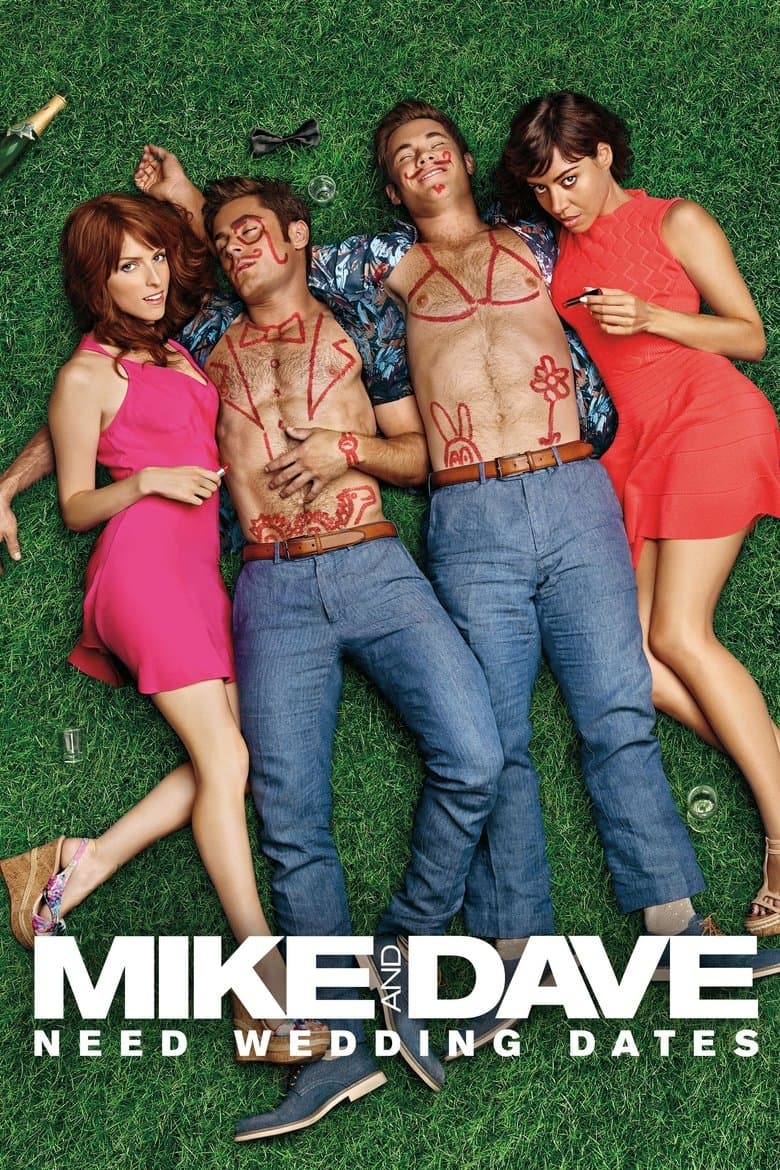
Mike and Dave Stangle are brothers who sell liquor and cause trouble at family parties. Their parents tell them to bring respectable dates to their sister Jeanie’s wedding in Hawaii or stay home. The brothers answer a Craigslist ad and choose Alice and Tatiana, who pretend to be calm but enjoy wild parties. The trip becomes a crude comedy about drinking, sex, lies, accidents, and family arguments. The story follows four people whose bad choices create chaos before they face the results.
The film gives Alice and Tatiana the same reckless behavior and rude jokes that it gives the men. The women often control the story, trick the brothers, and out-party them. The film includes bisexual cousin Terry and brief sexual material between women, but it uses these parts as raunchy comedy instead of a serious identity message. The main lesson says that the family must stop blaming each other, tell the truth, and accept responsibility. These themes matter to the story, but the film mainly remains a loud party comedy.
Community feedback
Was our 25% Woke rating accurate?
Breakdown
These are the editorial factors and ratings behind our score for Mike and Dave Need Wedding Dates.
Woke representation / casting
The four main romantic leads are white and fit a present day American comedy. The supporting cast includes a bisexual female cousin, and the date search includes a lesbian applicant. The film gives those queer roles brief appearances and broad sex jokes instead of making them part of a serious cast message. The marketing centers on crude party comedy and the four stars, so the casting signal stays low.
18%
Woke political dialogue
Not present. The film does not include woke political dialogue.
0%
Identity-driven story themes
The film presents its main gender message by showing that women can be as reckless and sexually bold as men. Alice and Tatiana control many major scenes, trick the brothers, and out-party them before both couples face the results of their choices. The film includes bisexual cousin Terry and sexual material between women, but it uses these parts for raunchy jokes instead of a serious identity message. The main lesson concerns family, honesty, and taking responsibility.
35%
Western institutional / cultural critique
Not present. The film does not include criticism of Western institutions or culture.
0%
Woke character or canon changes
Not relevant. The film does not make relevant character or canon changes.
0%
Anti-woke backlash and complaints
Not present. The film does not have notable anti-woke backlash or complaints.
0%
Creator track record context
The supplied context gives low scores to both directors and both writers because their work is mainly mainstream comedy. Producer Peter Chernin has donated to Democratic causes. Producer Jenno Topping and casting director Jennifer Euston have some diversity linked work in their backgrounds. No title specific activist statement was found, so this remains a small background signal.
16%
Production
Movie · 2016
A comedy that follows a group of friends as they navigate their way through the freedoms and responsibilities of unsupervised adulthood.
Movie · 2023
From his onstage tackle to the slap heard round the world, Dave Chappelle lets loose in this freewheeling and unfiltered stand-up comedy special.
Movie · 2023
A chaotic intervention. An action-packed stay in rehab. After a weird couple of years, John Mulaney comes out swinging in his return to the stage.
Movie · 2024
Inseparable best friends AJ and Moose decide to run the local pool's snack shack after their plan to sell home-brewed beer goes down the drain.
Movie · 2022
Exploring every facet of ‘Weird Al’ Yankovic’s life, from his meteoric rise to fame with early hits like ‘Eat It’ and ‘Like a Surgeon’ to his torrid celebrity love affairs and…
Movie · 2017
When dictator Joseph Stalin dies, his parasitic cronies square off in a frantic power struggle to become the next Soviet leader.
Movie · 2016
Two teenage boys from inner-city Cork steal bicycles and ride off on a 160km quest to find an unrecovered bale of cocaine worth 7,000,000 euros.
Movie · 2018
Adam Sandler takes his comical musical musings back out on the road, from comedy clubs to concert halls to one very unsuspecting subway station.
