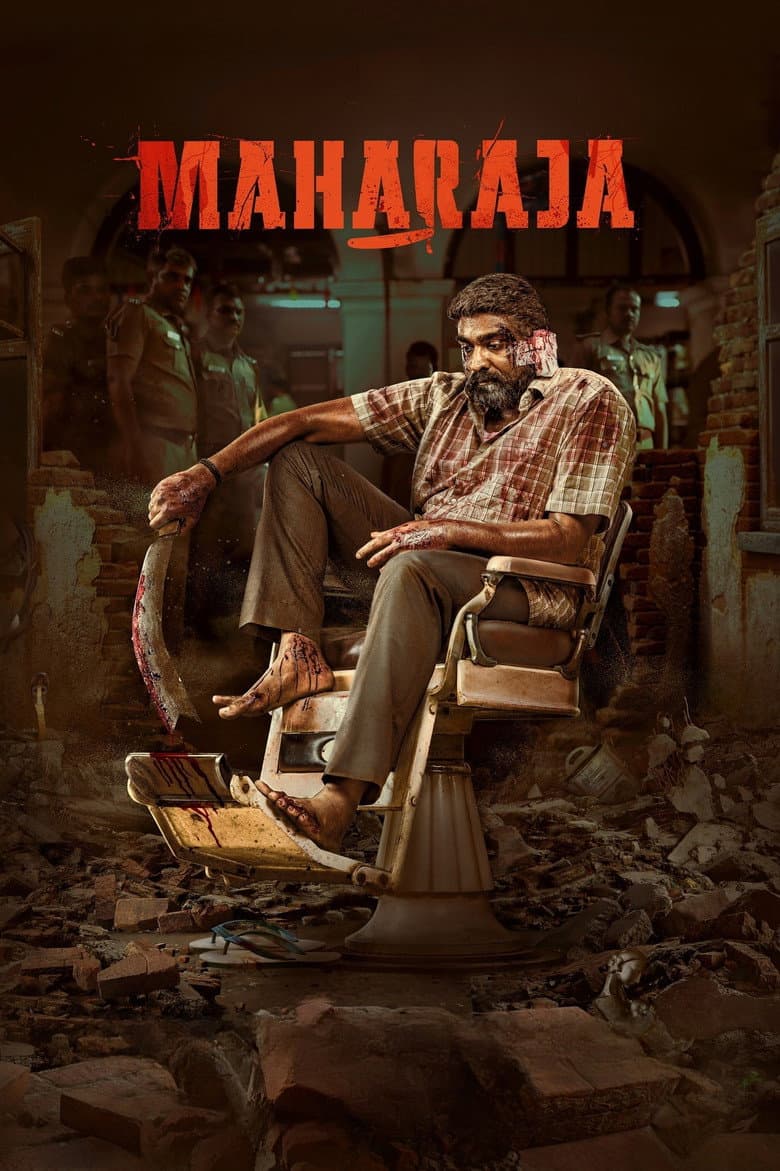
Maharaja is a quiet barber who lives in Chennai with his teenage daughter, Jothi. After a past accident kills his wife and leaves a metal dustbin protecting the baby, he and Jothi call it Lakshmi. Years later, thieves take the bin, and Maharaja asks the police to find it. The case hides a much darker search, and the film moves between dry comedy, mystery, grief, and brutal revenge.
The film makes sexual violence against girls and women a central issue. The thieves treat women as objects, while the police first mock the complaint and care more when the victim is tied to a family member. Jothi refuses to hide or let the assault decide her future, giving the story a clear message that an assault does not end a survivor's life. The film still follows her pain mainly through her father and the men around her, so its social point is strong but tied to a male revenge story.
Community feedback
Was our 33% Woke rating accurate?
Breakdown
These are the editorial factors and ratings behind our score for Maharaja.
Woke representation / casting
Not present. The cast is mostly Indian and the roles fit a modern Chennai crime story. Aasifa is a supportive female sports teacher, but the film does not frame her identity as a diversity message.
0%
Woke political dialogue
Jothi says the assault will not define her future. A policeman asks whether people would stay quiet if it happened to their own daughter, which exposes selective empathy. Maharaja’s request for help also shows officials mocking a serious complaint before they learn the family link. These ideas appear in a few key exchanges rather than in long political speeches.
27%
Identity-driven story themes
The film makes sexual violence against girls and women a central moral issue. Jothi refuses to hide her face or treat the assault as the end of her life. The story links the crime to men’s power, selective empathy, and a father’s sense of ownership over a daughter. The film still tells the story mainly through male revenge, so the identity-driven message is important but not dominant.
47%
Western institutional / cultural critique
The film repeatedly shows men treating women as property and using family ties to decide whose pain matters. The police mock the case, take a bribe, use harsh force, and later help with revenge after learning the victim’s link to the father. The criticism targets rape culture and local police failure, not Western institutions, Christianity, capitalism, or conservative family life. This gives the factor a limited score because the movie does not build a broad political critique.
18%
Woke character or canon changes
Not relevant. The film is an original modern crime story with no older character or real historical figure being changed.
0%
Anti-woke backlash and complaints
Not present. No sustained anti-woke backlash was found in the reviewed X, Reddit, and news discussion. The visible debate focused on graphic child sexual abuse, revenge, and the film’s handling of the victim, while a few right-leaning viewers praised the movie as not woke.
0%
Creator track record context
Not present. The cached profiles give Nithilan Saminathan and the four producers no clear woke or activist record. Nithilan said he did not make this film to preach or bring change.
0%
Production

Movie · 2017
Master car thieves square off against French gangsters in the South of France with money, women and lives all on the line.

Movie · 2023
When a professional tutor takes a job at a remote manor, he soon finds himself battling his disturbed student’s obsessions, which threaten to expose his darkest secrets and…
Movie · 2018
A businessman, on his daily commute home, gets unwittingly caught up in a criminal conspiracy that threatens not only his life but the lives of those around him.
Movie · 2017
On a relentless quest to avenge his sister's murder, a man from Cape Town infiltrates a sprawling network of lowlifes and elites in Los Angeles.

Movie · 2018
A married couple suspect that the 'smart apartments' in their high tech residence are being used by its owner for sinister reasons.

Movie · 2020
Kyle and Swin live by the orders of an Arkansas-based drug kingpin named Frog, whom they've never met. But when a deal goes horribly wrong, the consequences are deadly.

Movie · 2017
Steve Ford is a private detective in Venice Beach, Calif., who's good with the ladies, bad with the punches and wild about his dog Buddy.

Movie · 2017
An assassin seeks redemption after being given a second chance at life.
