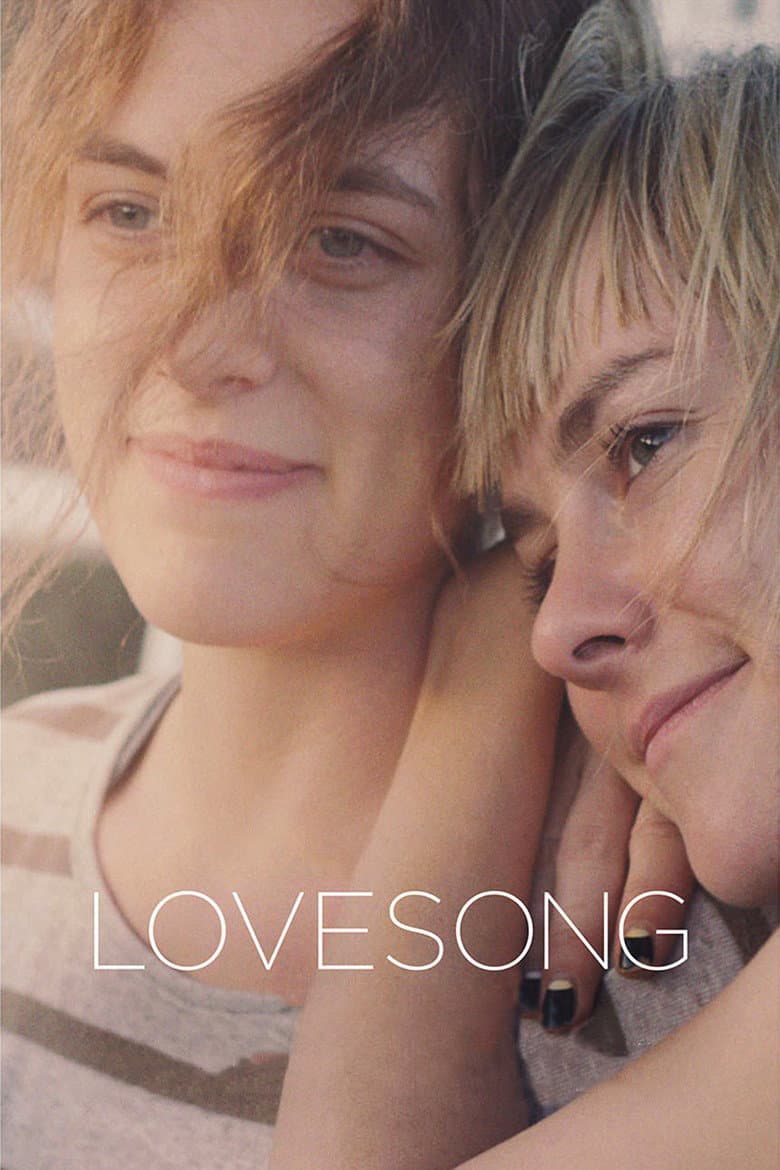
Lovesong follows Sarah, a lonely young mother living in rural Pennsylvania with her small daughter. Her husband spends much of his time away for work, so Sarah calls her old friend Mindy and leaves home for an unplanned road trip. The trip brings back a closeness that turns into a kiss and a painful break between the friends. Three years later, Sarah visits Mindy before her wedding, and the quiet drama asks whether their love can survive distance, marriage, and missed chances. The movie has a soft, sad tone and tells much of the story through looks and small actions.
The main woke element is the central same-sex romance between Sarah and Mindy. The movie follows their attraction, physical intimacy, longing, and repeated attempts to reconnect across most of its short running time. Mindy is about to marry a man, so the story places a woman-to-woman love against the expected path of a woman marrying a man. The film treats their love as real and important without forcing either woman to use a fixed label, and it gives little space to political speeches or broad social debate.
Community feedback
Was our 68% Woke rating accurate?
Breakdown
These are the editorial factors and ratings behind our score for Lovesong.
Woke representation / casting
Not present. The main cast is mostly white, and the two central roles are women because the story follows their friendship. The film does not frame its casting as a diversity or identity statement.
0%
Woke political dialogue
Not present. Sarah, Mindy, and the other characters talk about love, marriage, family, and missed chances. The film has no recurring activist, DEI, or identity-politics lines.
0%
Identity-driven story themes
Sarah and Mindy are the two central characters. Their friendship grows into physical and romantic attraction. The film follows that relationship through a road trip, a long separation, and Mindy’s wedding to a man. The story treats love between women as real without requiring either woman to use a fixed label. The same-sex relationship carries most of the film’s emotional weight.
85%
Western institutional / cultural critique
Sarah’s husband is away for long work trips, and his absence leaves her lonely while she raises their child. Mindy’s planned marriage to a man stands between her and Sarah’s love. The story places the women’s relationship against the expected path of a woman marrying a man. The film does not turn that conflict into a broad attack on family, religion, or other Western institutions.
24%
Woke character or canon changes
Not relevant. Lovesong is an original story, not an adaptation or retelling. The film does not change an established character or real historical figure.
0%
Anti-woke backlash and complaints
A conservative LifeSiteNews opinion piece mocked Lovesong as another lesbian or homosexual movie and said people were not interested in such films. The piece treated the same-sex romance as part of a larger Hollywood trend it disliked. The complaint came from one niche outlet, and no wider boycott or anti-woke campaign was found.
24%
Creator track record context
So Yong Kim has a strong record of feminist and queer cinema, and her supplied creator score is 76/100. Bradley Rust Gray has a supplied score of 52/100 for repeated women-centered and queer stories. Several producers have strong records of funding women filmmakers and social-issue films. This gives the project a clear identity-driven creator context.
72%
Production
Movie · 2023
After decades apart, childhood friends Nora and Hae Sung are reunited in New York for one fateful weekend as they confront notions of destiny, love, and the choices that make a…

Movie · 2019
England, early 20th century. The future writer and philologist John Ronald Reuel Tolkien (1892-1973) and three of his schoolmates create a strong bond between them as they share…

Movie · 2017
In 1950s London, a renowned dressmaker's meticulous lifestyle begins drastically changing as his relationship with his young muse intensifies.

Movie · 2017
A brilliant but impulsive young surgeon spirals into self-destruction after a painful breakup, struggling to cope with love, loss, and the consequences of his own temper.

Movie · 2018
Katie, a 17-year-old, has been sheltered since childhood and confined to her house during the day by a rare disease that makes even the smallest amount of sunlight deadly.

Movie · 2017
Nothing is as it seems in this riveting World War 2 thriller as a wary soldier goes to investigate a mysterious German monarch at his secluded mansion, leading him into a web of…

Movie · 2025
18-year-old Noah moves from America to London, with her mother who's recently fallen in love with William, a wealthy British businessman.

Movie · 2025
Heather is a young woman traveling Europe with friends before starting her perfectly planned life. A chance meeting with Jack sparks an unexpected romance that leads to deep…
