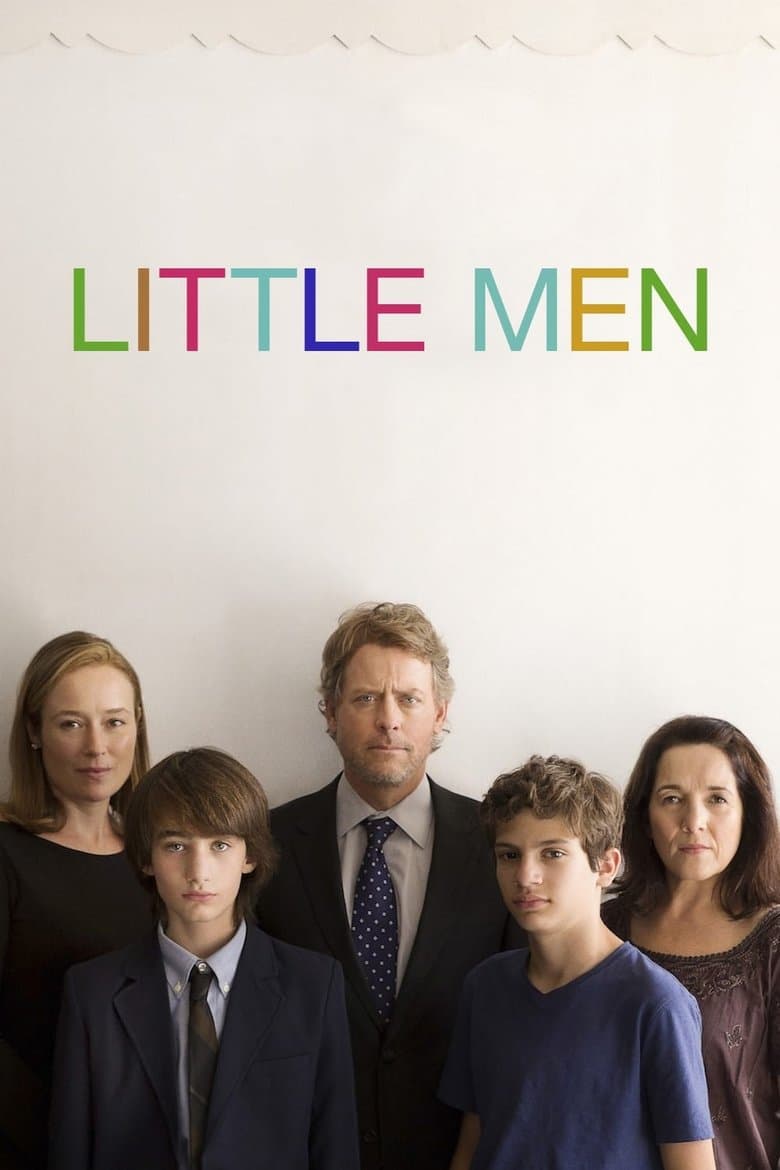
Little Men follows Jake Jardine, a quiet 13-year-old who loves drawing and feels out of place. After his grandfather dies, Jake moves with his parents from Manhattan to their old Brooklyn building. He becomes close friends with Tony, the lively son of Leonor, a Chilean woman who runs a dress shop below the home. The boys try to protect their friendship when Jake’s parents raise Leonor’s rent, and the film stays gentle, sad, and realistic.
The film makes gentrification and rising rents a main part of the conflict. Leonor is an immigrant shop owner, and the story shows how a changing neighborhood can push out a small business. The film also leaves Jake’s sexuality open and includes a scene where Tony fights boys who insult Jake about it. These ideas matter, but the movie presents them through a personal friendship and gives the adults mixed motives instead of turning the story into a speech.
Community feedback
Was our 43% Woke rating accurate?
Breakdown
These are the editorial factors and ratings behind our score for Little Men.
Woke representation / casting
Not present. The setting is a modern, diverse Brooklyn neighborhood, and the cast fits the story’s characters. The film does not make casting or representation part of the plot.
0%
Woke political dialogue
Not present. The characters discuss rent, money, and a changing neighborhood, but they do not deliver modern identity, DEI, or activist lines. The film keeps those discussions inside the family dispute.
0%
Identity-driven story themes
The film gives major space to a close friendship between two boys and leaves Jake’s sexuality open. Tony defends Jake after classmates insult him over his sexuality, and Jake shows a strong but undefined interest in Tony. The story does not label Jake as gay or make the boys a couple. The main conflict still concerns friendship, family conflict, and rent.
30%
Western institutional / cultural critique
The film treats gentrification and rising rents as the force that breaks apart the boys’ friendship. It shows a middle-class family using inherited property to triple the rent on an immigrant woman’s small shop. The adults have real money worries, and the story does not present them as simple villains. The film still places most sympathy on the shop owner’s loss and shows the changing neighborhood as harmful to local businesses.
44%
Woke character or canon changes
Not relevant. The film is an original modern story, not an adaptation of a known character or historical event. No established character is changed for identity reasons.
0%
Anti-woke backlash and complaints
Not present. No clear anti-woke, DEI, or right-leaning complaint appears in the researched coverage or audience discussion. The separate X pass also found no anti-woke posts, boycott talk, or review bombing.
0%
Creator track record context
Director Ira Sachs has a strong record of films about gay relationships and LGBTQ life. Writer Mauricio Zacharias has repeatedly worked on queer and culturally specific stories. Casting director Avy Kaufman has cast projects with strong LGBTQ themes. The producers’ cached profiles are mostly neutral, so this context mainly comes from Sachs, Zacharias, and Kaufman.
65%
Production

Movie · 2018
A father and daughter live a perfect but mysterious existence in Forest Park, a beautiful nature reserve near Portland, Oregon, rarely making contact with the world.

Movie · 2023
Hirayama is content with his life as a toilet cleaner in Tokyo. Outside of his structured routine, he cherishes music on cassette tapes, books, and taking photos of trees.
Movie · 2024
Inspired by the incredible true story of a hairdresser who single-handedly rallies an entire community to help a widowed father save the life of his critically ill young daughter.
Movie · 2023
British stockbroker Nicholas Winton visits Czechoslovakia in the 1930s and forms plans to assist in the rescue of Jewish children before the onset of World War II, in an operation…

Movie · 2016
Based on the life story of Mahendra Singh Dhoni, and his journey to being the world cup winning captain of the Indian cricket team.
Movie · 2018
Dan, a 21-year-old carefree boy is always surrounded by a bunch of friends and fellow hotel interns who feed off each other's everyday moments, their ups and downs.

Movie · 2019
A look at the Apollo 11 mission to land on the moon led by commander Neil Armstrong and pilot Buzz Aldrin.

Movie · 2021
The enthralling, against-all-odds story that transfixed the world in 2018: the daring rescue of twelve boys and their coach from deep inside a flooded cave in Northern Thailand.
