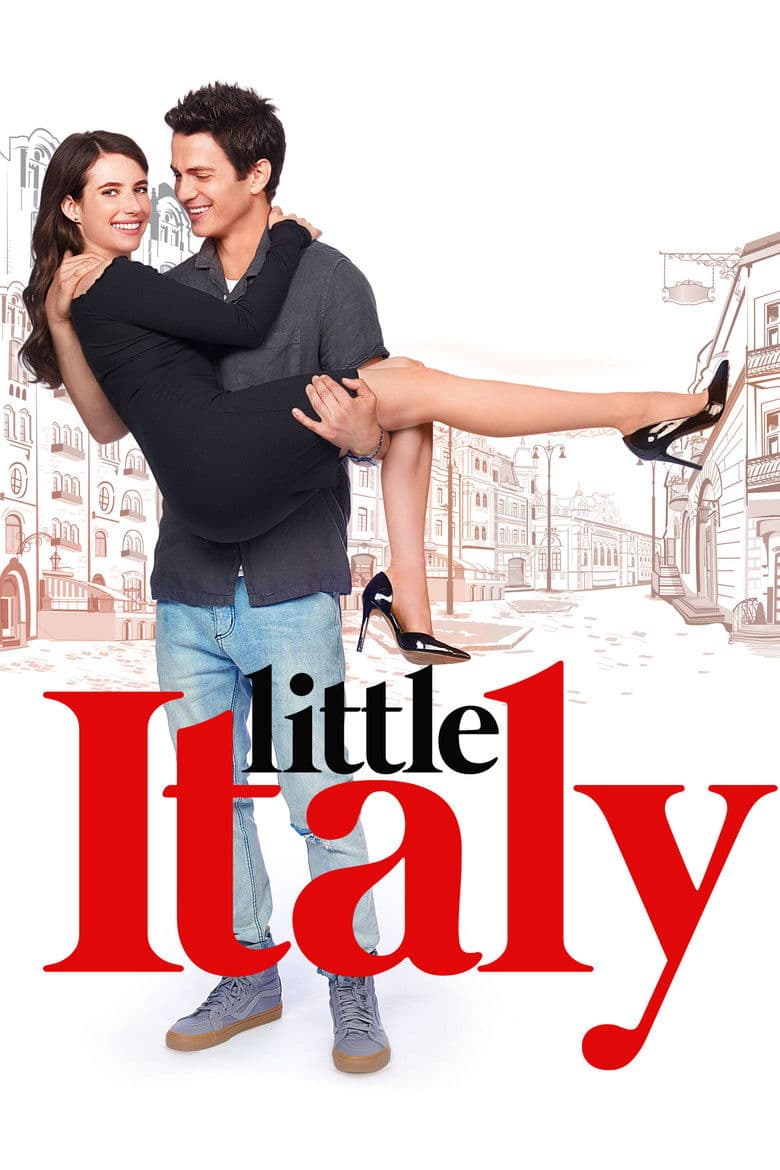
Nikki Angioli returns to Toronto's Little Italy after training as a chef in London. She wants a place in her teacher's new restaurant, but a visa problem sends her home for two weeks. Nikki falls for Leo Campo, her childhood friend and the son of her father's rival. Their families run pizza shops next door and use an old feud to keep them apart. The movie uses bright jokes, family fights, food gags, and a happy romantic ending.
The movie gives a side story to Luigi, a Chinese man who says his father rejected him after he came out as gay. Luigi finds a new family in Little Italy and later gets a love interest. The film also pairs Indian workers Jessie and Jogi and lets Nikki stand out as a skilled chef with her own career goal. These identity and diversity elements are easy to see, but they stay in side stories while the main plot follows a straight couple, family pride, and forgiveness.
Community feedback
Was our 40% Woke rating accurate?
Breakdown
These are the editorial factors and ratings behind our score for Little Italy.
Woke representation / casting
The main couple and both pizza families are white Italian-Canadian characters, which fits the neighborhood story. The film also gives recurring roles to a Chinese bar owner and two Indian workers. Luigi's Chinese and gay identities are part of a visible side plot, and Jessie and Jogi become a couple. The identity mix is noticeable, but the lead cast is not built as a diversity-first group.
20%
Woke political dialogue
Luigi explains that he is gay and that his father rejected him. Leo answers that their friendship does not change. Luigi says Little Italy gave him a new family after he was an outcast. These lines appear in a short side story and do not drive the main romance.
30%
Identity-driven story themes
Luigi's story makes coming out, rejection by a parent, and finding a new family part of the movie. His story returns more than once and ends with a possible romance. Nikki's career as a skilled chef also gives the female lead an independent goal, but Leo is shown as a capable cook too. The main plot remains a straight romance and a family feud, so these themes are important side material rather than the movie's main subject.
38%
Western institutional / cultural critique
The film treats Luigi's father's rejection of his gay son as cruel and shows a new family as better. The movie also laughs at the fathers' pride and old family rules. It does not attack churches, capitalism, or a wider Western institution. The criticism stays inside a family comedy.
14%
Woke character or canon changes
Not relevant. The film uses a familiar Romeo and Juliet setup, but it does not change characters from an established story. The pizza families and other named roles are original.
0%
Anti-woke backlash and complaints
Not present. The poster and trailer drew mockery for looking dated and cheesy. Reviews attacked the weak script and stereotypes, but they did not claim that the film pushes woke or DEI ideas. The supplied X pass found no anti-woke complaints, boycott, defense, or review-bombing.
0%
Creator track record context
Writer Steve Galluccio has a long history of queer-centered stories. Writer Vinay Virmani often focuses on South Asian and immigrant characters. Director Donald Petrie has a low activist profile, and the producers are mainly known for commercial film work. The film's gay side plot and South Asian characters fit the writers' past interests, but activism is not the movie's main subject.
44%
Production
Movie · 2022
Two strangers believe in love but never seem to be able to find its true meaning. In a wild twist of events, fate puts each in the other's path on one stormy New Year's Eve.

Movie · 2024
In the summer of 1986, three sixteen year old friends spend their Saturdays sneaking into movies at the local multiplex.
Movie · 2020
An on-the-lam punk rocker and a young woman obsessed with a local band go on an unexpected and epic journey together through the decaying suburbs of the American Midwest.

Movie · 2019
Charlie suffers from a serious disease that causes acute narcolepsy whenever he is happy. Although he develops a variety of techniques to deny himself pleasure and deal with his…
Movie · 2016
A girl falls for the "perfect" guy, who happens to have a very fatal flaw: he's a hitman on the run from the crime cartels who employ him.

Movie · 2018
Titu is going to marry a perfect woman named Sweety. Titu's best-friend Sonu doubts Sweety's character and tries to break the marriage while Sweety tries to do opposite and which…

Movie · 2019
Two young people arrive in New York to spend a weekend, but once they arrive they're met with bad weather and a series of adventures.

Movie · 2022
Peter and Emma thought they were on the precipice of life’s biggest moments – marriage, kids, and houses in the suburbs – until their respective partners dumped them.
