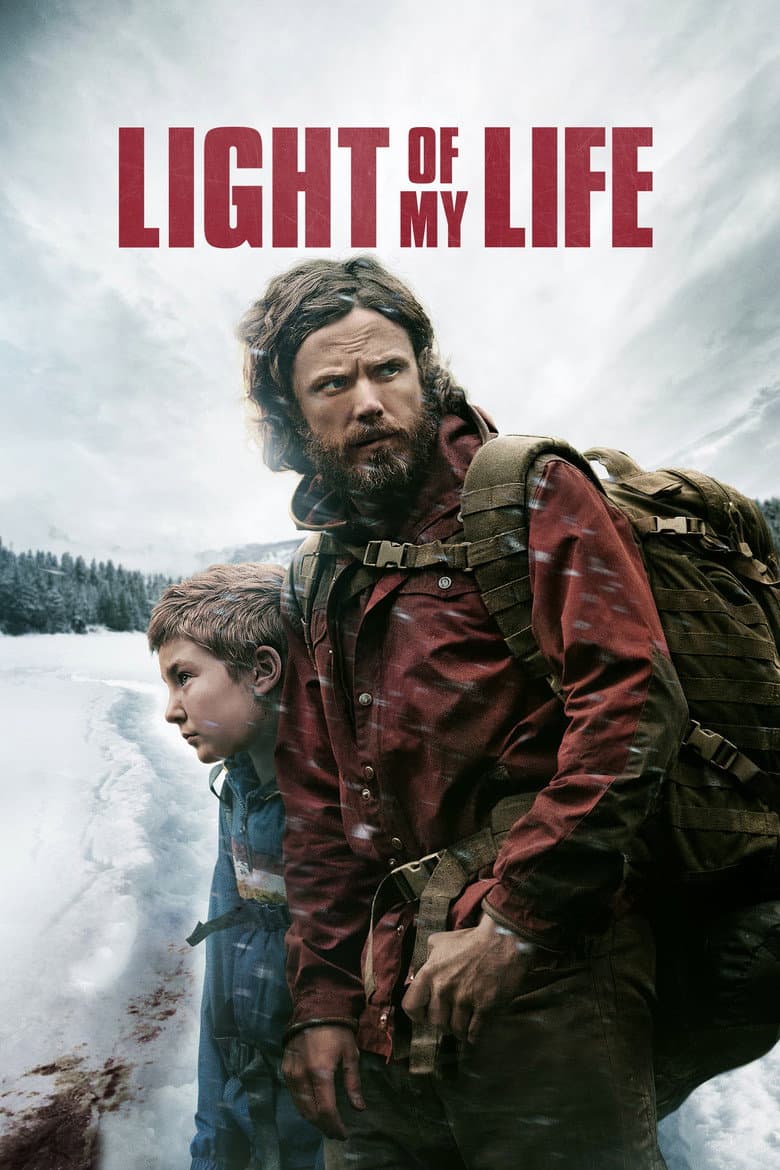
Light of My Life follows an unnamed father and his young daughter, Rag, through the cold forests of British Columbia almost ten years after a plague kills most of the world’s women. Rag survived the plague, so her father cuts her hair and passes her off as a boy whenever strangers are near. The two move between camps, empty houses, and unsafe settlements while searching for a rumored safe place. The film stays quiet and slow for long stretches, then turns tense and violent when men discover that Rag is a girl.
The film makes being a girl the main danger in its world, because a surviving girl can be hunted, taken, or killed by men who want to control her. Dad gives repeated warnings about men who act kind while putting girls down, and he explains why calling a woman a doll is insulting. Rag pushes back when his bedtime stories place a male hero at the center, and she retells the Noah story with herself in the brave role. Her need to hide that she is a girl and later tell her own story gives the movie a clear message about gender and independence, although the story remains mainly about a parent's love and the struggle to survive.
Community feedback
Was our 58% Woke rating accurate?
Breakdown
These are the editorial factors and ratings behind our score for Light of My Life.
Woke representation / casting
Not present. The film centers on a white father and daughter, with a few white and nonwhite men in smaller roles. The girl disguise follows the plot, and the film does not frame its casting as a diversity goal.
0%
Woke political dialogue
Dad explains that the world is out of balance because so few women remain. Dad warns that some men put girls down while acting friendly and says they avoid all men because they cannot know which ones are dangerous. Dad calls the word “doll” a way to put women down, and his sex talk covers puberty and sex. The dialogue is clearly gender-focused and appears in more than one scene, but it does not become a constant political speech.
40%
Identity-driven story themes
The plague makes being female the film's central source of danger. Rag must hide her identity, wear boys' clothes, and avoid men who may capture or kill her. The film follows her struggle to grow beyond her father's control, and she rewrites his Noah story so a girl becomes the brave figure. The story treats her new independence as important, but it stays focused on one family's survival rather than a broad political movement.
58%
Western institutional / cultural critique
The film presents a male world where fear, loneliness, anger, and sexual violence make most outside men dangerous. Dad says men can put girls down while pretending to be kind, and he rejects the word “doll” for women. The story questions whether a father can keep a girl safe by controlling every part of her life. The film does not attack churches, capitalism, or family life, and Tom's faith is treated as part of his character rather than mocked.
42%
Woke character or canon changes
The film is an original story, but its bedtime tale borrows from Noah's Ark and changes the hero role from a male fox to a female fox. Rag later retells the story so the girl becomes the brave figure. This is a brief gender-role change inside a story told by the characters, not a change to a film franchise or historical event. The change supports the film's message about girls finding their own voice.
24%
Anti-woke backlash and complaints
One Reddit commenter directly called the film a “woke movie” and objected to the idea that society would collapse when women disappeared. The same commenter mocked Rag for questioning her father, which connects the complaint to Rag's independence and the film's gender themes. The thread had many more comments about the father-daughter bond, slow pace, guns, and plot logic. This makes the anti-woke reaction real but isolated and fringe.
16%
Creator track record context
The supplied creator context rates Casey Affleck at 18/100 and describes no pattern of identity-driven filmmaking. The producers have stored scores from 10 to 25/100. Casting director Avy Kaufman has a higher stored score of 46/100 because of earlier work on LGBTQ-focused projects, but that pattern is not visible in this film. The overall creator context gives mild support rather than a strong signal.
22%
Production
Movie · 2021
In the near future, Cameron Turner is diagnosed with a terminal illness. Presented with an experimental solution to shield his wife and son from grief, he grapples with altering…
Movie · 2019
The near future, a time when both hope and hardships drive humanity to look to the stars and beyond. While a mysterious phenomenon menaces to destroy life on planet Earth…

Movie · 2017
Thirty years after the events of the first film, a new blade runner, LAPD Officer K, unearths a long-buried secret that has the potential to plunge what's left of society into…
Movie · 2016
Following the outbreak of a virus that wipes out the majority of the human population, a young woman documents her family's new life in quarantine and tries to protect her…
Movie · 2018
Jonathan is a young man with a strange condition that only his brother understands. But when he begins to yearn for a different life, their unique bond becomes increasingly tested.
Movie · 2018
After a catastrophe destroys most of humanity, recluse Del lives in his small, empty town, content with the utopia he has methodically created for himself, until an interloper…
Movie · 2017
Caesar and his apes are forced into a deadly conflict with an army of humans led by a ruthless Colonel. After the apes suffer unimaginable losses, Caesar wrestles with his darker…
Movie · 2019
A man becomes obsessed with facts and events that have been collectively misremembered by thousands of people.
