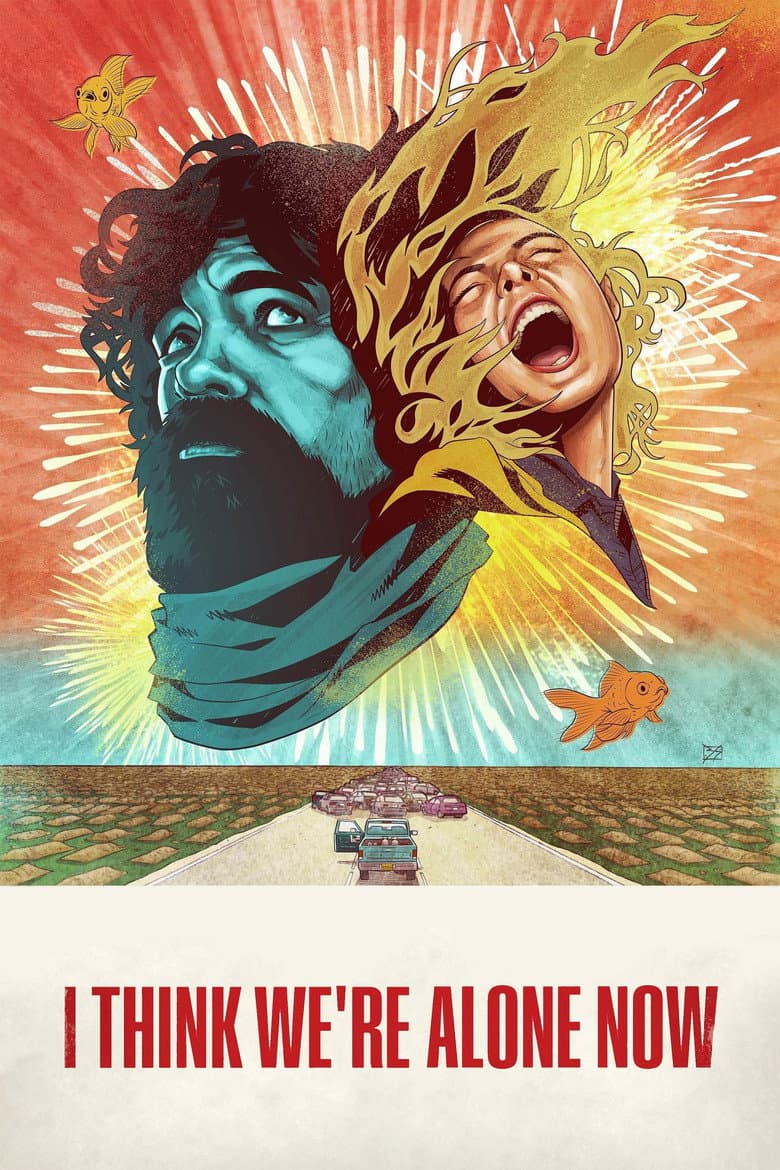
Del is a quiet former librarian who lives alone in a small town after a sudden disaster kills almost everyone. He cleans empty houses, buries the dead, gathers batteries, and keeps the town library in order. He feels safe in his strict routine until Grace arrives and refuses to leave. The movie is slow, dark, strange, and often dryly funny.
The story centers on loneliness, grief, memory, and the hard work of living with another person. Grace brings noise and strong feelings into Del's quiet world, while Del must learn to accept change. The final act reveals a community that uses a medical procedure to remove painful memories and make people act as if nothing bad happened. The movie treats that forced calm as frightening and values honest feeling, personal choice, and real human connection.
Community feedback
Was our 13% Woke rating accurate?
Breakdown
These are the editorial factors and ratings behind our score for I Think We're Alone Now.
Woke representation / casting
Peter Dinklage, an actor with dwarfism, plays the central survivor and former librarian. His disability is visible, but the film does not make it a subject of dialogue or a larger identity message. The other main survivor is a white young woman, and the small cast does not show a repeated diversity pattern.
16%
Woke political dialogue
Not present. The characters do not give speeches or repeat lines about race, gender, sexuality, DEI, or activism. Their talks concern loneliness, memory, grief, survival, and whether people should live with pain.
0%
Identity-driven story themes
Not present. The story focuses on loneliness, grief, memory, and human connection. Grace is lively and Del is withdrawn, but neither character is built around race, gender, sexuality, or DEI activism.
0%
Western institutional / cultural critique
Not present. The film criticizes a fictional post-apocalypse community that removes painful memories, not Western institutions or current identity politics. It does not attack traditional family, Christianity, capitalism, or male-female roles.
0%
Woke character or canon changes
Not relevant. The film is an original story about fictional survivors. It does not alter established characters, source material, or real historical people.
0%
Anti-woke backlash and complaints
Not present. No anti-woke complaints were found in the supplied X pass or in the reviewed news, audience, and social discussions. The recorded complaints focus on the ending, pacing, unclear science, and dark picture, not on woke or DEI messaging.
0%
Creator track record context
Reed Morano has a modest feminist and representation-focused profile from her work on The Handmaid’s Tale and comments about barriers for women directors. Peter Dinklage has spoken about disability representation and criticized stereotyped roles. Mike Makowsky and most of the listed producers have no strong public activist record in the cached context. Interviews about this film focus on loneliness, human behavior, and companionship rather than identity politics.
24%
Production
Movie · 2017
The widow of a wise professor stumbles upon one of his inventions that's able to record and play a person's memory.
Movie · 2024
Suspicious of the events ensnaring their former colleagues, Nite Owl and Silk Spectre are spurred out of retirement to investigate.
Movie · 2017
A service which creates holographic projections of late family members allows an elderly woman to spend time with a younger version of her deceased husband.

Movie · 2018
Over the course of 12 years, and three stages of life, Sidney Hall falls in love, writes the book of a generation and then disappears without a trace.

Movie · 2017
Thirty years after the events of the first film, a new blade runner, LAPD Officer K, unearths a long-buried secret that has the potential to plunge what's left of society into…
Movie · 2026
In an attempt to avenge her daughter’s death, Irene Kelly travels through parallel universes, killing her daughter’s murderer again and again.
Movie · 2020
A once-celebrated kid detective, now 31, continues to solve the same trivial mysteries between hangovers and bouts of self-pity.
Movie · 2023
A detective becomes entangled in a mystery involving his missing daughter and a secret government program while investigating a string of reality-bending crimes.
