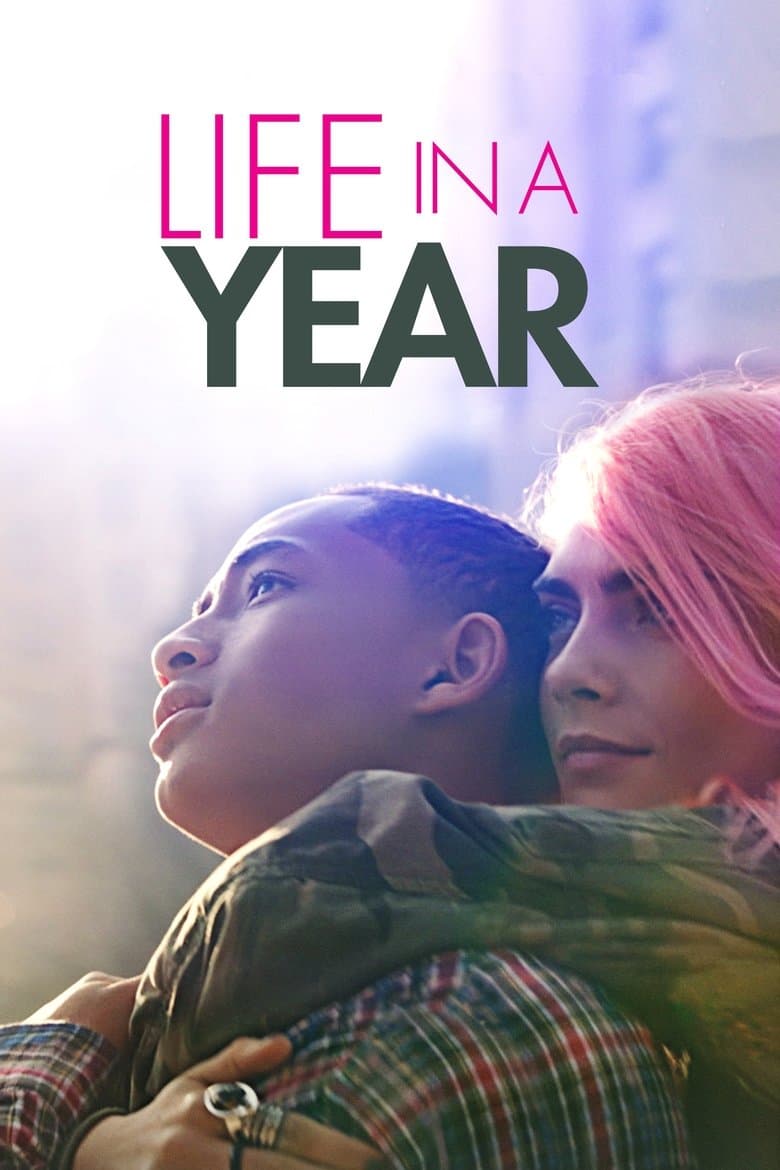
Seventeen-year-old Daryn lives in Pittsburgh with a strict plan built by his father. Daryn is expected to win at school, run track, enter Harvard, study law, and follow a safe path, even though he dreams of making rap music. Daryn meets Isabelle, a sharp and restless girl who has ovarian cancer and may have less than a year to live. Daryn packs a lifetime of love, travel, music, marriage, and small milestones into their final year. The film moves between teen romance, family conflict, illness, and grief.
The strongest audience-visible identity element is Phil, Isabelle’s drag performer caregiver and parent-like adult. The film treats Phil as loyal and caring, but queer identity is not the main subject. Daryn’s interracial romance and black family fit a present-day Pittsburgh setting without a diversity message. Most of the story challenges one father’s control and the idea that grades, Harvard, and a fixed career plan are the only road to a good life. The main message is that love, choice, and time matter more than another person’s plan.
Community feedback
Was our 21% Woke rating accurate?
Breakdown
These are the editorial factors and ratings behind our score for Life in a Year.
Woke representation / casting
Phil is a recurring drag performer and caregiver in Isabelle’s home and family scenes. That is a clear LGBTQ-related casting choice, but Phil is not a lead. Daryn and Isabelle are a black and white couple in modern Pittsburgh, and the film gives no identity-first message about that pairing. The cast does not show a strong pattern of forced diversity, so the score stays low.
12%
Woke political dialogue
Not present. The dialogue centers on cancer, love, college plans, family pressure, and grief. The movie has no recurring speeches about DEI, race politics, capitalism, or current activism.
0%
Identity-driven story themes
Phil is a drag performer and parent-like caregiver, and the film shows Phil as a loyal part of Isabelle’s family. The movie also includes a wedding scene connected to drag and transgender performers. This creates a recurring LGBTQ-related element, but the main story follows cancer, love, grief, and family pressure. The queer material supports the story without becoming its central conflict.
24%
Western institutional / cultural critique
Not present. The film questions one father’s strict plan for Harvard, law school, and a safe career. It treats that as a family problem and a choice about growing up, not as a wider attack on Western culture, men, family, or schools.
0%
Woke character or canon changes
Not relevant. The film is an original romantic drama, not an adaptation of a known character, book, franchise, or historical event.
0%
Anti-woke backlash and complaints
Not present. Reviews and social posts discuss the romance, cancer story, acting, and writing. No meaningful anti-woke backlash or DEI complaint was found.
0%
Creator track record context
Jada Pinkett Smith has a strong cached record of race and gender discussion through Red Table Talk. Will Smith has general progressive views, while James Lassiter has a neutral cached profile. Okorn and the writers also have low cached scores and no known identity-activist record. The context is mixed, with no title-specific activist framing.
30%
Production

Movie · 2016
Set during the last days of the Ottoman Empire, a love triangle develops between Mikael, a brilliant medical student, the beautiful and sophisticated artist Ana, and Chris, a…

Movie · 2020
When illness strikes two people who are polar opposites, life and death bring them together in surprising ways.

Movie · 2025
18-year-old Noah moves from America to London, with her mother who's recently fallen in love with William, a wealthy British businessman.

Movie · 2019
England, early 20th century. The future writer and philologist John Ronald Reuel Tolkien (1892-1973) and three of his schoolmates create a strong bond between them as they share…

Movie · 2016
Lou Clark, a directionless 26-year-old from the English countryside, takes a job at the local castle as a caregiver and companion to a wealthy young banker, Will Traynor.

Movie · 2020
It was a chance meeting started by one of Sol’s friends trying to chat up Jennifer. However, in the end, it was those two who hit it off.

Movie · 2018
Katie, a 17-year-old, has been sheltered since childhood and confined to her house during the day by a rare disease that makes even the smallest amount of sunlight deadly.
Movie · 2022
A young couple's relationship clashes with the harsh realities of the California Gold Rush of 1850. Angel, experiencing love for the first time and facing demons unsurmountable…
