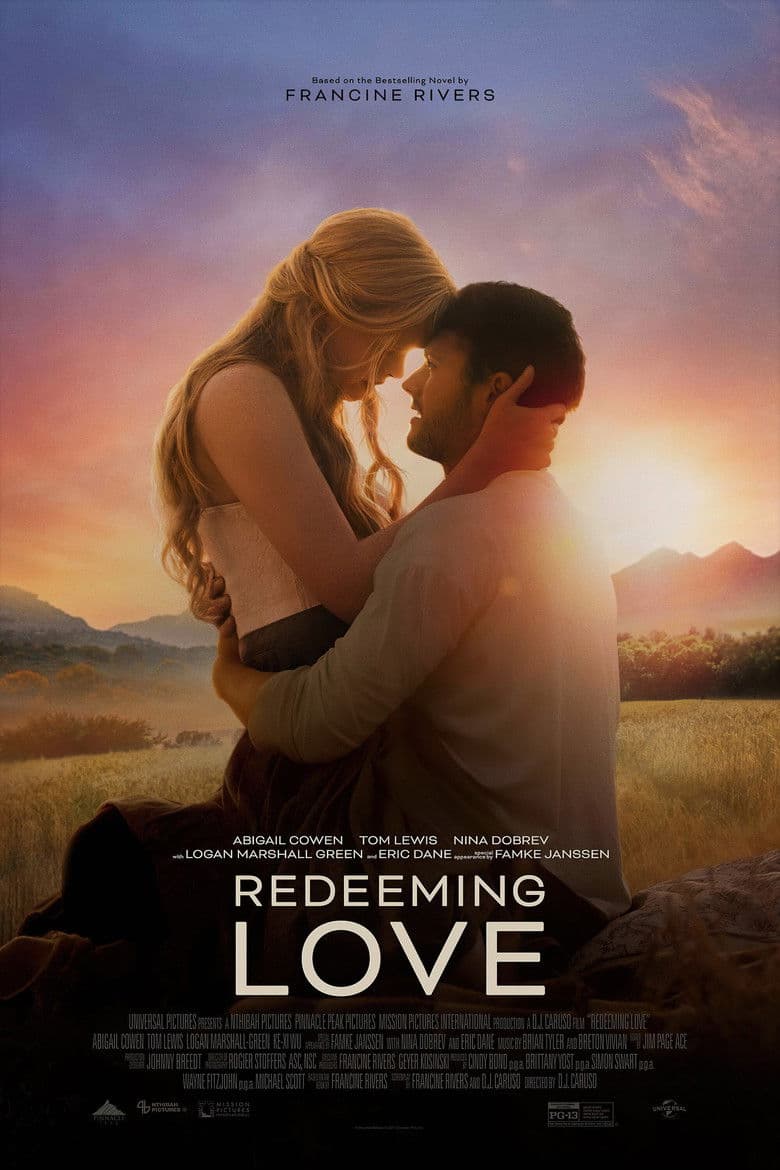
Redeeming Love follows Angel, a young woman who was sold into prostitution as a child and learned to expect pain from men. In 1850 California, she meets Michael Hosea, a farmer who believes God has told him to marry her. Angel runs from him several times because she fears love, marriage, and the past that shaped her. The film uses a dark, violent, and emotional tone before moving toward hope, family, and faith.
The story presents Christian faith as the main answer to shame, sin, and deep hurt. Michael’s patience and marriage help Angel learn that she can be loved, while Angel later chooses to return and help other women. The film also treats sex inside marriage as safe and meaningful after a long history of abuse and forced sex. Its strongest ideas are forgiveness, personal change, committed marriage, and God’s steady love.
Community feedback
Was our 1% Woke rating accurate?
Breakdown
These are the editorial factors and ratings behind our score for Redeeming Love.
Woke representation / casting
Not present in this title.
0%
Woke political dialogue
Not present. The film contains no modern political dialogue, activist language, or identity-based discussions of any kind. All conversations stay within personal faith, sin, forgiveness, love, trauma, and biblical redemption.
0%
Identity-driven story themes
Not present. Core themes come straight from the biblical Hosea story and center on God’s relentless love, personal redemption from trauma and prostitution, forgiveness, and healing through faith and marriage. No plotlines or messaging involve race, gender identity, sexuality, systemic critiques, or social justice ideas.
0%
Western institutional / cultural critique
Not present. The narrative affirms Christian faith, traditional marriage, personal responsibility, and redemption. It presents steadfast male pursuit and committed partnership in a positive light within its historical and faith context rather than critiquing patriarchy, Christianity, Western institutions, or cultural norms through any activist lens.
0%
Woke character or canon changes
Not relevant. The film adapts Francine Rivers’ novel, which retells the biblical Hosea account. No identity-driven or DEI-style alterations were made to characters, source material, or historical setting.
0%
Anti-woke backlash and complaints
Not present. No notable right-leaning or anti-woke backlash exists that accuses the film of pushing woke, DEI, identity politics, or left-wing messaging. Public debate stayed inside Christian circles over sexual content suitability or came from secular reviewers calling the faith elements preachy.
0%
Creator track record context
Most key creatives have low or no record of woke activism. Producer Roma Downey has a limited diversity-focused record through multicultural casting advocacy and the Imago Dei campaign. The film does not turn that background into a visible identity message.
3%
Production
Movie · 2017
The story of four characters whose lives intertwine amid the hustle and bustle of the Coney Island amusement park in the 1950s: Ginny, an emotionally volatile former actress now…

Movie · 2025
Two artistic souls find harmony through music despite their contrasting worlds. As feelings deepen, age and circumstances challenge their undeniable bond.

Movie · 2016
Canadian folk artist Maud Lewis falls in love with a fishmonger while working for him as a live-in housekeeper.
Movie · 2016
In 1958, in the state of Virginia, the idea of interracial marriage was not only considered to be immoral to many, it was also illegal.

Movie · 2024
Aza confronts her potential for love, happiness, friendship, and hope while navigating an endless barrage of invasive, obsessive thoughts.

Movie · 2023
Set in 1889 France, Dodin Bouffant is a chef living with his personal cook and lover Eugénie. They share a long history of gastronomy and love but Eugénie refuses to marry Dodin…

Movie · 2018
A man and a woman meet in the ruins of post-war Poland. With vastly different backgrounds and temperaments, they are fatally mismatched and yet drawn to each other.
Movie · 2019
England, early 20th century. The future writer and philologist John Ronald Reuel Tolkien (1892-1973) and three of his schoolmates create a strong bond between them as they share…
