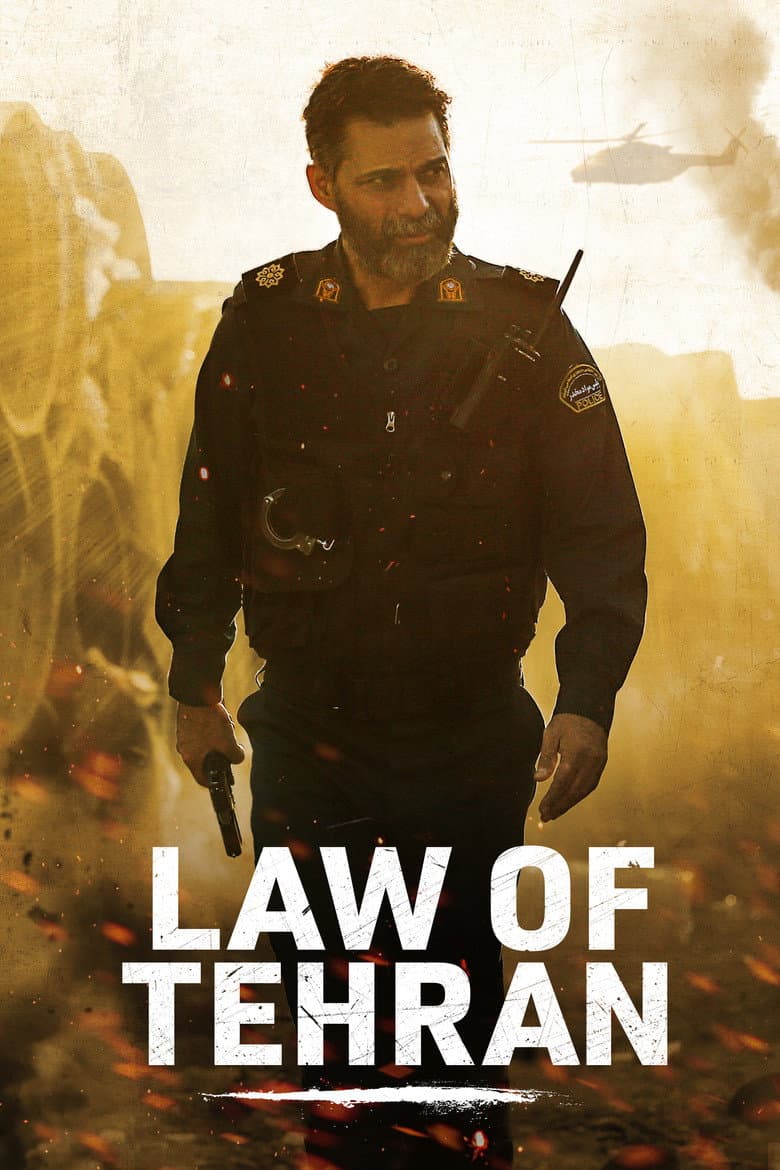
Law of Tehran follows Samad, a tough drug officer in Tehran who is chasing Nasser Khakzad, a powerful drug lord. Samad and his team move from raids on poor addicts to crowded police cells, courtrooms, and prisons. Nasser faces prison, the loss of his family’s property, and an execution that seems certain. The film is harsh, fast, and dark, but it also uses grim humor and gives both the cop and the criminal human weaknesses.
The film’s strongest social message links Iran’s drug crisis to poverty, class pressure, and laws that punish users and dealers without stopping the problem. It shows homeless addicts, children pulled into drug work, families damaged by crime, and officials using threats and paperwork to control people. These ideas create a clear message for changing harsh punishment, but they are not built around race, gender, sexuality, DEI, or Western identity politics. Most of the movie remains a crime story about addiction, corruption, family duty, and the failure of a war on drugs.
Community feedback
Was our 40% Woke rating accurate?
Breakdown
These are the editorial factors and ratings behind our score for Law of Tehran.
Woke representation / casting
Not present. The cast is Iranian, and the story is set in Tehran, so the main casting matches the world. The main roles are mostly men because the story follows a police team, a drug lord, and a judge. Elham is a supporting ex-girlfriend who helps locate Nasser, but she is not framed as an identity symbol.
0%
Woke political dialogue
The police and court scenes repeatedly discuss rising addiction, poverty, harsh sentences, bribes, and whether executions work. The dialogue favors prevention and better social conditions over endless arrests and executions. The film does not use modern race, gender, queer, DEI, or identity-politics language.
31%
Identity-driven story themes
The story repeatedly links addiction and crime to poverty, class pressure, family breakdown, and a harsh prison system. Nasser is shown as both a dangerous dealer and a man shaped by a poor childhood, while a disabled father trains his young son to sell pills. The ending says arrests and executions have not stopped new dealers from appearing. This gives the film a strong social-problem and class message, but it does not center race, gender, sexuality, DEI, or modern identity politics.
40%
Western institutional / cultural critique
Not present. The film criticizes Iran’s drug laws, police methods, courts, overcrowded prisons, and death penalty. It does not attack Western institutions, Christian beliefs, family life, or traditional gender roles.
0%
Woke character or canon changes
Not relevant. Law of Tehran is an original modern crime story, not a remake or a story about established characters.
0%
Anti-woke backlash and complaints
Not present. Audience posts mainly praise the acting, tension, and social realism. No sustained news or platform campaign accused the film of woke or DEI content.
0%
Creator track record context
Saeed Roustaee repeatedly makes films about poverty, addiction, class inequality, women facing male authority, and pressure from the Iranian state. His work has a clear social and political edge, which supports a high context score. Law of Tehran matches that pattern through its focus on poor communities, state pressure, and failed institutions. Jamal Sadatian has a milder social-film and anti-censorship record, while the other listed producers have no clear woke pattern.
62%
Production
Movie · 2023
Set in the fictional dystopian city-state of Khansaar, the film follows the friendship between Deva, a tribesman, and Varadha, the prince of Khansaar.

Movie · 2018
The amazing true story of Billy Moore, an English boxer incarcerated in Thailand’s most notorious prison. Thrown into a world of drugs and violence, he finds his best chance to…

Movie · 2022
A noir thriller set in Miami, the film follows an enforcer who discovers his femme fatale boss has branched out into cyber sex trafficking, putting a young runaway he’s befriended…

Movie · 2023
The hardened son of a powerful industrialist returns home after years abroad and vows to take bloody revenge on those threatening his father's life.

Movie · 2026
As Frank Castle searches for meaning beyond revenge, an unexpected force pulls him back into the fight.
Movie · 2025
Expert thief Parker gets a shot at a major heist, but to pull it off he and his team must outsmart a South American dictator, the New York mob, and the world's richest man.

Movie · 2024
When an army commando finds out his true love is engaged against her will, he boards a New Dehli-bound train in a daring quest to derail the arranged marriage.

Movie · 2023
When his aging mob boss is whacked, Charlie Swift, a loyal friend and hired gun, will stop at nothing to destroy the upcoming crew that took him out.
