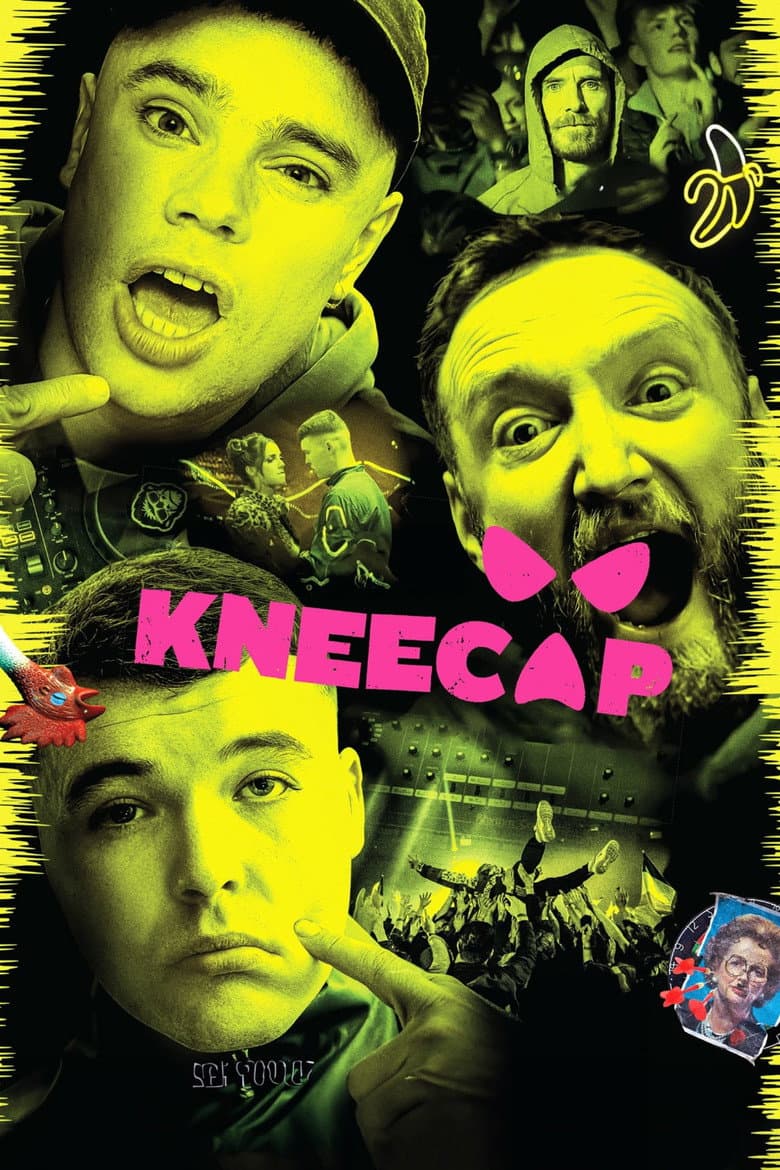
Kneecap follows JJ, a tired music teacher in Belfast, after he meets Liam and Naoise at a police station. Liam refuses to speak English, and JJ turns Naoise’s Irish lyrics into rap songs. The three men build a band while they sell drugs, party, and face police, Irish militant groups, and angry politicians. The film mixes sex, strong language, danger, and fast jokes with family pain and a bright, noisy tone.
The main woke element is the film’s strong focus on Irish-language identity and cultural rights. The story treats Irish as a living language that young people can use to resist British control, not as a museum piece. Repeated lines connect speaking Irish with freedom, civil rights, and the voice of a people who were pushed aside. The group’s rise, JJ’s job, the police conflict, the campaign for legal recognition, and a romance across the Catholic and Protestant divide all keep that message at the center.
Community feedback
Was our 77% Woke rating accurate?
Breakdown
These are the editorial factors and ratings behind our score for Kneecap.
Woke representation / casting
Not present. The main cast is made up of local Irish actors playing Belfast people. The cast does not show a clear identity-first pattern beyond what the story needs.
0%
Woke political dialogue
The film repeatedly presents Irish as a political right and a tool of resistance. A news report calls equal legal status for Irish a civil-rights issue, while Arlo says each Irish word is a bullet for freedom. The characters accuse British rule, the police, and the DUP of helping suppress the language. The closing speech links Irish hip-hop with the voice of black Americans and says the language became political when it was banned.
66%
Identity-driven story themes
The story makes Irish-language identity the reason the band forms and the cause that drives its rise. The group turns a minority language into youth music and argues that it must live in daily life, not sit in a museum. The film presents their songs as a voice for Irish speakers and as a challenge to British control. A language-rights campaign, a teacher risking his job, police conflict, and a Catholic-Protestant romance keep this message central.
72%
Western institutional / cultural critique
The film repeatedly makes the police, radio stations, politicians, and British state block or shame the group. It presents the Irish Language Act as a basic rights issue and treats official resistance as part of a wider history of control. The DUP, MI5, and old republican hard-liners all become targets, so the film does not attack only one institution. This is a clear political view, but it stays tied to Belfast’s conflict rather than attacking every Western institution.
48%
Woke character or canon changes
Not relevant. This is a fictionalized biopic. The band members play heightened versions of themselves, and no established character is given a new race, gender, sexuality, or lead role.
0%
Anti-woke backlash and complaints
The Daily Mail and some unionist critics attacked the film’s public funding and its anti-British, pro-Irish-language politics. The paper also used the word “woke” when attacking BBC coverage, but its main complaint was about public money and republican politics. The supplied X research found only a few tiny anti-woke posts and no boycott, review-bombing, or race, gender, or LGBT complaint. The film drew mostly positive audience and critic reaction.
14%
Creator track record context
The three writer-performers have public records built around Irish-language rights, Irish republican identity, politics against British rule, and support for Palestine. Rich Peppiatt has a milder anti-establishment record built around tabloid criticism and stories about underrepresented communities. Several producers also have repeated links to Irish-language access, LGBTQ representation, or underrepresented voices. This gives the project a strong activist and representation-focused background that matches the film’s main subject.
72%
Production
Movie · 2025
Tenderly captures a year in the life of a family as the parents navigate their separation. Through both playful and heartfelt moments, the film portrays the bittersweet essence of…

Movie · 2024
Mismatched cousins David and Benji reunite for a tour through Poland to honor their beloved grandmother. The adventure takes a turn when the pair's old tensions resurface against…
Movie · 2025
1984; Michael Larson, an unemployed ice-cream truck driver from Ohio, steps onto the game show "Press Your Luck" harboring a secret: the key to endless amounts of money.
Movie · 2018
Thirteen-year-old Kayla endures the tidal wave of contemporary suburban adolescence as she makes her way through the last week of middle school — the end of her thus far…

Movie · 2019
An unlikely friendship between two neighbors becomes an unexpectedly emotional journey when the younger man is diagnosed with terminal cancer.
Movie · 2024
In 2008, during the last month of summer before high school begins, an impressionable 13-year-old Taiwanese American boy learns what his family can't teach him: how to skate, how…

Movie · 2021
Veteran comedy writer Charlie Berns, who is slowly but surely losing his grip on reality, befriends a talented young New York street singer Emma Payge.
Movie · 2024
Pansy is a woman so full of rage that every interaction she has devolves into lashing out, whether at her utterly cowed husband and son, or random strangers who have the temerity…
