Movie review
January 25, 2019 · 93 min · R · Sci-Fi · Fantasy · Comedy · Action
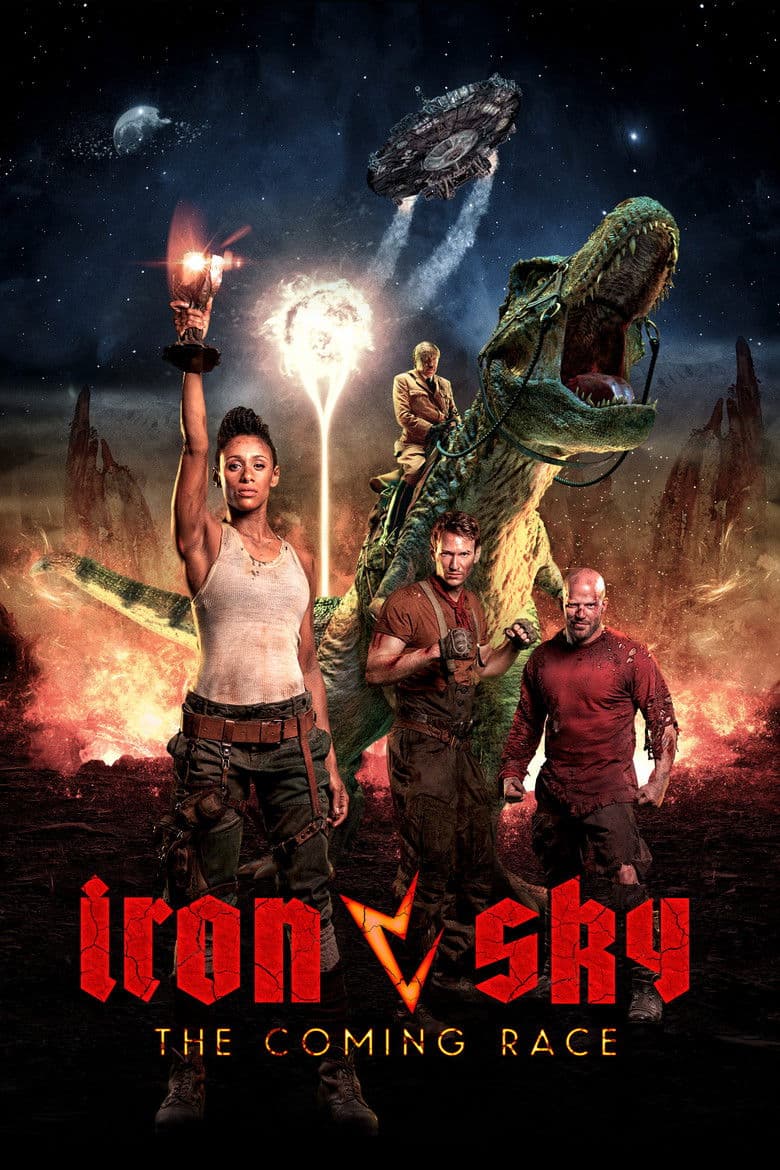
Obi Washington is a mechanic who keeps a failing Moon base alive after a nuclear war has made Earth nearly unlivable. When an old Nazi leader offers a cure for her sick mother, Obi leads a small crew into the Hollow Earth to find the power source called Vrilia. The crew faces reptile rulers, famous tyrants, dinosaurs, and a dangerous return trip to the Moon. The movie uses loud jokes, wild effects, conspiracy ideas, and fantasy adventure instead of a serious tone.
The movie presents Obi as a black woman who stands at the center of the story as its main mechanic, decision-maker, and savior. The film repeatedly makes Obi the most capable member of the crew, while the men serve as comic helpers, muscle, or romantic support. The film presents her as an action hero who fixes machines, makes plans, and saves people without treating her as a sex object. Malcolm reveals that he is gay near the end, but the moment is brief and played as a surprise joke. These identity elements matter to the characters, but the main adventure still focuses on dinosaurs, Nazis, religion jokes, and conspiracy ideas.
Community feedback
Was our 58% Woke rating accurate?
Breakdown
These are the editorial factors and ratings behind our score for Iron Sky: The Coming Race.
Woke representation / casting
Obi Washington is a black woman who is the lead mechanic and main hero. Her role is central, and the film gives her the key rescue and survival tasks. The sequel links her to James Washington from the earlier film, which gives the character a clear family reason. Lara Rossi also frames Obi as the woman-of-color hero she wanted to see, which adds a clear representation message.
40%
Woke political dialogue
The opening song says “Let’s make Earth great again,” which points at Donald Trump’s slogan. The Vril leaders also talk about politics, elections, religion, and world leaders while blaming them for ruining Earth. A character says one-god religion starts old wars, and Jobsism turns Steve Jobs into a god. The jokes are brief and scattered, so political dialogue is noticeable but not central.
32%
Identity-driven story themes
Obi is repeatedly shown as the person who keeps the Moon base alive, leads the mission, fixes the ship, and saves the survivors. The male crew mainly supplies comic relief, muscle, or romance while she makes the key choices. The film also gives Malcolm a late gay reveal, but the moment is brief and played for surprise. These choices make gender and identity part of the story, while the main plot still centers on dinosaurs, Nazis, and conspiracy jokes.
55%
Western institutional / cultural critique
The director says the film is built as a comedy about religion, human origins, and future religions. The story turns Steve Jobs into the god of a strict moon cult and shows people punished for breaking phone rules. It also jokes about Adam and Eve, the Holy Grail, the Last Supper, the Pope, and one-god religion. This repeated mockery of religion and tech power gives the film a clear cultural critique, though the broad comedy targets many groups.
44%
Woke character or canon changes
Not relevant. The sequel introduces Obi and the new Vril and Jobsist characters. It does not change the race, gender, or sexuality of an established character from the earlier film or a known source.
0%
Anti-woke backlash and complaints
Small online reactions did call the film “super woke trash” and accused the writers of taking shots at religion, conservatives, Republicans, big tech, and Trump. Another audience review called Obi a Mary Sue and said the film could not be made in Hollywood at the time. The X search found only a few small posts about a DEI lead and a Mary Sue. No large account, boycott, review bomb, or organized campaign was found.
32%
Creator track record context
Most writers and producers have genre, business, or independent-film backgrounds without a clear DEI or identity-politics record. Timo Vuorensola is mainly linked to political satire, pacifism, and fan-made science fiction. Johanna Sinisalo has a stronger history of writing about sexuality, gender, outsiders, and the environment, while Dalan Musson has little public biography. This gives some context, but it does not show a strong activist pattern around this film.
18%
Production
Movie · 2024
A listless Wade Wilson toils away in civilian life with his days as the morally flexible mercenary, Deadpool, behind him.
Movie · 2025
Set against the backdrop of a postapocalyptic Earth whose Eastern Hemisphere was destroyed by a massive solar flare, leaving what life remains mutated from radiation and fallout.
Movie · 2016
Four losers are thrust into the position of saving the world when they stumble upon a UFO crash site and become genetically equipped to the battle suit on board.

Movie · 2022
When a team of mercenaries breaks into a wealthy family compound on Christmas Eve, taking everyone inside hostage, the team isn’t prepared for a surprise combatant: Santa Claus is…
Movie · 2022
Dangerously ill with a rare blood disorder, and determined to save others suffering his same fate, Dr. Michael Morbius attempts a desperate gamble.
Movie · 2020
After the vicious slaughter of his family by stone-cold mercenary Sub-Zero, Hanzo Hasashi is exiled to the torturous Netherrealm.
Movie · 2026
A 'Man from the Future' arrives at an LA diner where he must recruit the precise combination of disgruntled patrons to join him on a one-night quest to save the world from the…
Movie · 2025
The Demon Slayer Corps are drawn into the Infinity Castle, where Tanjiro, Nezuko, and the Hashira face terrifying Upper Rank demons in a desperate fight as the final battle…
