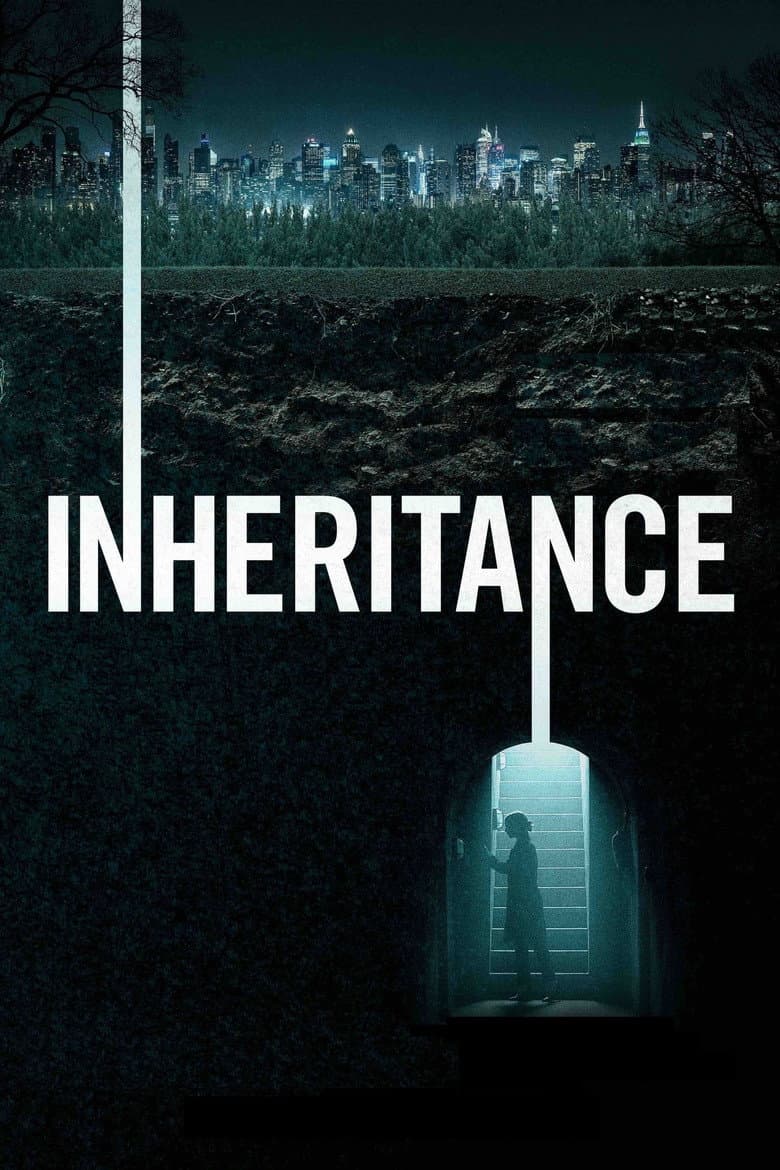
Inheritance follows Lauren Monroe, a young Manhattan district attorney who comes from a rich New York family. Her father dies suddenly and leaves her a key, a video, and a hidden bunker instead of the large cash gift given to her brother, William. In the bunker, Lauren finds Morgan Warner chained to a wall and learns that her father kept him there for decades. The film uses a dark, tense tone as Lauren tries to learn which man is telling the truth and how far her family’s secrets reach.
The film gives Lauren a clear female-empowerment role because she is shown as tough, skilled, and determined to build a career outside her father’s influence. It also attacks inherited wealth, Wall Street fraud, political connections, and the way rich families can hide crimes. Lauren’s work for victims and the poor conflicts with her choice to protect her own family, so the story asks whether justice matters more than family loyalty. These ideas are present around the central mystery, but the movie stays focused on family guilt, captivity, revenge, and a late twist.
Community feedback
Was our 28% Woke rating accurate?
Breakdown
These are the editorial factors and ratings behind our score for Inheritance.
Woke representation / casting
Not present. The film uses a modern New York setting with a mostly white family and several black supporting characters. The cast does not form a repeated identity-focused pattern, and Lauren’s role as a female district attorney is not presented as a diversity campaign.
0%
Woke political dialogue
The opening courtroom scenes attack Wall Street fraud and defend victims of lost pensions. Lauren says she serves the innocent and poor because she was born into wealth. Morgan later calls the family’s lawyer, banker, and politician an “unholy trinity” and asks what happened to justice. The movie uses these lines during the family mystery, but it does not make political debate the main plot.
27%
Identity-driven story themes
Lauren is a young female district attorney who is shown as tough, skilled, and determined to work outside her father’s control. The film makes her smaller inheritance than her brother part of their family conflict. Lauren rejects the family’s money and name while trying to follow her own idea of justice. The female-empowerment angle recurs, but the story remains a personal family thriller rather than a broad identity campaign.
20%
Western institutional / cultural critique
The story presents Wall Street, inherited wealth, and political ties as ways that powerful people can escape blame. Lauren prosecutes a rich financier while her own family hides a death, bribery, affairs, and a man held captive. The film links the family’s lawyer, banker, and politician to an “unholy trinity.” These ideas affect Lauren’s main choice between public justice and family loyalty, but the movie does not build a full activist case against capitalism or Western culture.
34%
Woke character or canon changes
Not relevant. The film is an original screenplay with no established characters, canon, or real historical figures to change.
0%
Anti-woke backlash and complaints
Not present. Public complaints focus on plot holes, weak character logic, and Simon Pegg’s unusual performance. No major report frames the film as pushing woke, DEI, or identity politics.
0%
Creator track record context
Vaughn Stein’s title interviews focus on film craft, a dark fairy tale, and family secrets, with no activist framing. Matthew Kennedy is mainly linked to action and thriller work, with no high-confidence record of DEI advocacy. Rich Delia and most producers have conventional genre and finance backgrounds, although two producers also worked on Call Jane. That one project does not show a broad activist pattern in this title.
7%
Production
Movie · 2019
Professor James Murray begins work compiling words for the first edition of the Oxford English Dictionary in the mid 19th century, and receives over 10,000 entries from a patient…

Movie · 2021
A truffle hunter who lives alone in the Oregon wilderness must visit Portland to find the mysterious person who stole his beloved foraging pig.

Movie · 2017
Susan, a single mother of two, works as a waitress in a small town. Her son, Henry, is an 11-year-old genius who not only manages the family finances but acts as emotional support…
Movie · 2022
7 years after the case related to Vijay Salgaonkar and his family was closed, a series of unexpected events bring truth to light that threatens to change everything for the…

Movie · 2016
Denmark, 2016. A blurred note is found in a bottle that has traveled across the ocean for a long time. After deciphering the cryptic note, Department Q follow a sinister trail…

Movie · 2020
A professional cellist has an encounter with a stranger on the subway which has unexpected and far-reaching ramifications on his life.

Movie · 2016
In 1967, four undercover CIA agents were sent to NASA posing as a documentary film crew. What they discovered led to one of the biggest conspiracies in American history.

Movie · 2017
Barcelona, Spain. Adrián Doria, a young and successful businessman accused of murder, meets one night with Virginia Goodman, an expert interrogation lawyer, in order to devise a…
