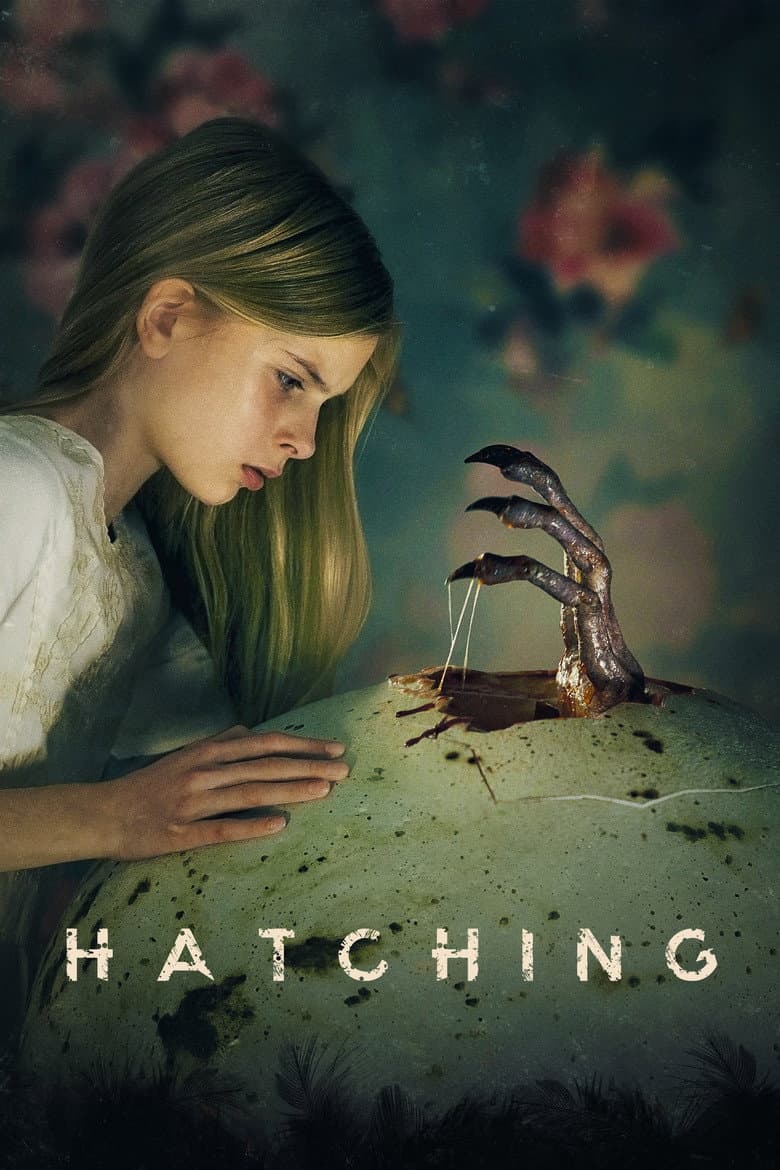
Tinja is a quiet 12-year-old gymnast who lives with her parents and younger brother in a neat Finnish home. Her mother films their happy family life online and pushes Tinja to win while hiding anger, fear, and every sign of failure. After Tinja finds a wounded bird and brings its egg home, the egg hatches into Alli, a strange bird-like double that copies her feelings and grows more violent. The film is a grim body-horror fairy tale with a cold, bright look, dark jokes, and a sad story about a child who wants love.
The clearest woke element is the film's female-centered message about girlhood, puberty, body image, and the pressure to look perfect. Tinja's mother treats her daughter as a project, while the creature gives shape to the anger and pain that Tinja must hide. The story attacks fake family perfection, strict ideas about feminine beauty, and social-media approval, then favors self-acceptance over keeping up appearances. These ideas run through the whole plot and are easy to notice, but the film keeps the message inside one family and tells it through a monster story instead of speeches about public policy.
Community feedback
Was our 55% Woke rating accurate?
Breakdown
These are the editorial factors and ratings behind our score for Hatching.
Woke representation / casting
The film gives its most important roles to Tinja, her mother, and the female creature, while the father and boys are passive or secondary. The director said she changed the lead from a boy to a girl because she wanted more stories about girls and women. The cast otherwise fits the Finnish family setting and does not use a broad ethnic diversity pattern.
32%
Woke political dialogue
Not present. The film has no recurring lines that argue for DEI, current identity politics, or activist politics. Its talk about social media, family pressure, and body image serves the horror story.
0%
Identity-driven story themes
The film makes a girl's puberty, body image, and need for acceptance the center of the horror. Tinja's mother treats feminine beauty and gymnastics success as proof of worth. Alli turns Tinja's hidden anger, shame, and wish to escape those demands into a living double. The message favors accepting imperfect bodies and feelings over performing a perfect family life.
61%
Western institutional / cultural critique
The movie repeatedly attacks a picture-perfect nuclear family, a submissive father, and a mother who uses social media to police behavior. The home and gymnastics world make traditional femininity look controlling and harmful. The story stays focused on one abusive family and does not make a broad claim about Christianity, capitalism, government, or Western society.
39%
Woke character or canon changes
Not relevant. The story is an original Finnish horror film. It does not change a known character, book, franchise, or real person.
0%
Anti-woke backlash and complaints
Not present. No sustained anti-woke complaints, boycott calls, or review-bombing were found in the searched X, news, Reddit, or audience-review material. Public discussion centered on the ending, body horror, family abuse, and social-media themes.
0%
Creator track record context
Writer Ilja Rautsi has a strong public focus on representation, gender roles, empathy, and challenging default white male characters. Director Hanna Bergholm has a feminist-leaning interest in women's stories, maternal roles, and pressure to fit ideal images, but no lasting partisan persona. Most producers have industry-focused records with little public activism. This gives the key creative team a moderate creator track record signal.
48%
Production
Movie · 2018
The Shadow Mountains, 1983. Red and Mandy lead a loving and peaceful existence; but when their pine-scented haven is savagely destroyed, Red is catapulted into a phantasmagoric…
Movie · 2016
A determined young woman and a damaged occultist risk their lives and souls to perform a dangerous ritual that will grant them what they want.
Movie · 2019
On the outskirts of a kingdom, a quiet but fierce medieval warrior protects the realm from monsters and the occult.
Movie · 2021
Four children become friends during the summer holidays, and out of sight of the adults they discover they have hidden powers.
Movie · 2024
After a family tragedy, three generations of the Deetz family return home to Winter River. Still haunted by Betelgeuse, Lydia's life is turned upside down when her teenage…
Movie · 2024
A live broadcast of a late-night talk show in 1977 goes horribly wrong, unleashing evil into the nation's living rooms.
Movie · 2025
Ten-year-old Aurora asks her hitman neighbor to kill the monster under her bed that she claims ate her family.
Movie · 2026
After breaking the mysterious "One Wish Willow" to win his crush's heart, a hopeless romantic finds himself getting exactly what he asked for but soon discovers that some desires…
