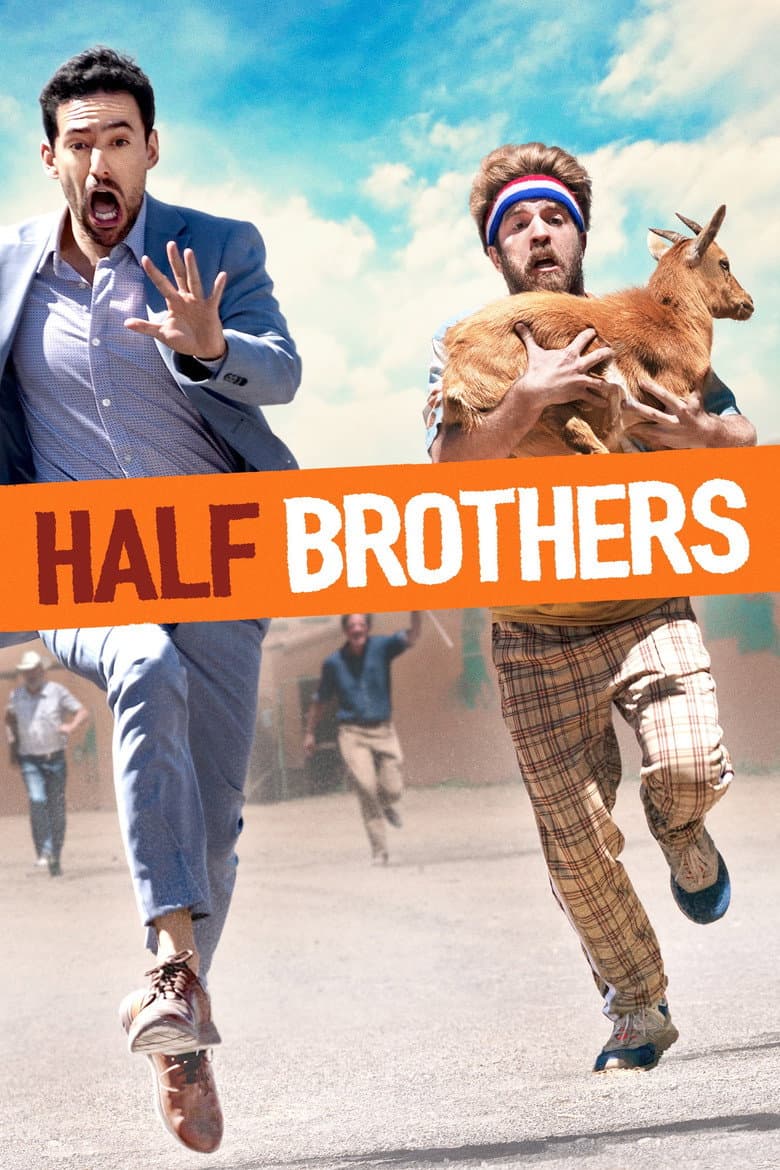
Renato is a successful Mexican aircraft company boss who still feels hurt because his father left him as a child and never came back. When his father becomes ill in Chicago, Renato meets Asher, his loud and jobless American half-brother. Their father dies and leaves them a chain of riddles, so the brothers travel through the United States toward El Paso to uncover his past. The film mixes road-trip jokes, fights, family pain, and serious flashbacks about a migrant trying to return home.
The clearest woke material comes from the film’s view of immigration and the border. The story shows a Mexican migrant facing poverty, racism, detention, and border patrol trouble, while the brothers learn to see the United States and Mexico from each other’s side. Renato complains that Americans are entitled and ignorant, and Asher says he did not want the wall. The film asks viewers to feel empathy for immigrants and for people who are treated as different, but these ideas support the family story instead of replacing it.
Community feedback
Was our 53% Woke rating accurate?
Breakdown
These are the editorial factors and ratings behind our score for Half Brothers.
Woke representation / casting
The film places Mexican and Latin American actors in the central family roles, which fits its Mexico and United States setting. The marketing presents the Latino cast and point of view as part of the film’s identity. The story does not build a random mix of identities, so the casting signal stays mild.
18%
Woke political dialogue
The film includes a long early exchange about Americans being entitled, ignorant, and wrong about Mexico. Renato also pushes back on stereotypes about Mexicans, and Asher says he did not want the wall. A later border patrol scene makes Renato’s Mexican identity part of the joke and danger. These lines appear in more than one part of the story, but they do not become a constant speech or debate.
37%
Identity-driven story themes
The immigration story takes up a large part of the father’s past and the brothers’ road trip. The flashbacks show a Mexican worker facing poverty, racism, detention, and border trouble while trying to return to his son. The film asks viewers to treat immigrants with dignity and to see Mexico and the United States as closely linked. The story also treats Asher’s bullying and his father’s rejection of his unusual personality as lessons about accepting people who are different.
55%
Western institutional / cultural critique
The film shows border officers stopping Flavio and later detaining Renato after he loses his passport. The flashbacks show immigrant families held in cages and a sick father left in custody. The story presents border control and the American immigration system as harsh and unfair toward Mexicans. The criticism stays focused on the border and does not spread to most other Western institutions.
42%
Woke character or canon changes
Not relevant. The film tells an original family story and does not change a known character, book, real person, or historical event.
0%
Anti-woke backlash and complaints
Movieguide warns about politically correct elements in the film. The review objects to the film’s view of Americans as ignorant, its border scenes, and its mention of cheap foreign labor. The complaint is limited to one family-review site, while the X pass and wider searches found no organized anti-woke campaign.
10%
Creator track record context
The stored profiles identify Luis Gerardo Méndez and Eduardo Cisneros as the main representation-focused voices, while Luke Greenfield and most other listed crew have mostly neutral records. Méndez and Cisneros helped shape a story about Latino visibility, immigrant dignity, and cultural difference. That background matches the film’s content, but it does not dominate the full creative team. The creator signal is therefore present but mixed.
28%
Production

Movie · 2023
The true story of how Dave Fishwick, a working class man and self-made millionaire, fought to set up a community bank so that he could help the local businesses of Burnley not…
Movie · 2017
Brigsby Bear Adventures is a children's TV show produced for an audience of one: James. When the show abruptly ends, James's life changes forever, and he sets out to finish the…
Movie · 2025
Lily Trevino unexpectedly befriends an online stranger who shares her self-centered father’s name. This new Bob Trevino’s support could transform her life.

Movie · 2016
Aspiring New York City artist John Hollar returns to his Middle America hometown on the eve of his mother’s brain surgery.

Movie · 2016
The story of a young man who arrives in Hollywood during the 1930s hoping to work in the film industry, falls in love, and finds himself swept up in the vibrant café society that…

Movie · 2018
An American hypochondriac who is working as a baggage handler is forced to confront his fears when a British teenager with a terminal illness enlists him to help her carry out her…

Movie · 2020
Four stagnant high school teachers decide to test out a theory that maintaining a constant level of intoxication will improve their overall lives.

Movie · 2016
From Jane Austen’s novella, the beautiful and cunning Lady Susan Vernon visits the estate of her in-laws to wait out colorful rumors of her dalliances and to find husbands for…
