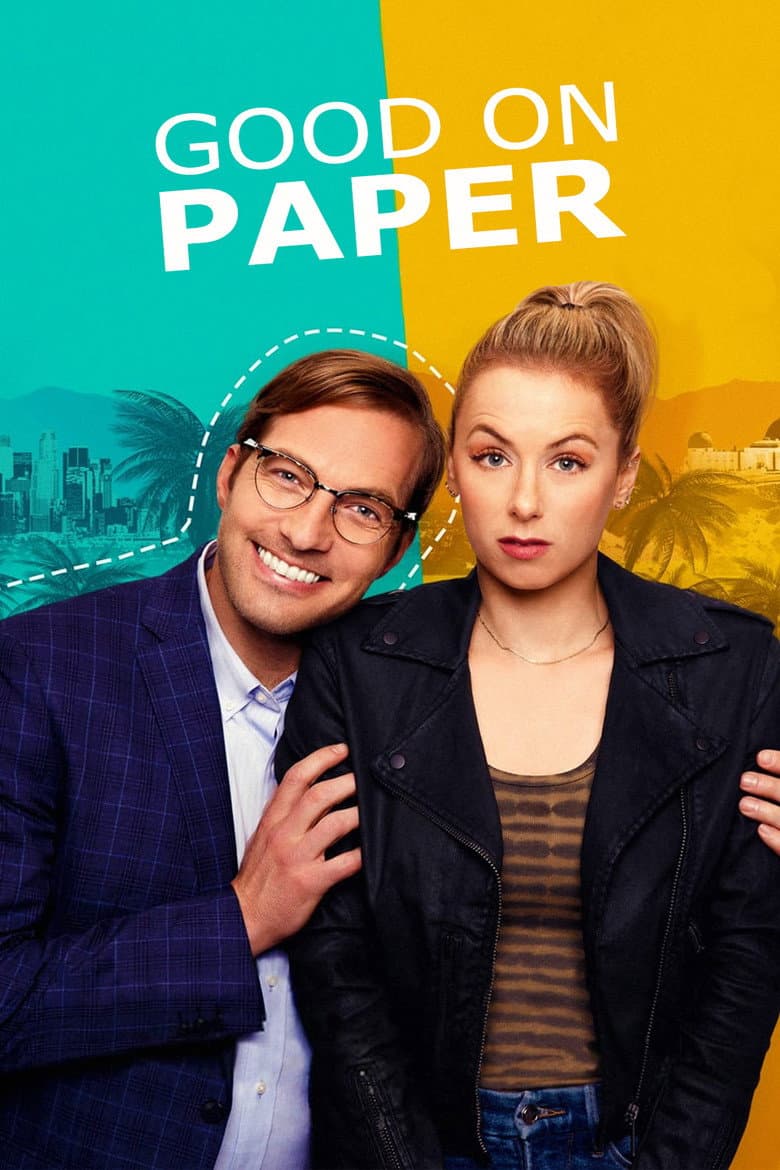
Andrea Singer is a Los Angeles stand-up comic who is trying to build an acting career. She meets Dennis on a plane, and he seems smart, kind, rich, and well educated. Andrea first treats him as a friend, but she starts dating him after he keeps pushing into her life. Her best friend Margot helps her uncover a long list of lies, and the light romance turns into a dark and strange comedy.
Andrea’s jokes question why women are judged more harshly than men and why they are told to accept poor treatment or settle for less. The story repeatedly treats Dennis’s lies, male entitlement, and pressure on women as targets for laughs. Andrea’s career, female friendships, and fight to trust her own judgment matter more than finding a man. Margot is a lesbian, but that fact is a small side detail rather than the movie’s main subject. The film uses a female lead who drives the investigation and ends with personal payback, so its gender message is clear without becoming a broad political story.
Community feedback
Was our 53% Woke rating accurate?
Breakdown
These are the editorial factors and ratings behind our score for Good on Paper.
Woke representation / casting
The film gives Margot, a prominent best friend, a visible lesbian identity, and Margaret Cho plays her. Shlesinger and Cho also described that identity as part of the film’s normal world in Pride Month coverage. The setting is modern Los Angeles, and the role is tied to the writer’s real queer friend, so the casting does not show a strong mismatch or a broad quota-style pattern.
18%
Woke political dialogue
Andrea’s stand-up repeatedly asks why women are judged more harshly than men. Andrea also jokes about men feeling owed attention, women being told to accept the bare minimum, and being dismissed as funny because she is a woman. The film places these ideas in several stand-up breaks and dating scenes. The lines are part of the comedy and are not a speech about government or party politics, so the emphasis is recurring but moderate.
42%
Identity-driven story themes
Andrea’s main arc centers on a woman who protects her career, rejects pressure to settle, and learns to trust her own judgment. The story treats Dennis’s lies and anger as part of male insecurity and entitlement. Andrea, Margot, and Serrena join forces, while the women around Andrea help solve the problem. The film also turns female rivalry into a lesson about women being pushed to compete with one another. These themes shape the plot from the dating setup through the final revenge, but the movie remains a personal comedy rather than a broad activist campaign.
49%
Western institutional / cultural critique
The film mocks the idea that women should accept any man who offers money, status, or basic kindness. Andrea’s stand-up says men often judge women’s bodies and choices more freely than women can judge men’s. Dennis is shown as a man who thinks kindness and persistence should earn him romance, and the story rejects that belief. The movie does not attack churches, government, capitalism, or family life, so its critique stays inside dating and career pressure.
32%
Woke character or canon changes
Not relevant. The movie is an original story based loosely on Shlesinger’s dating experience. It does not adapt a known character or historical event.
0%
Anti-woke backlash and complaints
One Reddit thread listed Good on Paper under a comment about movies with an overt woke political agenda. The post gave no reason and did not describe a scene or line. The X research pass found no anti-woke reaction or named complaint. No major news or review campaign treated the film as a woke controversy, so the evidence is isolated and weak.
5%
Creator track record context
Kimmy Gatewood’s past work and comments focus on women directors, female performers, and stories about complicated women. Iliza Shlesinger’s comedy and public work often focus on gender rules, dating, misogyny, and double standards. Gatewood has a cached score of 44 and Shlesinger has a cached score of 58, while the four cached producer scores are low or modest. The film’s female-centered story matches the director and writer’s known themes, so creator track record context is moderate.
48%
Production

Movie · 2023
After a disastrous first date, wild-child Nicole and socially-anxious Max vow to lose each other’s numbers until they learn that their dogs found a love match, and now puppies are…
Movie · 2022
Two strangers believe in love but never seem to be able to find its true meaning. In a wild twist of events, fate puts each in the other's path on one stormy New Year's Eve.

Movie · 2020
An on-the-lam punk rocker and a young woman obsessed with a local band go on an unexpected and epic journey together through the decaying suburbs of the American Midwest.
Movie · 2020
A guy meets the woman of his dreams and invites her to his company's corporate retreat, but realizes he sent the invite to the wrong person.

Movie · 2024
A mild-mannered professor moonlighting as a fake hit man in police stings ignites a chain reaction of trouble when he falls for a potential client.
Movie · 2023
A straight-laced bank manager is about to marry the love of his life. When his bank is held up by infamous Ghost Bandits during his wedding week, he believes his future in-laws…
Movie · 2026
A happily engaged couple is put to the test when an unexpected turn sends their wedding week off the rails.

Movie · 2024
After a failed comeback album, a rock star retreats to a cliffside home on Cyprus, only to find his new life complicated by visitors — and an old flame.
